

Broadcom CEO: AI revenue to hit $230 billion by 2028, power is bottleneck


- Broadcom CEO Hock Tan projects AI revenue to reach $115 billion in 2027 and double to $230 billion in 2028
- Power availability and data center readiness are cited as primary constraints, outweighing semiconductor supply issues
- Free cash flow is expected to be in the mid-$40 billion range in 2027, supporting potential capital returns
- The company has a long-term agreement to supply Google with TPUs and networking products through 2031
- A new infrastructure financing vehicle with Apollo and Blackstone offers $35 billion for over 20 gigawatts of compute capacity

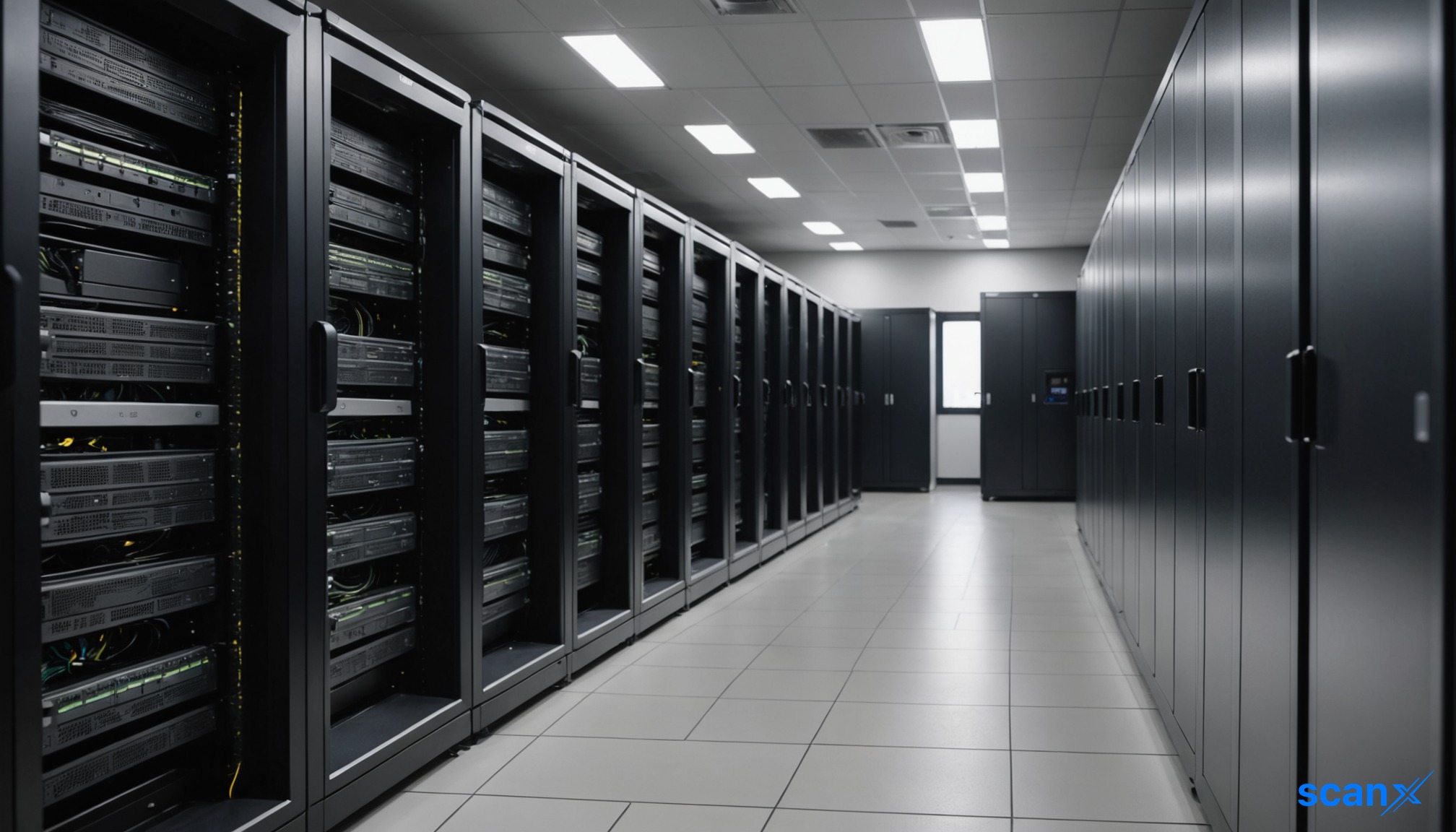

*this image is generated using AI for illustrative purposes only.
Broadcom Inc. (NASDAQ: AVGO) stock was little changed in Wednesday’s premarket session as investors weighed a softer broader market against CEO Hock Tan’s bullish long-term outlook for artificial intelligence demand. Nasdaq futures fell 0.16%, while S&P 500 futures slipped 0.09%.
Tan outlined the opportunity at the Goldman Sachs Communacopia + Technology Conference. He highlighted custom silicon, deep hyperscaler partnerships and rising infrastructure spending as key growth drivers. However, he also warned that power availability and data center readiness could constrain expansion.
Broadcom Sees AI Revenue Doubling
Tan said Broadcom expects AI revenue to reach $115 billion in 2027 and double to $230 billion in 2028. Importantly, he said those forecasts are constrained more by infrastructure availability than customer demand.
Tan said Broadcom can largely secure critical chip supplies, including wafers, memory and substrates, making semiconductor constraints more predictable. However, power-ready sites are emerging as the bigger uncertainty, with electricity availability, transformers, permitting and construction timelines threatening to limit how quickly AI data centers can come online.
Customers must prepare power sites well in advance to support capacity planned for 2028, he said.
The AI boom could also fuel significant cash generation. Broadcom expects free cash flow in the mid-$40 billion range in 2027, with further growth expected in 2028.
Custom Silicon Drives AI Expansion
Custom silicon sits at the center of Broadcom’s AI strategy. Broadcom works closely with six frontier-model developers on custom XPU accelerators. OpenAI, Alphabet Inc. (NASDAQ: GOOGL) unit Google and Anthropic are among its customers.
Tan said close collaboration allows Broadcom to design chips around each customer’s models and workloads. For example, Broadcom delivered its Jalapeño ASIC sample to OpenAI within nine months. The companies are now working on the next two generations.
Broadcom previously signed an agreement to supply OpenAI with 10 gigawatts of custom silicon capacity.
Google Partnership Extends Through 2031
Tan also highlighted Broadcom’s decade-long relationship with Google, which began with the first generation of its tensor processing units. Broadcom has a long-term agreement to supply Google with TPUs and networking products through 2031.
Tan said Broadcom’s semiconductor design expertise, high-speed interconnect technology, multi-die integration and advanced packaging give it an advantage as customers look beyond traditional Moore’s Law scaling.
Financing Helps Customers Expand Compute
Broadcom is also helping address the massive capital requirements behind the AI buildout. The company partnered with Apollo Global Management Inc. (NYSE: APO) and Blackstone Inc. (NYSE: BX) on an infrastructure financing vehicle. The structure provides an initial $35 billion in financing for more than 20 gigawatts of compute capacity.
Tan said Broadcom provides residual guarantees on equipment rather than directly financing customer demand. Meanwhile, rising cash generation could give Broadcom more flexibility to return capital to shareholders. Tan said higher dividends or share buybacks could be considered when the board reviews capital allocation in December.
For investors, that long-term AI opportunity now sits against a more cautious near-term technical picture.
Technical Analysis
Broadcom is $7.17 below its 20-day simple moving average of $375.63 and $15.27 below its 50-day SMA of $383.73. That keeps the intermediate trend under pressure.
However, the stock is just $1.51 below its 200-day SMA of $369.97. That puts Broadcom near a key long-term trend level. Holding or reclaiming the 200-day SMA could strengthen the bullish case, while a decisive break below it could signal further weakness.
Broadcom’s relative strength index stands at 46.14. That points to neutral-to-slightly bearish momentum. It also means the stock is not yet oversold.
Meanwhile, the 20-day SMA remains below the 50-day SMA, signaling near-term weakness. However, the 50-day SMA remains above the 200-day SMA. As a result, the golden cross formed in April remains intact.
Key resistance sits near $376.50, close to the 20-day SMA. Support is around $358 if selling pressure increases.
Analyst Outlook
Broadcom trades at a price-to-earnings multiple of about 47 times. Analysts have a consensus Buy rating and an average price forecast of $521.32.
Citigroup maintained a Buy rating and raised its price forecast to $515 on Sept. 4. DA Davidson maintained a Neutral rating and lowered its forecast to $350 the same day. Macquarie upgraded Broadcom to Outperform with a $490 price forecast on Sept. 3.
Price Action
Broadcom shares slipped 0.03% to $368.46 in Wednesday’s premarket trading, according to Benzinga Pro data.

How might the bottleneck in power infrastructure and permitting timelines impact Broadcom's ability to meet its $230 billion AI revenue target by 2028?
What are the competitive implications for Nvidia and other chipmakers as Broadcom deepens its exclusive custom silicon partnerships with hyperscalers like Google and OpenAI?
Could the new $35 billion financing vehicle with Apollo and Blackstone create conflicts of interest or alter the risk profile for Broadcom's hyperscaler customers?
 16
16










 Access 50+ Readymade Screeners
  Use 200+ Custom Filters
  Get Full Market Insights





