

Avio Smart Market Stack Partners with US Firms for Aquaculture Development


Avio Smart Market Stack Limited has signed a strategic MOU with US companies Aquasafra Holdings and Waterfield Farms to develop technology-driven aquaculture ecosystems. The partnership leverages ASMS's rural network of over 5,000 villages with Aquasafra's three decades of aquaculture expertise in high-performance tilapia genetics, aiming to build scalable commercial aquaculture models and enhance rural livelihoods.

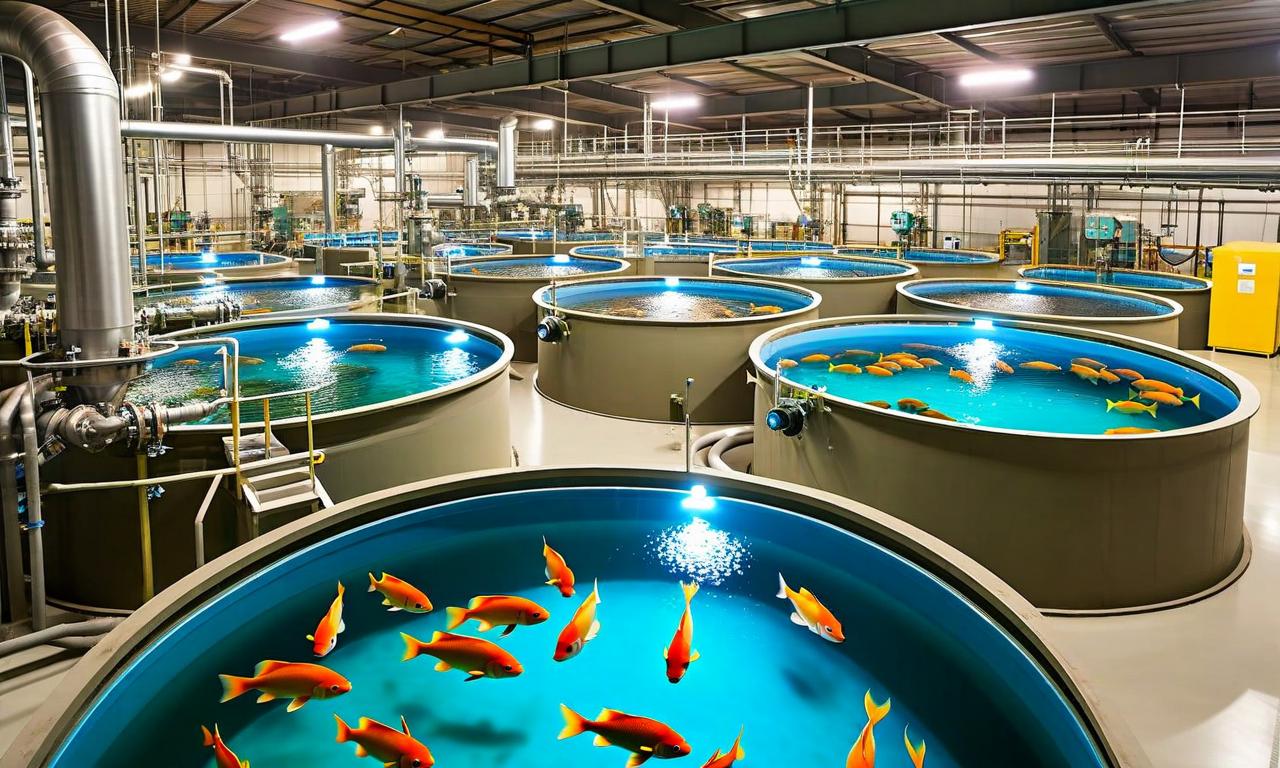

*this image is generated using AI for illustrative purposes only.
Avio Smart Market Stack Limited has entered into a strategic memorandum of understanding with US-based Aquasafra Holdings, Inc. and Waterfield Farms, Inc. to develop technology-driven aquaculture and fisheries ecosystems. The partnership was announced through a regulatory filing under Regulation 30 of SEBI (LODR) Regulations, 2015.
Strategic Partnership Framework
The collaboration brings together ASMS's extensive rural distribution infrastructure spanning over 5,000 villages with Aquasafra's specialized aquaculture expertise backed by over three decades of industry experience. The partnership focuses on building scalable, commercially viable aquaculture models that integrate advanced tilapia genetics with sustainable farming practices.
| Partnership Details: | Information |
|---|---|
| Lead Company: | Avio Smart Market Stack Limited (ASMS) |
| US Partners: | Aquasafra Holdings, Inc., Waterfield Farms, Inc. |
| Focus Area: | Technology-driven aquaculture ecosystems |
| Rural Network: | Over 5,000 villages |
| Connected Base: | Millions of rural participants |
Technology and Capabilities Integration
Aquasafra has developed specialized capabilities in high-performance tilapia genetics, including hybrid seed stock designed for faster growth cycles, higher survival rates, and resilience across diverse farming conditions. The company's operating model integrates broodstock development, feed optimization, farm design, and production systems along with technical advisory services.
The partnership will explore establishment of regionally adapted hatcheries for high-performance tilapia seed production, deployment of modern aquaculture systems, and integration of aquaponics-based models for climate-resilient agriculture.
Strategic Objectives and Implementation
The collaboration aims to improve productivity, survival rates, and input efficiency across aquaculture operations while enabling new livelihood opportunities in rural and peri-urban markets. Key focus areas include feed optimization partnerships, lake and reservoir stocking programs, and structured capacity-building initiatives for farmers, cooperatives, and agri-entrepreneurs.
| Implementation Areas: | Details |
|---|---|
| Hatchery Development: | Regionally adapted facilities |
| Production Focus: | High-performance tilapia seed |
| Technology Integration: | Aquaponics-based models |
| Target Markets: | Rural and peri-urban areas |
| Capacity Building: | Farmers and cooperatives training |
Project AVIO Agritech Alignment
The engagement aligns with ASMS's broader strategy under Project AVIO Agritech to expand into high-value sectors including fisheries, water resource management, and climate-linked rural enterprises. Dr. Raja Krishnamurthy M, Head – Agri Tech Business, ASMS, commented that aquaculture represents a significant opportunity to enhance rural incomes and diversify agricultural value chains.
The companies will also explore joint research and innovation initiatives focused on disease resistance, climate-resilient production models, and efficient water management systems, with the objective of creating long-term value across commercial and community-driven fisheries programs.

What regulatory approvals will be required for establishing tilapia hatcheries across different Indian states, and how might this impact the partnership's expansion timeline?
How will ASMS compete with established aquaculture players in India, and what market share could this partnership realistically capture in the next 3-5 years?
What are the potential environmental and ecological concerns of introducing high-performance tilapia genetics in Indian water bodies, and how might regulatory bodies respond?
 20
20







 Create Custom Screeners
  Access 200+ Pre-built Filters
  Use 50+ Readymade Screener





