

Amaero wins $344,000 BPMI contract for submarine components


Amaero Inc. secured a $344,000 production contract from Bechtel Plant Machinery, Inc. to support submarine industrial base needs using PM-HIP technology. The award follows two years of collaboration and six prior undisclosed contracts, positioning Amaero for future production opportunities. BPMI estimates a demand for up to 400 PM-HIP components annually to address supply chain challenges in naval shipbuilding.



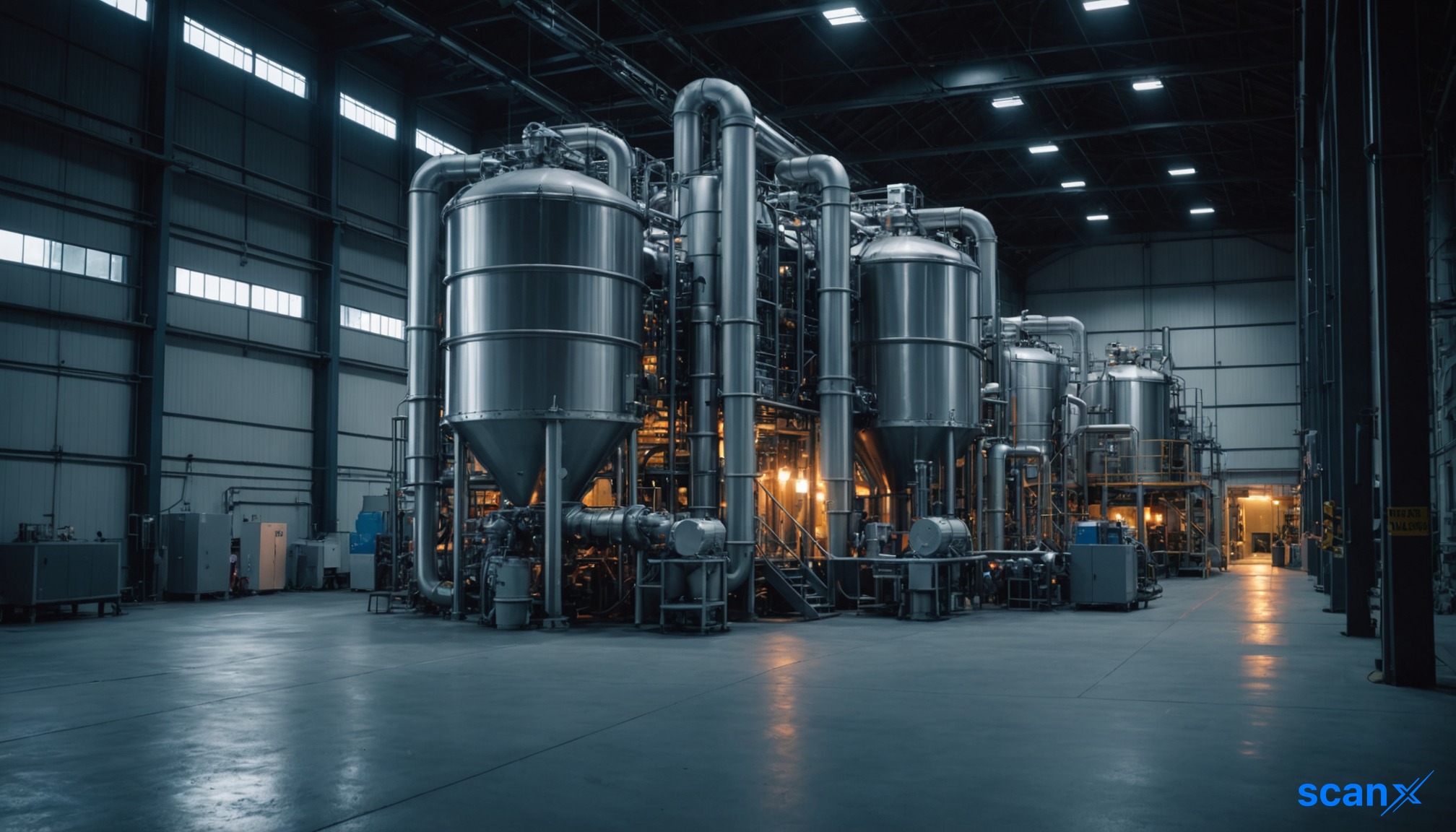
*this image is generated using AI for illustrative purposes only.
Amaero Inc. has been awarded a production contract valued at $344,000 by Bechtel Plant Machinery, Inc. (BPMI), a defense prime contractor, to produce piping in support of critical submarine industrial base needs. The contract marks a progression from development and demonstration phases to low-rate-initial-production (LRIP) for Amaero. This award positions the company to commence receiving production contract awards for critical components, leveraging its established capabilities in powder metallurgy-hot isostatic pressing (PM-HIP) technology.
Strategic Collaboration and Progress
Over the past two years, Amaero has closely collaborated with BPMI and the U.S. Navy to advance development, demonstration, first article, and LRIP projects. Prior to this announcement, the company did not disclose six contracts that were previously awarded by BPMI. The successful progress of these prior contracts has been instrumental in securing the current production award. The U.S. Navy recently announced support for PM-HIP as a mature manufacturing technology and a viable alternative for large casting and forging supply chain challenges.
PM-HIP Technology and Market Position
Amaero has established a market leadership position in PM-HIP manufacturing of near-net-shape components using proprietary state-of-the-art numerical and metallurgical methods. The company’s simulation tools and engineering team have demonstrated success in meeting the demanding requirements for production components in defense, energy, and industrial applications. PM-HIP is a near-net-shape manufacturing process capable of producing large and complex components such as valves, fittings, manifolds, structural components, and pressure vessels, which would typically be produced using casting or forging.
Demand and Future Outlook
BPMI has previously announced estimated demand for up to 400 PM-HIP components per year to support current and near-term shipbuilding needs. Addressing the significant ramp-up in naval vessel production demand, PM-HIP offers shorter lead times, improved manufacturing flexibility, and greater inspection confidence while maintaining the high material performance standards of forgings. The following table summarizes the key details of the contract and the associated demand:
| Detail | Description |
|---|---|
| Contract Value | $344,000 |
| Contractor | Bechtel Plant Machinery, Inc. (BPMI) |
| Purpose | Production of piping for submarine industrial base |
| Estimated Annual Demand | Up to 400 PM-HIP components |
Executive Commentary
Hank J. Holland, Amaero’s Chairman and CEO, commented: "Amaero’s differentiated numerical modeling, metallurgical and technical manufacturing competency has positioned the Company as an industry leader. The United States Navy has ambitious plans to grow its sovereign shipbuilding capability and capacity. PM-HIP is an important supplementary manufacturing modality that addresses critical bottlenecks and vulnerabilities in the maritime industrial base supply chain. We are appreciative of the close collaboration with BPMI and the U.S. Navy and look forward to advancing the qualification of more critical submarine components."
Nathan Weiderspahn, BPMI’s Executive Manager, Industrial Base Management, added: "Amaero’s progress in PM-HIP development reflects the type of technical rigor and collaboration needed to strengthen our submarine industrial base with innovative manufacturing methods. This contract award is another meaningful step in expanding production capacity and capability for critical components, supporting the Navy’s long-term shipbuilding objectives."

How will the transition from low-rate-initial-production to full-scale production impact Amaero's revenue and operational capacity?
What additional critical submarine components is Amaero targeting for qualification following this piping contract?
How might the U.S. Navy's endorsement of PM-HIP technology influence adoption in other defense or industrial sectors?
 16
16







 Access Market Heat-map & Insights
  Create, Save & Share your Screener
  Use 200+ Screening Filters





