

Abha Power H2 FY26 profit falls 86.5% on price correction


Abha Power and Steel Limited reported an 86.5% decline in Profit After Tax for H2 FY26 to ₹42.76 lakh, with Earnings Per Share dropping to ₹0.23. Revenue from operations decreased 22.7% to ₹2,764.60 lakh, impacted by a 20% price correction in the Insert segment and inflationary raw material costs.


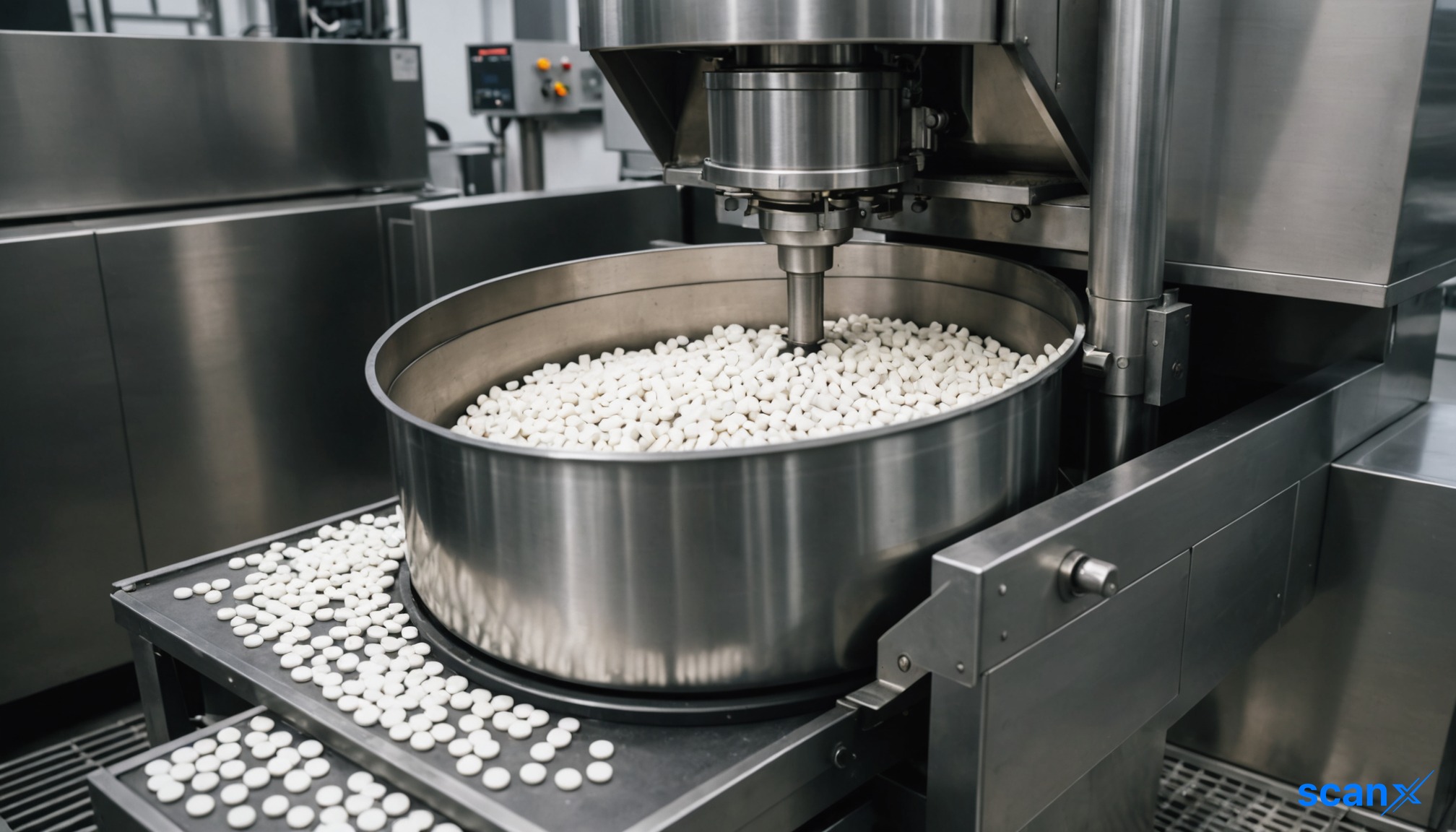
*this image is generated using AI for illustrative purposes only.
Abha Power and Steel Limited reported an 86.5% decline in Profit After Tax for H2 FY26 to ₹42.76 lakh, compared to ₹317.14 lakh in the same period last year, as price corrections and input cost inflation squeezed margins. Earnings Per Share fell to ₹0.23 from ₹1.85 in H2 FY25. Revenue from operations decreased 22.7% to ₹2,764.60 lakh, down from ₹3,578.27 lakh in the prior year period, driven primarily by a sharp 20% price correction in its core Insert segment, which accounts for approximately 50% of revenue share.
The company’s operational performance was further impacted by sudden escalations in raw material input costs due to geopolitical supply chain shocks. Because legacy orders were subject to fixed-price structures, the company could not immediately pass these incremental costs to customers, resulting in margin compression. EBITDA for the half-year stood at ₹178.40 lakh, a significant drop from ₹540.97 lakh in H2 FY25, with the EBITDA margin contracting to 6.45% from 15.12%.
Despite the revenue dip, the company maintained operational stability with production tonnage tracking flat from H1 FY26 into H2 FY26. Management noted that while order deferrals and delivery delays occurred, zero orders were cancelled, preserving the structural pipeline. To mitigate future volatility, Abha Power has implemented automatic raw material price escalation clauses in all newly booked contractual orders.
Financial Performance
The company’s full-year performance for FY26 reflected the H2 pressures, with total revenue declining to ₹6,221.51 lakh from ₹7,018.01 lakh in FY25. Profit After Tax for the full year fell to ₹246.03 lakh from ₹622.83 lakh in the previous year. The balance sheet showed a robust expansion in assets, primarily driven by capital work in progress, which increased to ₹2,265.11 lakh in FY26 from ₹711.85 lakh in FY25, indicating significant investment in capacity expansion.
| Particulars | H2FY25 | H1FY26 | H2FY26 | FY25 | FY26 |
|---|---|---|---|---|---|
| Revenue from Operations | 3,578.27 | 3,456.91 | 2,764.60 | 7,018.01 | 6,221.51 |
| EBITDA | 540.97 | 356.79 | 178.40 | 1,074.68 | 535.19 |
| EBITDA Margin (%) | 15.12 | 10.32 | 6.45 | 15.31 | 8.60 |
| Profit After Tax | 317.14 | 203.27 | 42.76 | 622.83 | 246.03 |
| Earnings Per Share (₹) | 1.85 | 1.09 | 0.23 | 3.94 | 1.32 |
Strategic Initiatives and Outlook
Abha Power is executing a major plant upgradation program to eliminate manual bottlenecks and increase capacity utilization. The company has commissioned an Electric Arc Furnace (EAF) and a 6MT Heat Treatment Furnace, while a new automated Moulding Line and a 20MT Heat Treatment Furnace are in the final stages of completion. These upgrades are targeted for commissioning by August 31, 2026, and are expected to increase sand processing capability from 1,000 kg/hour to 35,000 kg/hour.
On the business development front, the company has formally entered the defence sector by securing a strategic order from the Ministry of Defence for two critical prototype casting parts. Additionally, it has achieved a Railway OEM breakthrough, securing formal approval for two distinct components that have locked in continuous standing orders. The company also achieved NABL Accreditation for its in-house laboratory under ISO/IEC 17025:2017, covering Chemical, Mechanical, and Microstructure Testing.
Historical Stock Returns for Abha Power and Steel
| 1 Day | 5 Days | 1 Month | 6 Months | 1 Year | 5 Years |
|---|---|---|---|---|---|
| -3.71% | 0.0% | -6.17% | -21.81% | -44.88% | -71.66% |

What is the projected timeline for the new capacity expansion to translate into revenue growth given the current demand environment?
How will the new automatic price escalation clauses in contracts specifically protect margins if input cost volatility persists?
What are the expected revenue contributions from the defence and railway sectors over the next 12-24 months?
 16
16




 Access Market Heat-map & Insights
  Create, Save & Share your Screener
  Use 200+ Screening Filters





