

US refiners at 95% capacity limit Venezuela oil deal impact


- US refiners operating at >95% capacity limit ability to process new Venezuelan crude
- Deal aims to refill SPR with access to >65 billion barrels of Venezuelan reserves
- Analysts warn billions in investment needed to upgrade degraded infrastructure
- National average gas price remains above $4/gallon despite political announcements

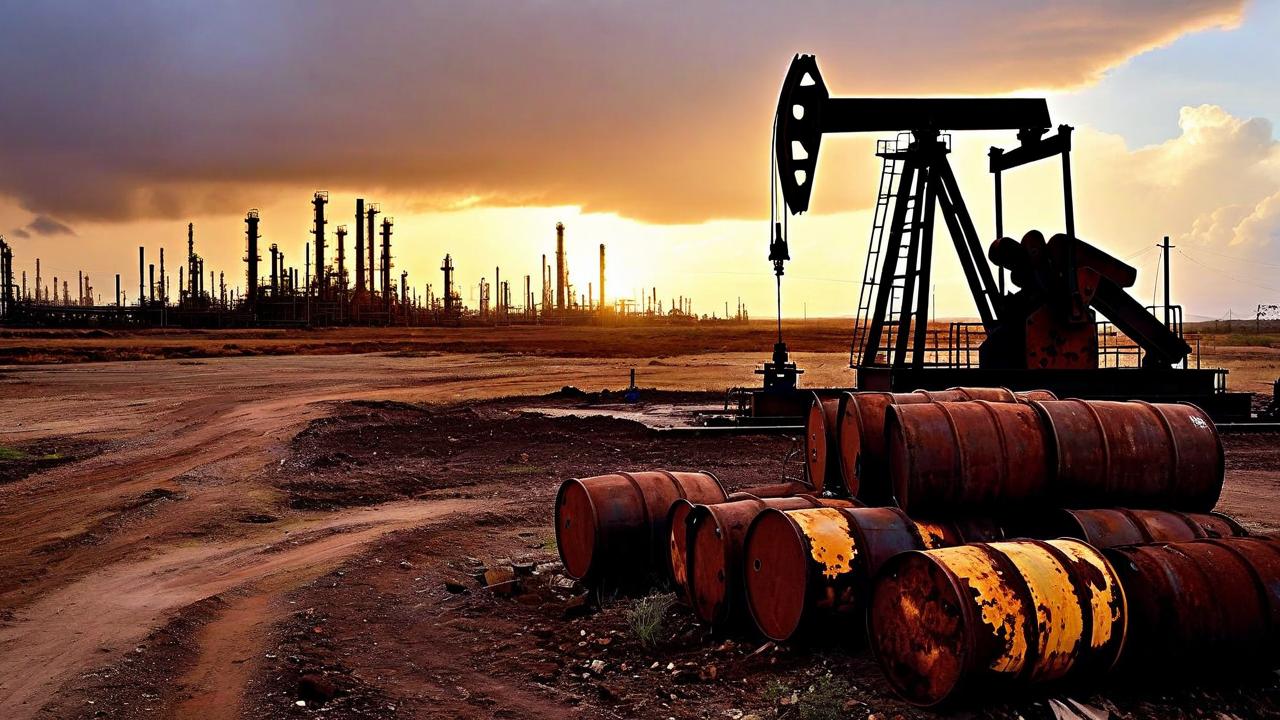

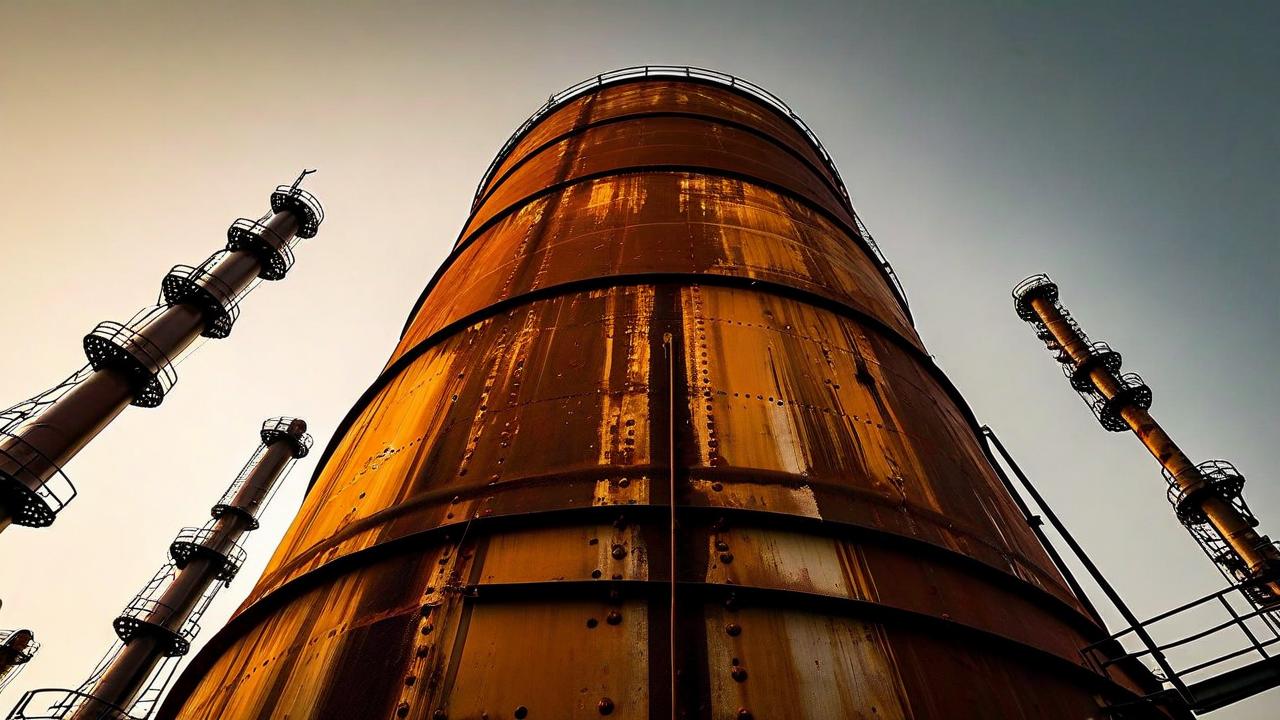
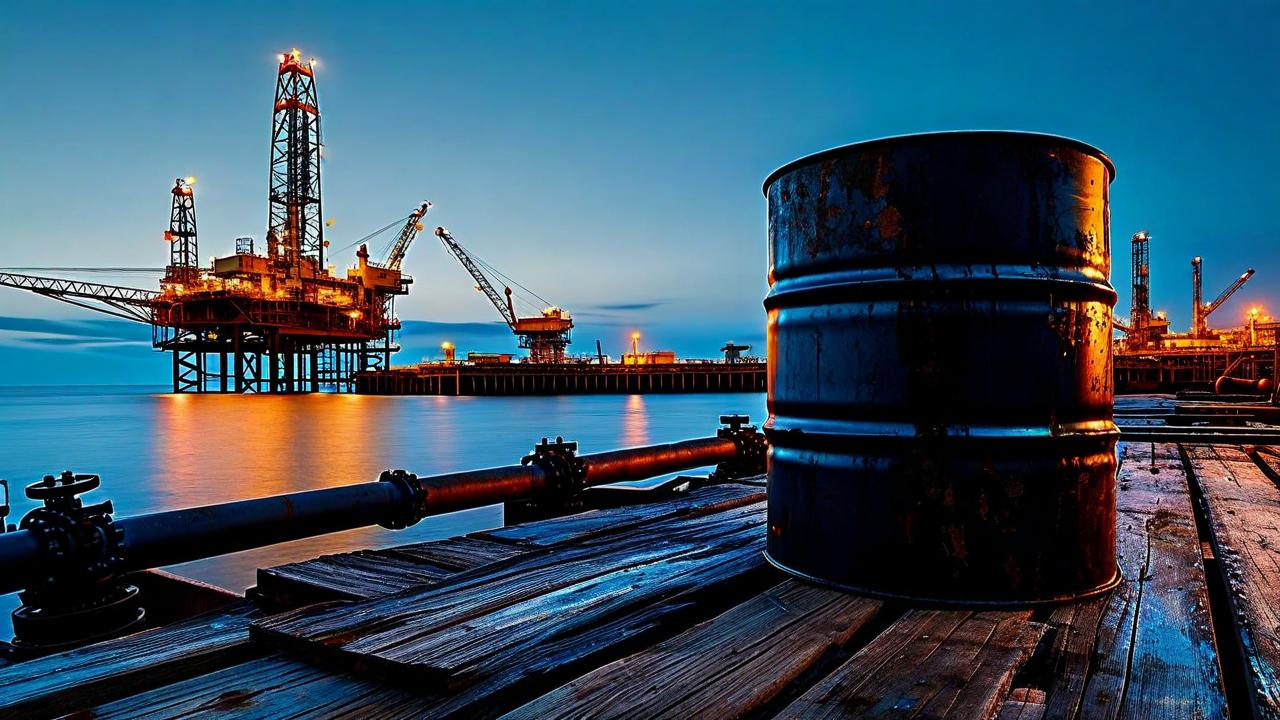
*this image is generated using AI for illustrative purposes only.
GasBuddy analyst Patrick De Haan warned that US refiners are running at near-record capacity, leaving little room to process additional Venezuelan crude. This bottleneck undermines claims that the recent deal will quickly lower gas prices.
Refining Capacity Question
De Haan stated on X on Monday that US refiners are "running at the closest pace to capacity in years." He noted there is no "more room for U.S. refiners to process more oil," whether from Venezuela or elsewhere. Refiners have operated over 95% of capacity all summer long.
The analyst also confirmed that processing Venezuelan heavy, high-sulfur crude requires specialized refinery complexity. This adds another layer of difficulty to increasing throughput in an already constrained system.
| Metric | Detail |
|---|---|
| Refinery Utilization | >95% |
| Crude Type | Heavy, high-sulfur |
| Processing Need | Specialized complexity |
Refilling the Strategic Reserve
President Donald Trump announced on Sunday that the United States will use oil from Venezuela to replenish the Strategic Petroleum Reserve (SPR). He described the move as a "gift" to Americans, blaming former President Joe Biden for having "virtually emptied" the stockpile.
Trump stated on Truth Social that the "topping out" process for the reserve would begin shortly. This follows his Friday announcement that the US had reached an agreement for majority control of more than 65 billion barrels of proven oil reserves in Venezuela. Trump had previously claimed this deal would cost American taxpayers nothing and strengthen ties with Caracas.
Analyst Skepticism on Timeline and Costs
De Haan took to X on Saturday to critique the timeline. "Sounds promising, but it still will take billions of investment to get that oil," he said. He clarified that the 65 billion barrel figure represents geological estimates of what Venezuela may have, which differs significantly from actual SPR inventory.
De Haan emphasized that drilling and pumping these reserves is a long-term process. "Nothing changes overnight or even in months," he added. He also pointed to constrained global refining capacity, noting that even with additional crude supply, the lack of refining infrastructure limits the translation of lower oil prices into lower fuel costs at the pump.
According to US Department of Energy data, the SPR stood at 289.7 million barrels as of August 21. De Haan questioned the validity of the claim, asking how the US could lay claim to a sovereign country’s natural resources.
Complex Crude and High Costs
Not all crude oil is made equal. Venezuelan crude oil from the Orinoco Belt is so dense it is often compared to peanut butter. It has viscosity that needs upgraders, steam injection, diluents, and coking capacity just to move it through the system. Years of underinvestment, sanctions, and instability have left much of that system degraded or idle.
Greenfield development may take seven to 10 years, while Lake Maracaibo assets require repairs before delivering sustained increases, with estimates ranging from $100 billion to $180 billion. Tankers have reportedly waited up to 30 days to load amid power outages, crude-quality issues and limited storage flexibility.
Former Chevron executive Ali Moshiri warned, "The idea is great. The challenge is going to be implementation, human capacity, operational experience."
Deal Details and Market Context
Venezuela’s interim President Delcy Rodriguez confirmed a 25-year energy agreement aimed at raising crude production to 1.5 million barrels per day. The deal covers 17 oilfields and eight new blocks, projected to generate about $209 billion in revenue for Venezuela while preserving national ownership of resources.
The White House and Rodríguez’s interim government have announced a 25- to 100-year project that would give the US majority control over 17 fields containing 65 billion barrels of recoverable reserves. Rodríguez said the project targets more than 1.5 million barrels a day.
It’s clear logic for the US: securing Western Hemisphere barrels far from Middle East uncertainty and rebuilding the Strategic Petroleum Reserve. For refiners along the U.S. Gulf Coast, the prize is equally strategic. Venezuelan crude is an unusually close fit for plants built to process heavy, sour oil.
However, the agreement, even if it survives the politics around it, is no quick fix for fuel prices, and a bet made in one of the world’s most difficult upstream environments.
Opaque Circumstances Create Risk
Venezuela is currently revising its hydrocarbons framework and migrating contracts. According to Reuters, Rodríguez has said the structure complies with Venezuelan law and would leave Caracas with nearly $19 per barrel in taxes and royalties – a sum that Francisco Monaldi, a fellow in Latin American energy policy at Rice University, deemed "incredibly low."
Luisa Palacios of Columbia University warned that the transaction could instead be "further weakening the country’s already fragile institutional framework," while Juan Carlos Apitz, head of Central University of Venezuela’s law faculty, said the agreement could later be challenged in court.
Geopolitical Tensions and Political Backlash
The deal comes as the U.S. launched missile strikes after Iran reportedly prepared to launch rockets carrying sea mines near the Strait of Hormuz. Iran responded by targeting U.S. bases in Jordan. Earlier, Trump imposed sanctions on Iran, calling it an "Economic D-Day" for Tehran.
Sen. Elizabeth Warren (D-Mass.) slammed Trump, accusing him of profiting off the war with Iran. She cited the President’s multi-million-dollar holdings in oil companies like ExxonMobil Holdings Corp (NYSE: XOM) and Chevron Corp (NYSE: CVX), whose stocks grew more than 30% in some cases.
Investment firm Creative Planning’s Chief Marketing Strategist Charlie Bilello also criticized Trump as gas prices remain elevated. Bilello said that the national average gas price remained above $4/gallon, which was a "painful" new record for American consumers.
Out of major producers, Chevron arguably has the clearest path into the new framework. The company is already in negotiations to migrate its joint ventures into Venezuela’s revised energy structure and secure broader operational control. A logical next step would be to expand its flagship Petropiar heavy-crude project into the adjacent Ayacucho 8 block and other Orinoco acreage.
Still, Moshiri noted that the first wave of investment is likely to come from midsize operators and specialized partnerships rather than the biggest names in oil. Repairing brownfield assets in a high-risk jurisdiction takes flexibility, technical focus and a tolerance for uncertainty that many mega-majors lack.
Meanwhile, Exxon Mobil is unlikely to move without formal security guarantees and stronger bilateral legal protections.
Current Fuel and Oil Prices
Gas prices recorded a slight decline on Sunday, with the national average price at $4.0787/gallon, according to AAA data. On Monday, the national average price was $4.0807/gallon. However, the national average remains above $4, well over usual seasonal levels. Trump’s EPA had earlier issued an emergency fuel waiver to allow an early shift to winter blends of gasoline in a bid to decrease fuel costs.
On the oil front, West Texas Intermediate (WTI) crude grew 2.35% to $85.36 at press time, while Brent crude traded at $90.27/bbl.
What the Numbers Show
The divergence between the announced reserve control and immediate market impact highlights structural bottlenecks. While the administration controls access to 65 billion barrels of estimated reserves, the current SPR holds only 289.7 million barrels. Analysts note that converting geological estimates into pump-ready fuel requires billions in capital expenditure and time, suggesting the political announcement may not immediately alleviate the $4+ per gallon gasoline prices driven by the Iran conflict. The estimated $100 billion to $180 billion investment needed for infrastructure repair further underscores the gap between political rhetoric and operational reality. Additionally, with refineries operating above 95% capacity, there is minimal immediate physical room to absorb additional crude supply regardless of its origin.

How might the $100 billion to $180 billion infrastructure investment requirement for Venezuelan assets impact the timeline for any tangible reduction in US gasoline prices?
Given that US refineries are already operating above 95% capacity, what specific operational changes or expansions would be necessary to absorb additional Venezuelan heavy crude without causing bottlenecks?
Could the legal challenges and institutional fragility in Venezuela's hydrocarbon framework deter major oil companies like Exxon Mobil from committing to long-term investments despite the new agreement?
 19
19








 Create Custom Screeners
  Access 200+ Pre-built Filters
  Use 50+ Readymade Screener





