

India's Iron Ore Imports Surge to Seven-Year High Despite Abundant Domestic Reserves


India imported 12.20 million tonnes of iron ore in 2025, nearly double the previous year, reaching a seven-year high despite abundant domestic reserves. JSW Steel accounted for 80% of imports after surrendering Odisha mines, while favorable global pricing below $100 per tonne made imports economically viable. Steel capacity grew 9.50% to 163 million tonnes while domestic ore output rose only 4%, creating supply mismatches compounded by deteriorating domestic ore quality and new high-grade international capacity.


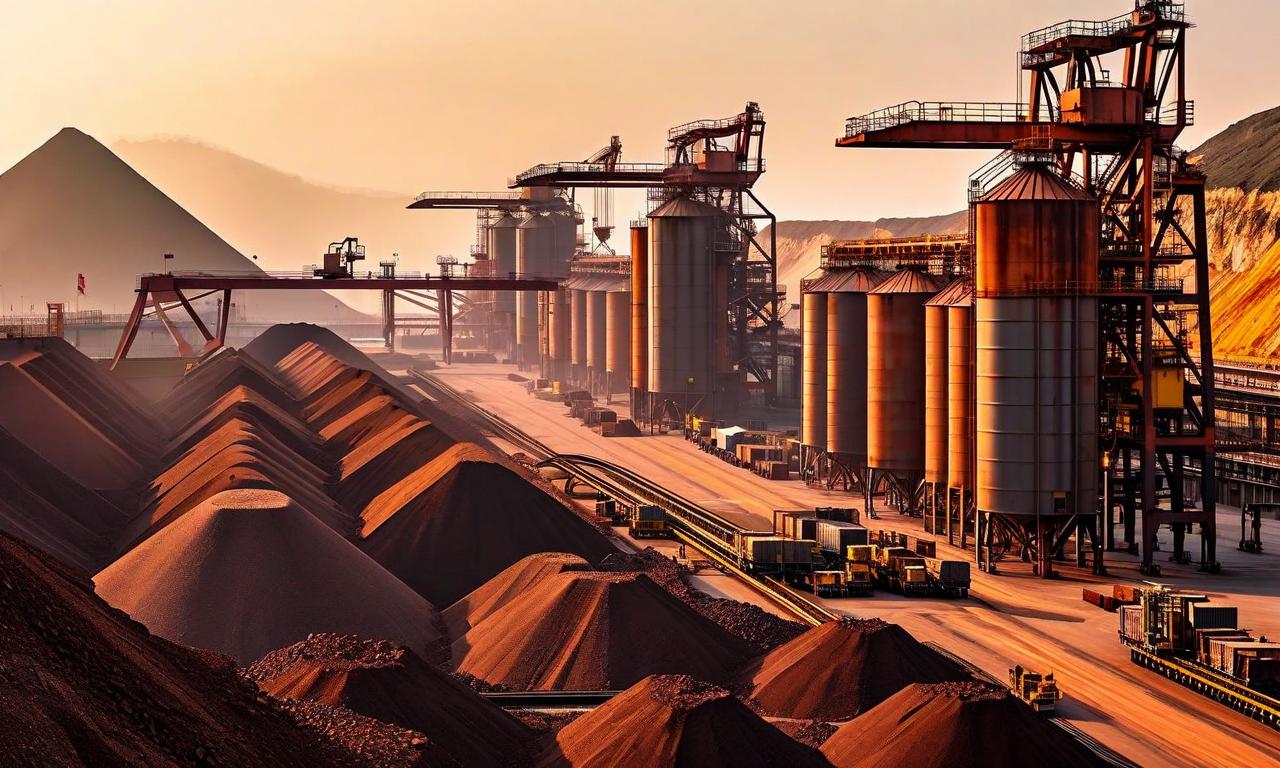
*this image is generated using AI for illustrative purposes only.
India's iron ore imports reached a seven-year high in calendar year 2025, with the country importing 12.20 million tonnes—nearly double the previous year's volume. This surge occurred despite India's abundant domestic iron ore reserves, highlighting complex market dynamics affecting the steel industry. Brazil and Oman emerged as the largest suppliers, while JSW Steel alone accounted for nearly 80% of total imports, according to commodities market intelligence firm Big Mint.
Import Economics Drive Market Shift
The import surge stemmed from company-specific supply constraints and favorable pricing dynamics. JSW Steel became the largest importer after surrendering its Jajang mines in Odisha during 2025, leading to a significant drop in domestic production. To compensate for this shortfall, the company turned to international markets for supply.
Dhruv Goel, CEO of Big Mint, explained that lower global prices made overseas purchases economically attractive. Iron ore prices remained below $100 per tonne at the start of 2025, creating arbitrage opportunities that made imports viable. After accounting for logistics costs, domestic iron ore prices are broadly comparable to imports or only marginally cheaper.
| Key Import Drivers: | Details |
|---|---|
| Primary Importer: | JSW Steel (80% of total imports) |
| Import Volume: | 12.20 million tonnes |
| Price Threshold: | Below $100 per tonne |
| Main Suppliers: | Brazil and Oman |
Imports offer steelmakers the advantage of sourcing large volumes from single mines with uniform quality. In contrast, while NMDC operates under long-term supply agreements, other domestic miners lack capacity to supply bulk cargoes. High transport costs also made it difficult to move pellets from central to western India, forcing west coast steel mills to import iron ore from the Middle East.
Quality Deterioration Compounds Supply Challenges
Experts identify structural deterioration in domestic ore quality as a compounding factor. Niladri N Bhattacharjee, Partner and Metals and Mining Industry Leader at Grant Thornton Bharat, noted that India has experienced rapid deterioration in ore quality, coupled with large high-grade mines from outside India coming into production during 2025.
New international capacity includes the Simandou mega-mines in Guinea, three new mine expansions in Australia, and Vale's Northern Mines. This development keeps availability and pricing of high-grade ore from India tight while maintaining soft international iron ore prices.
| Production vs Capacity Growth: | 2025 Performance |
|---|---|
| Steel Production Capacity: | 163 million tonnes (+9.50%) |
| Domestic Iron Ore Output: | 295 million tonnes (+4.00%) |
| Operational Mines: | ~35 out of 135 auctioned since 2015 |
The mismatch between volume and usability has created supply constraints. Steel production capacity expanded 9.50% to 163 million tonnes in calendar year 2025, while domestic iron ore output rose only 4.00% to 295 million tonnes. Global prices have declined more than 20% since 2023, further tilting economics toward imports.
Policy Challenges and Market Outlook
Since 2015, approximately 135 iron ore mines have been auctioned, but only about 35 are operational. Odisha, Chhattisgarh, Karnataka, Jharkhand, and Maharashtra represent the top five iron ore-producing states. Goel expressed concern that domestic raw material production is lagging while steel production continues increasing, potentially impacting targets under the National Steel Policy.
The government held meetings throughout 2025 to boost iron ore supply and control prices, discussing measures including:
- Reallocating non-operational mines held by Steel Authority of India Ltd and Odisha Mining Corporation Ltd
- Capping auction premiums at 50%
- Linking bids to upfront payments
- Levying export tax on low-grade iron ore
However, resistance from states and steelmakers stalled the process, with a mines ministry committee not meeting for more than four months as of November.
Market Perspectives and Future Trends
Analysts offer differing views on the import surge's implications. Suman Kumar, Assistant Vice-President for metals and mining at Philip Capital, emphasized that no fundamental shortage exists in India, characterizing recent import increases as pricing-driven rather than resource-constrained.
Experts expect imports to remain elevated in the near term. Goel anticipates imports will likely stay high in 2026, though they could ease from 2025 levels as global iron ore prices have moved above $100 per tonne and the rupee has weakened. Bhattacharjee noted that when green-field mines come onstream, ore quality will begin correcting, but until then, Indian ore will continue facing competition from high-grade imported alternatives.
 15
15






 Access 50+ Readymade Screeners
  Use 200+ Custom Filters
  Get Full Market Insights





