Global Cement Production Plateaus as China's Construction Slump Drives 30% Output Decline


Global cement production has plateaued at 4.4 billion tonnes following China's construction sector collapse, with Chinese output declining nearly 30% since 2020. Despite continued industrialization in India, Southeast Asia, and Africa, no combination of markets can offset China's massive production shortfall of approximately 350 million tonnes. This decline offers environmental benefits as cement contributes 8% of global emissions, with limited technological solutions available for carbon reduction.
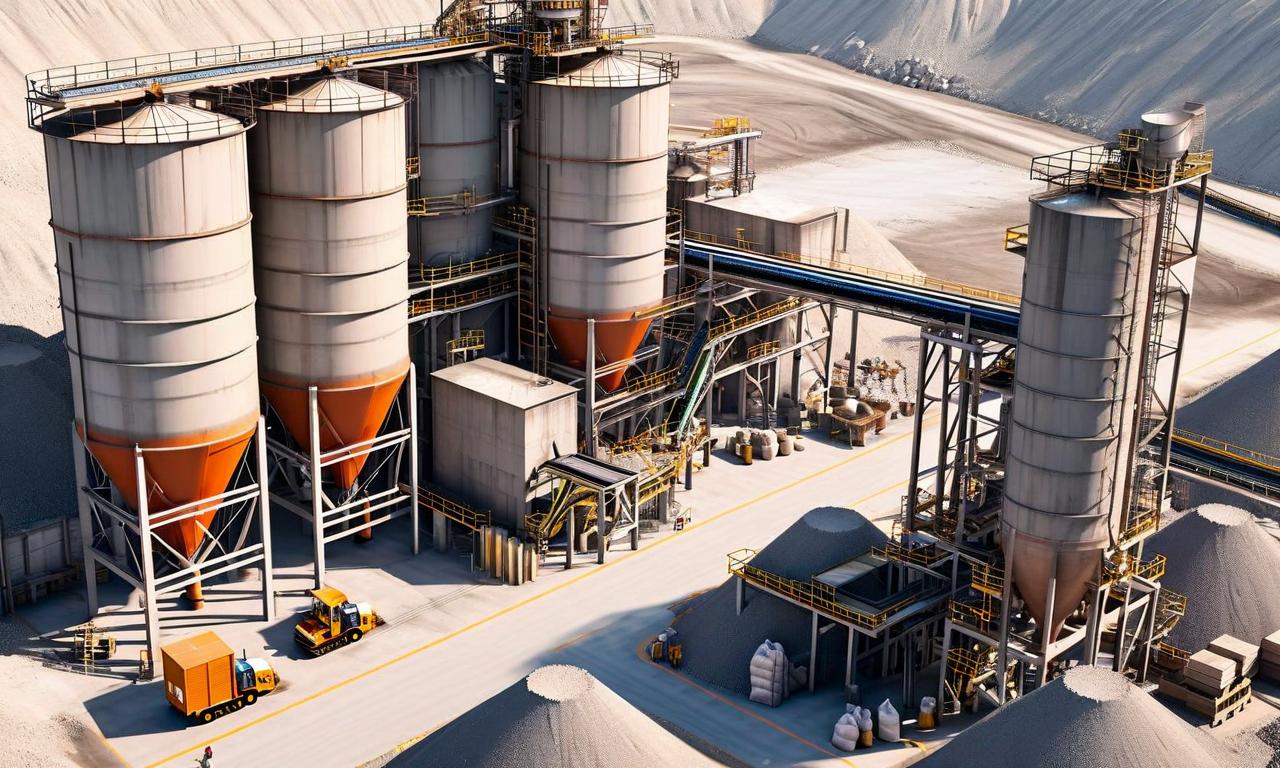

*this image is generated using AI for illustrative purposes only.
Global cement production has reached an unprecedented plateau, driven primarily by China's construction sector downturn that has fundamentally altered the industry landscape. After decades of consistent growth, worldwide cement consumption peaked at 4.4 billion tonnes in 2021 and may never return to those levels despite continued industrialization in developing economies.
China's Dramatic Production Decline
China's cement industry, which has dominated global markets for three decades and still represents nearly half of worldwide output, has experienced a severe contraction. The following data illustrates the magnitude of this decline:
| Metric | Details |
|---|---|
| Output Decline Since 2020 | Nearly 30% |
| Market Capacity Utilization | Factories operating at twice needed capacity |
| Price Levels | Lowest in a decade |
| Projected Decline Period | Sixth consecutive year expected in 2026 |
The floor area of newly-started commercial buildings through December reached its lowest level since 2003, serving as a key leading indicator of continued market weakness. Despite this dramatic reduction, China still produces nearly twice as much cement as it did in 2003.
Consumption Patterns and Global Context
Cement consumption follows unique patterns compared to other commodities. While materials like energy, copper, or plastics see continued growth with rising incomes before plateauing at developed-economy levels, cement consumption drops significantly once countries complete their industrialization phase.
China's cement intensity during its construction boom was extraordinary by global standards:
| Period/Country | Per-Capita Consumption (tonnes annually) |
|---|---|
| China Peak (2014) | 1.80 |
| China Current Levels | 1.20 |
| United States | 0.25 |
| Global Average | 0.30 |
Interestingly, per-capita cement consumption in upper-income countries like the UK matches levels found in low-income nations such as Burkina Faso and Syria, while countries like Albania and Cambodia consume approximately three times more than the United States.
Future Projections and Market Impact
Analysts project continued decline in China's cement consumption, though the pace may moderate. If annual per-capita consumption decline slows from the current 6% average over the past five years to 4% through 2030, China would still maintain consumption levels nearly three times those found in seismically-active Japan.
This scenario would result in:
- 20% output reduction
- Approximately 350 million tonnes decrease in annual production
- An insurmountable shortfall for other markets to fill
Other developing economies cannot compensate for China's production decline:
| Region/Country | Projected Annual Growth |
|---|---|
| Egypt, Indonesia, Turkey, Vietnam | 5-10 million tonnes each |
| India | 40-50 million tonnes |
| China's Projected Decline | 350 million tonnes |
Environmental Implications
The cement industry's plateau presents significant environmental benefits. Cement production accounts for approximately 8% of global annual emissions, with each tonne of cement releasing 0.8 tonnes of carbon dioxide into the atmosphere. The industry processes between 25 billion and 30 billion tonnes annually, roughly three times the volume of global coal extraction.
Technological solutions for reducing cement's carbon footprint remain limited:
- Adding volcanic ash or steel production waste materials to concrete mix reduces emissions by only 5-10%
- Carbon capture and storage technology remains largely theoretical in practical applications
- Rich countries most likely to adopt emission-reduction measures already show declining concrete consumption
The natural decline in cement consumption through economic development and industrialization processes appears to be the most effective path toward reducing the industry's environmental impact, as technological fixes have proven insufficient to address the scale of emissions from this massive global industry.
 17
17