EU Recycling Strategy Faces Setback as Chinese Demand for Aluminium Scrap Surges

2 min read     Updated on 05 Jan 2026, 11:02 AM
scanx
Reviewed by
Radhika SScanX News Team
Overview

The European Union's recycling strategy is encountering challenges as Chinese buyers increasingly acquire aluminium scrap from European markets, potentially undermining the EU's circular economy goals. This trend highlights the global nature of commodity markets and creates supply concerns for European aluminium companies who may face reduced access to recycled raw materials, potentially impacting production costs and sustainability objectives.

29136768

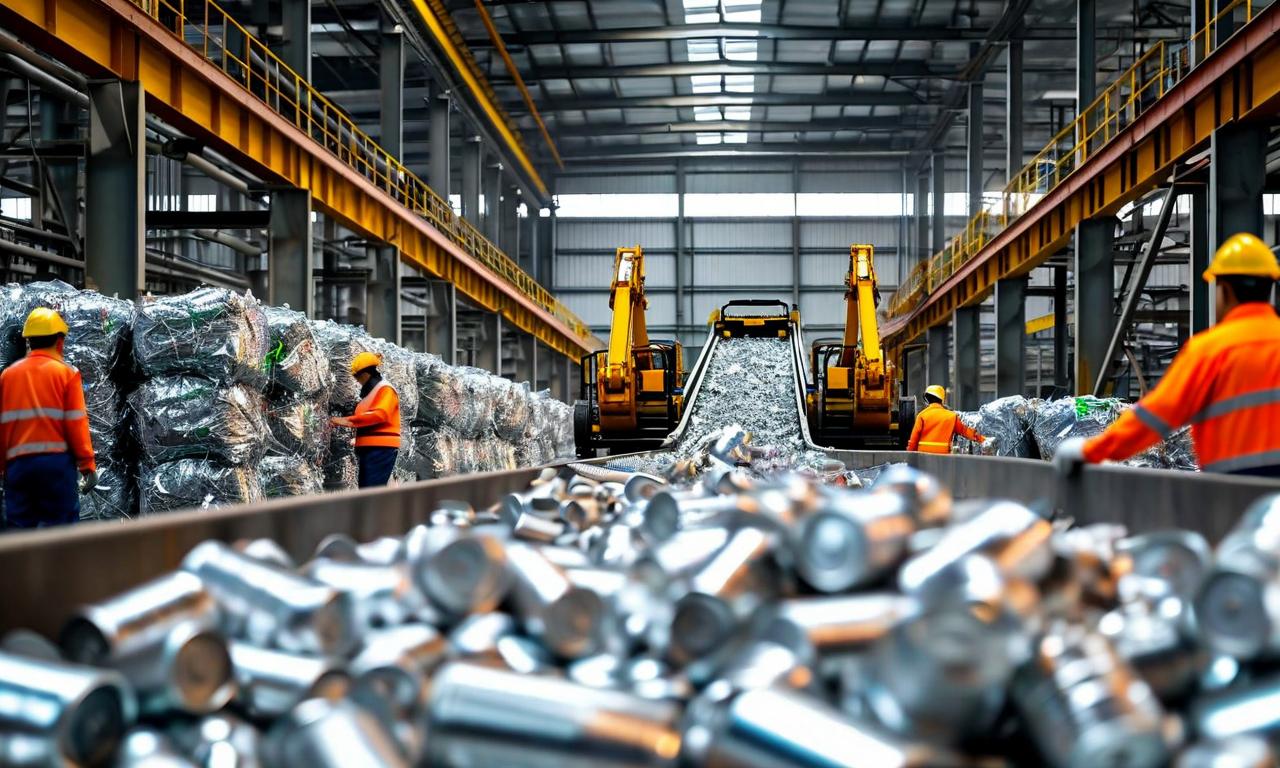
*this image is generated using AI for illustrative purposes only.

The European Union's ambitious recycling strategy is facing an unexpected challenge as Chinese buyers are increasingly snapping up aluminium scrap from European markets, according to recent reports. This development has raised questions about the effectiveness of the EU's circular economy initiatives and their ability to retain recycled materials within the regional market.

Growing Chinese Demand Creates Market Dynamics

Chinese buyers have been actively acquiring aluminium scrap from European sources, creating a competitive market environment that was not anticipated when the EU's recycling policies were formulated. This trend demonstrates the global nature of commodity markets and how international demand can influence regional recycling strategies.

The increased Chinese interest in European aluminium scrap reflects broader market dynamics in the global metals industry. As China continues to be a major consumer of raw materials, including recycled metals, European suppliers are finding attractive opportunities in Asian markets.

Impact on EU Circular Economy Goals

The exodus of aluminium scrap to Chinese markets potentially undermines the EU's circular economy objectives, which aim to keep materials in use within the European economic system for as long as possible. This situation highlights the challenges of implementing regional recycling policies in a globalized commodity market.

European policymakers had envisioned recycled aluminium remaining within EU borders to support local manufacturing and reduce dependence on primary aluminium production. However, market forces and price differentials are directing these materials toward international buyers.

Implications for European Aluminium Industry

The trend could have significant implications for European aluminium companies, including golkonda aluminium , which may face reduced availability of recycled raw materials in their regional markets. This scarcity could potentially impact production costs and force companies to seek alternative sources or rely more heavily on primary aluminium.

European manufacturers may need to reassess their supply chain strategies and consider long-term contracts or other mechanisms to secure access to recycled aluminium. The situation also raises questions about the pricing competitiveness of European buyers compared to their Chinese counterparts.

Market Response and Future Outlook

The aluminium scrap market dynamics reflect broader trends in global commodity trading, where price differentials and demand patterns drive material flows across international borders. European recycling companies are responding to market signals by directing their products to the highest bidders, regardless of geographic location.

This development may prompt EU policymakers to reconsider their approach to recycling regulations and explore mechanisms to retain strategic materials within European markets. The situation demonstrates the complexity of balancing free market principles with regional policy objectives in the commodities sector.

Historical Stock Returns for Golkonda Aluminium

1 Day5 Days1 Month6 Months1 Year5 Years
+8.10%+19.03%+17.95%-21.81%-34.08%+132.56%
Golkonda Aluminium
View in Depthredirect
like18
dislike

Aluminium Prices Rally 23% in 2025 as Supply Constraints Drive Market Optimism

2 min read     Updated on 31 Dec 2025, 02:50 PM
scanx
Reviewed by
Radhika SScanX News Team
Overview

Domestic aluminium prices declined 1.3% to ₹294.60 per kg on MCX amid profit booking, while global markets showed positive momentum with Shanghai contracts gaining 2.7%. The metal has rallied 23% this year, reaching three-year highs due to supply constraints including South32's Mozal smelter shutdown by March 2026 and China's production control measures. Religare analyst forecasts continued uptrend toward ₹308-310 levels, with strong support at ₹280-283, as tight supply fundamentals and growing demand from EVs and infrastructure sectors support prices through early 2026.

28718415

*this image is generated using AI for illustrative purposes only.

Domestic aluminium prices experienced mixed trading patterns on Wednesday, declining 1.3% intraday to hit a low of ₹294.60 per kg on the Multi Commodity Exchange (MCX) amid profit booking activities. This movement contrasted sharply with global aluminium markets, where peers on the Shanghai Futures Exchange and London Metal Exchange maintained positive momentum throughout the trading session.

Current Market Performance

January aluminium futures on MCX were trading near the ₹296.00 per kg mark during the session. Meanwhile, international markets showed stronger performance:

Exchange Price Change
Shanghai Futures Exchange CNY 22,950 per mt +2.70%
London Metal Exchange (3-month) $2,989 per mt +0.08%
MCX (January futures) ₹296.00 per kg Near current levels

Aluminium prices have demonstrated remarkable strength this year, rallying nearly 23% amid positive sentiment for the metal sector driven by persistent demand-supply risks and structural market imbalances.

Supply Constraints Drive Market Optimism

Ajit Mishra, Senior Vice President of Research at Religare Broking, noted that aluminium futures are hovering near the $2,950 per tonne mark in the UK, representing their highest levels in over three years. The metal has posted an impressive 18% increase over the previous year, supported by multiple supply-side developments.

A significant market catalyst emerged from South32 Limited, the major mining and metals company headquartered in Perth, Western Australia. The company announced that its Mozal smelter in Mozambique will be placed under care and maintenance by March 2026 due to its inability to secure a new power agreement. This shutdown is expected to further shrink global aluminium supplies next year, intensifying concerns over an already under-supplied market.

China's Production Control Measures

China, the world's largest aluminium producer, has reiterated its commitment to controlling overcapacity in metal production to manage deflationary pressures affecting manufacturers. The country is set to breach its 45 million tonne output cap this year and is actively discouraging smelters from expanding production capacity in 2026.

These production control measures from the dominant global supplier are expected to maintain tight supply conditions and support price levels across international markets.

Technical Analysis and Trading Strategy

From a technical perspective, aluminium on MCX has witnessed a healthy correction after testing a high of ₹315.15. The broader technical framework clearly indicates continuation of the upward trend in the coming weeks, with prices trading significantly above key exponential moving averages and the upper Bollinger Band level.

Technical Parameter Level/Target
Upside Target ₹308.00 - ₹310.00
Support Base ₹280.00 - ₹283.00
Buy Above ₹290.00
Stop Loss Below ₹280.00

Mishra recommends looking for stability above ₹290.00 for buying opportunities, with target objectives of ₹305.00 to ₹308.00 and maintaining stop loss levels below ₹280.00.

2026 Market Outlook

The broader market landscape indicates that tighter supply fundamentals will likely keep aluminium prices elevated through early 2026, with markets potentially transitioning into deficit conditions. Key bullish price drivers include smelter risks, low inventory levels, and structural supply constraints.

Demand growth remains consistent across multiple sectors including electric vehicles, renewable energy infrastructure, packaging, and electrification projects. Limited availability in London Metal Exchange warehouses provides another positive indicator for the metal's price trajectory.

Unless weaker macroeconomic cycles dominate market sentiment or adverse tariff impacts and trade policy shifts emerge, the primary price outlook remains positive for aluminium through the first half of 2026.

Historical Stock Returns for Golkonda Aluminium

1 Day5 Days1 Month6 Months1 Year5 Years
+8.10%+19.03%+17.95%-21.81%-34.08%+132.56%
Golkonda Aluminium
View in Depthredirect
like17
dislike
More News on Golkonda Aluminium
Explore Other Articles
9.07
+0.68
(+8.10%)