Unsold Homes Up 4% In 2025 Across Top Seven Cities As New Supply Outstrips Demand

2 min read     Updated on 04 Jan 2026, 04:20 PM
scanx
Reviewed by
Radhika SScanX News Team
Overview

Real estate consultant Anarock Capital reported a 4% increase in unsold housing inventory across seven major Indian cities, reaching 5.77 lakh units in 2025. The rise was attributed to tapered demand and increased new supply, with housing sales falling 14% while new supply grew 2%. Bengaluru saw the highest increase at 23%, while Mumbai and Hyderabad managed to reduce their unsold stock.

29069421

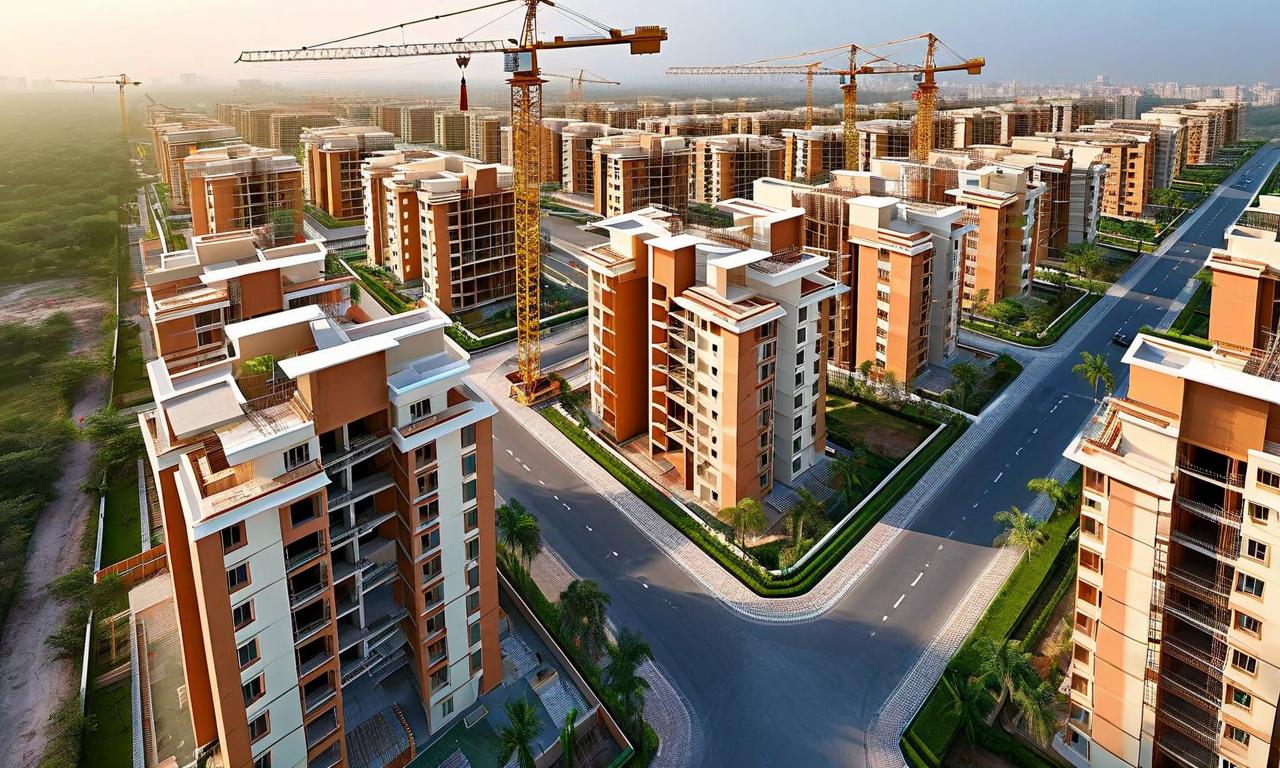
*this image is generated using AI for illustrative purposes only.

Unsold housing inventory across India's seven major cities increased 4% in 2025, reaching nearly 5.77 lakh units as new supply continued to outpace demand, according to data released by real estate consultant Anarock Capital. The imbalance between supply and demand has created a challenging market environment for developers and homebuyers alike.

Market Overview and Key Statistics

The comprehensive analysis of the primary residential market revealed significant shifts in housing dynamics across major metropolitan areas. Anarock Capital's data demonstrates the growing gap between what developers are building and what consumers are purchasing.

Metric: 2025 2024 Change (%)
Unsold Housing Units: 5,76,617 units 5,53,073 units +4%
Housing Sales: 3,95,625 units 4,59,564 units -14%
New Supply: 4,19,170 units 4,10,951 units +2%

The data indicates that while new supply grew modestly at 2%, housing sales experienced a sharp 14% decline, contributing to the accumulation of unsold inventory. Anarock Capital explained that the annual rise in unsold inventory was "largely because of tapered demand and increased new supply in the year."

City-wise Performance Analysis

The unsold housing stock showed varied performance across different cities, with some markets experiencing significant increases while others managed to reduce their inventory levels.

Northern and Western Markets

Delhi-NCR recorded a 5% increase in unsold housing stock, rising to 90,455 units from 85,901 units in the previous year. The National Capital Region continues to face challenges with demand absorption despite being one of India's largest real estate markets.

Mumbai Metropolitan Region (MMR) bucked the overall trend with a marginal 1% decline in unsold homes, dropping to 1,79,228 units from 1,80,964 units. This performance suggests relatively better demand-supply balance in the financial capital.

Southern Markets Show Mixed Results

Bengaluru experienced the most significant increase among all cities, with unsold housing stock surging 23% to 64,863 units from 52,807 units. This substantial rise indicates potential oversupply concerns in India's IT capital.

City: 2025 Unsold Units 2024 Unsold Units Change (%)
Bengaluru: 64,863 52,807 +23%
Chennai: 33,434 28,423 +18%
Hyderabad: 96,140 97,765 -2%
Pune: 83,491 80,672 +3%
Kolkata: 29,007 26,542 +9%

Chennai also showed a notable 18% increase in unsold inventory, reaching 33,434 units from 28,423 units. In contrast, Hyderabad managed to reduce its unsold homes by 2% to 96,140 units from 97,765 units, demonstrating better market absorption.

Pune recorded a modest 3% increase to 83,491 units from 80,672 units, while Kolkata saw a 9% rise to 29,007 units from 26,542 units.

Market Outlook and Future Expectations

Regarding the market outlook, Anarock Capital believes that demand should rise with lower interest rates on home loans, provided housing prices remain under control. The current inventory buildup stems from the combination of tapered demand and increased new supply throughout the year.

The market dynamics indicate that developers may need to reassess their launch strategies and pricing models to better align with current demand patterns. The 14% decline in sales alongside continued new supply additions highlights the need for more calibrated market approaches in the coming period.

like17
dislike

India's Office Market Achieves Record Leasing in 2025 as Flexible Workspaces Drive Growth

3 min read     Updated on 31 Dec 2025, 04:18 PM
scanx
Reviewed by
Shriram SScanX News Team
Overview

India's office market is set to achieve record leasing of over 80 million square feet in 2025, with flexible workspaces contributing 20% of total activity. The flex segment has grown from 34 million square feet in 2019 to nearly 100 million currently, projected to exceed 144 million within two years. This performance contrasts sharply with declining office markets in the US, Europe, and other Asia-Pacific regions, establishing India as a global outlier in commercial real estate.

28723727

*this image is generated using AI for illustrative purposes only.

India's office real estate market has emerged as a standout performer in 2025, delivering record-breaking leasing activity while major global markets face weak demand and economic uncertainty. The market's exceptional performance is largely attributed to the rapid expansion of flexible workspaces, which have transformed from niche solutions to integral components of corporate real estate strategies.

Record-Breaking Leasing Performance

According to Gulam Zia, Executive Director at Knight Frank, India's office leasing activity is positioned to close well above 80 million square feet in calendar year 2025. This achievement represents one of the strongest years on record for the Indian office market. The performance becomes even more remarkable when viewed against the backdrop of struggling global office markets.

Market Segment Contribution Significance
Total Office Leasing 80+ million sq ft Record-breaking annual performance
Flexible Workspaces ~20% of total leasing Key growth engine
Global Comparison Outperforming Contrasts with US, Europe decline

Dramatic Expansion of Flexible Workspaces

The flexible workspace segment has experienced unprecedented growth over recent years, fundamentally reshaping India's office landscape. The expansion reflects deeper structural changes in corporate space utilization strategies, moving beyond traditional long-term lease models.

Timeline Flex Space Footprint Growth Trajectory
2019 34 million sq ft Starting baseline
Current (2025) ~100 million sq ft Nearly 3x growth
Next 2 Years (Projected) 144+ million sq ft Continued expansion

Zia emphasized that flexible spaces have evolved significantly in their market positioning. "Flex is no longer a niche or stop-gap solution. It has become an integral part of corporate real estate strategy, especially for companies looking for scalability, speed-to-market and cost flexibility," he explained.

India's Contrarian Market Performance

While office markets across developed economies struggle with remote-working trends and economic headwinds, India continues to demonstrate robust growth. The contrast is particularly stark when compared to other major markets globally.

Office markets in the United States and Europe have been significantly impacted by changing work patterns and economic uncertainty. Even within the Asia-Pacific region, markets including China, Singapore, Australia, and Hong Kong have experienced either contraction or flat growth in office absorption. "India clearly stands out," Zia noted. "Despite global headwinds, office demand here has grown spectacularly year-on-year, and this momentum is expected to continue."

Diversified Demand Drivers

The strength of India's office market stems from multiple demand sources, providing resilience against global volatility. While Global Capability Centres (GCCs) remain significant contributors to office absorption, the market has benefited from increasing diversification.

Zia highlighted the growing importance of domestic demand: "The demand is no longer only global-facing. Strong domestic growth is also supporting office leasing, which is a very healthy sign for the sector." This diversification particularly benefits flexible workspace operators, who can serve both multinational corporations and domestic businesses effectively.

Supply-Side Dynamics Supporting Growth

Market dynamics have been influenced by developer preferences shifting toward residential projects, particularly in the luxury segment. This shift has created supply constraints in the office sector while inadvertently supporting flexible workspace expansion.

"As residential became the low-hanging fruit, office development slowed. This supply-side constraint has indirectly supported flex spaces, which can respond quickly to occupier needs without waiting for large new office completions," Zia explained. The ability of flexible workspace operators to adapt existing spaces and respond rapidly to market demand has proven advantageous in this environment.

Strong Outlook for Continued Growth

Knight Frank maintains an optimistic outlook for India's office market, particularly the flexible workspace segment. The combination of sustained demand, limited new office supply, and India's strengthening position as both a global and domestic business hub creates favorable conditions for continued outperformance.

"The fundamentals are firmly in place," Zia concluded. "India's office story—and especially the flex space segment—remains one of the brightest spots in global commercial real estate." The market's resilience and growth trajectory position it favorably for continued expansion over the coming years.

like17
dislike
Explore Other Articles
Power Mech Projects Subsidiary Secures ₹1,563 Crore BESS Contract from WBSEDCL 6 hours ago
Elpro International Acquires Additional Stake in Sundrop Brands for ₹39.18 Crores 6 hours ago
Transformers & Rectifiers Targets ₹8000 Crore Order Book by FY26 End 7 hours ago
Reliance Industries Schedules Board Meeting for January 16, 2026 to Approve Q3FY26 Financial Results 9 hours ago
Krishival Foods Limited Completes Rights Issue Allotment of 3.33 Lakh Partly Paid-Up Equity Shares 8 hours ago
Raymond Realty Board Approves Employee Stock Option Plan 2025 Following Demerger 8 hours ago