

Quick Commerce Transforms Indian Fashion Retail with 30-Minute Delivery Models


India's quick commerce sector is rapidly expanding into fashion retail, with startups like Zilo and established players like Myntra offering 30-minute clothing delivery. Myntra operates over 80 dark stores with 20% customer adoption in metros, while brands like Snitch use physical stores for rapid fulfillment. The sector faces unique challenges around sizing and returns, requiring higher average order values of ₹2,000+ for profitability compared to grocery delivery.

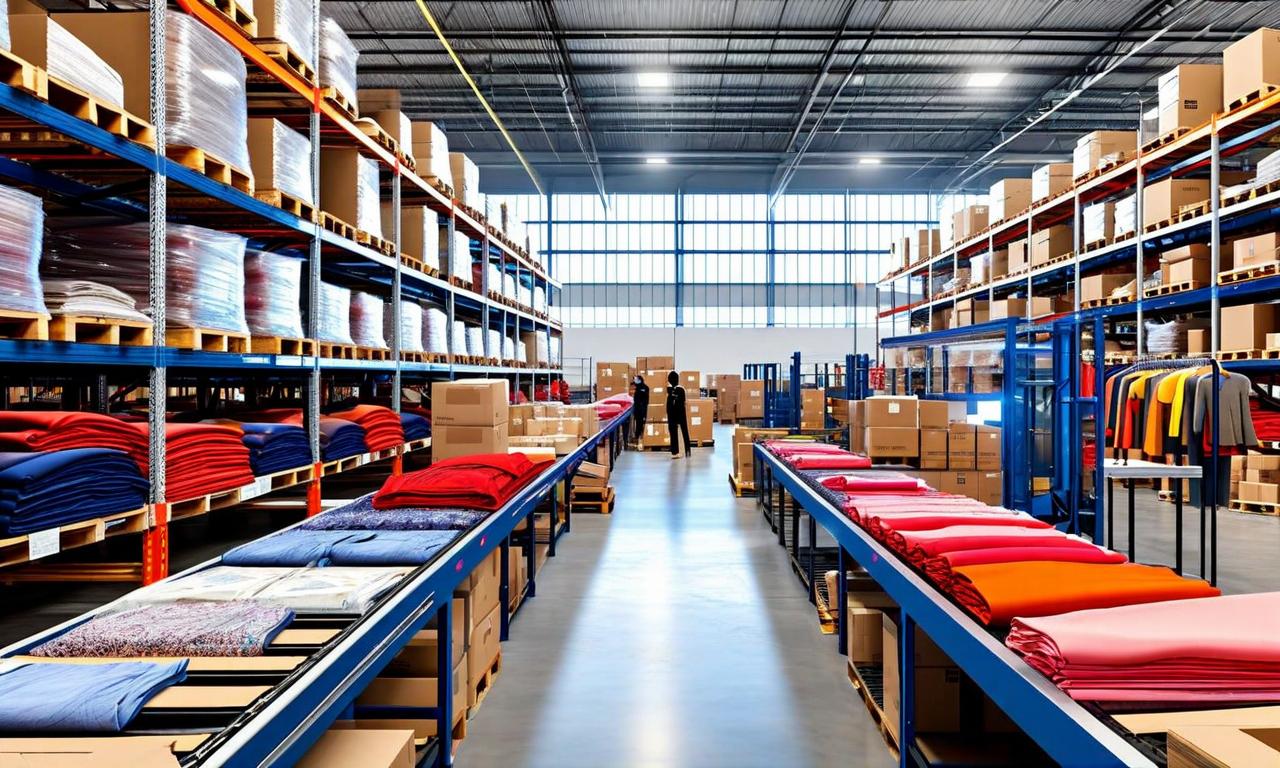

*this image is generated using AI for illustrative purposes only.
India's quick commerce revolution is expanding beyond groceries and essentials into fashion retail, as startups and established platforms race to deliver clothing within 30 minutes. This shift represents a fundamental change in how Indian consumers approach fashion shopping, moving from planned purchases to instant gratification.
Market Players and Business Models
Two distinct business models are emerging in the fashion quick commerce space. Fashion startups including Zilo, Knot, and Zulu Club are pioneering marketplace-led approaches built around dark stores, while D2C brands like NEWME and Snitch are adopting brand-led models that utilize existing physical store inventory for rapid fulfillment.
| Business Model | Key Players | Approach |
|---|---|---|
| Marketplace-led | Zilo, Knot, Zulu Club | Dark store network |
| Brand-led | NEWME, Snitch | Physical store inventory |
| Established platforms | Myntra M-Now, Ajio Rush | Hybrid approach |
Established e-commerce giants are also moving aggressively into this space. Myntra has launched M-Now with over 80 dark stores across major metros, while Flipkart's Ajio has introduced Ajio Rush to compete in the rapid fashion delivery segment.
Consumer Adoption and Market Response
The shift in consumer behavior is becoming increasingly evident across Indian metros. Padmakumar Pal, Co-Founder and CEO of Zilo, explains that shopping patterns have fundamentally changed: "What behaviour we have seen is, let's shift in how customer shops fashion. They're not doing planned shopping. They are doing fashion shopping instantly. They don't need to plan. They can buy fashion instantly and this the convenience and experience which is actually helping this customer to basically shift to this new way of shopping."
Myntra's market penetration demonstrates strong early adoption, with Sai Deo, Head of Strategy at Myntra, reporting that nearly 20% of customers in metro cities are already using the M-Now service. This adoption rate indicates significant consumer appetite for instant fashion delivery.
Operational Challenges and Solutions
Fashion quick commerce faces unique operational complexities compared to grocery delivery, particularly around sizing, trials, and returns. Different players are adopting varied approaches to address these challenges:
Technology-Driven Solutions
Some platforms are investing heavily in technology to minimize sizing issues and improve customer experience through better product visualization and sizing algorithms.
Try-at-Home Models
Anoop N Menon of Chiratae Ventures believes bunched try-at-home orders can improve unit economics by allowing customers to try multiple items before purchase. However, this approach faces skepticism from some industry leaders.
Store-as-Warehouse Strategy
Snitch is leveraging its dense physical store network by converting backroom inventory into quick fulfillment centers. Aniket Singh, Chief Business Officer at Snitch, notes: "We are trying to run our stores almost or the backroom of our stores like a warehouse," with picking times reduced to within three minutes.
Economic Viability and Investment Perspective
The financial sustainability of fashion quick commerce requires different economics compared to grocery delivery. Investors emphasize that successful fashion quick commerce platforms need significantly higher average order values to achieve profitability.
| Parameter | Fashion Quick Commerce | Grocery Quick Commerce |
|---|---|---|
| Required AOV | ₹2,000+ | Lower threshold |
| Return complexity | High | Low |
| Trial requirements | Essential | Not applicable |
Sumit Jasoria, Co-Founder and CEO of NEWME, acknowledges the economic pressures while emphasizing market demand: "It's instant gratification, but that's the need of the hour." However, he dismisses try-and-buy models as "a waste of time" that makes little economic sense.
Future Outlook
The fashion quick commerce sector is still in its early stages, but the rapid adoption rates and significant investment from major players suggest this trend will continue expanding. Success in this space will likely depend on three critical factors: achieving scale, building dense demand clusters, and perfecting last-mile execution.
Myntra's expansion plans beyond its current 80 dark stores indicate confidence in the model's long-term viability, while the entry of multiple startups suggests a competitive landscape is forming. The sector's evolution will likely determine which business model—marketplace-led or brand-led—proves more sustainable in the Indian market.
 16
16





 Create Custom Screeners
  Access 200+ Pre-built Filters
  Use 50+ Readymade Screener





