Promoters Increase Stakes in Adani Ports, Sundrop Brands, and NDTV During Q3FY26

2 min read     Updated on 13 Jan 2026, 10:02 AM
scanx
Reviewed by
Riya DScanX News Team
Overview

Promoters increased their stakes in three major companies during Q3FY26, with Adani Ports seeing a 2.13% rise to 68.02%, Sundrop Brands experiencing the largest increase of 4.99% to 38.91%, and NDTV promoters boosting their holding by 4.31% to 69.02%. These moves demonstrate enhanced confidence in long-term business fundamentals across port operations, FMCG, and media sectors, despite minor share price declines on the trading day.

29824349

*this image is generated using AI for illustrative purposes only.

Promoter groups demonstrated increased confidence in their companies' long-term prospects during Q3FY26, with notable stake increases across three major listed entities. The enhanced ownership levels signal strengthened belief in business fundamentals and future growth trajectories, while also improving alignment between promoter and shareholder interests.

Adani Ports Sees Steady Promoter Confidence

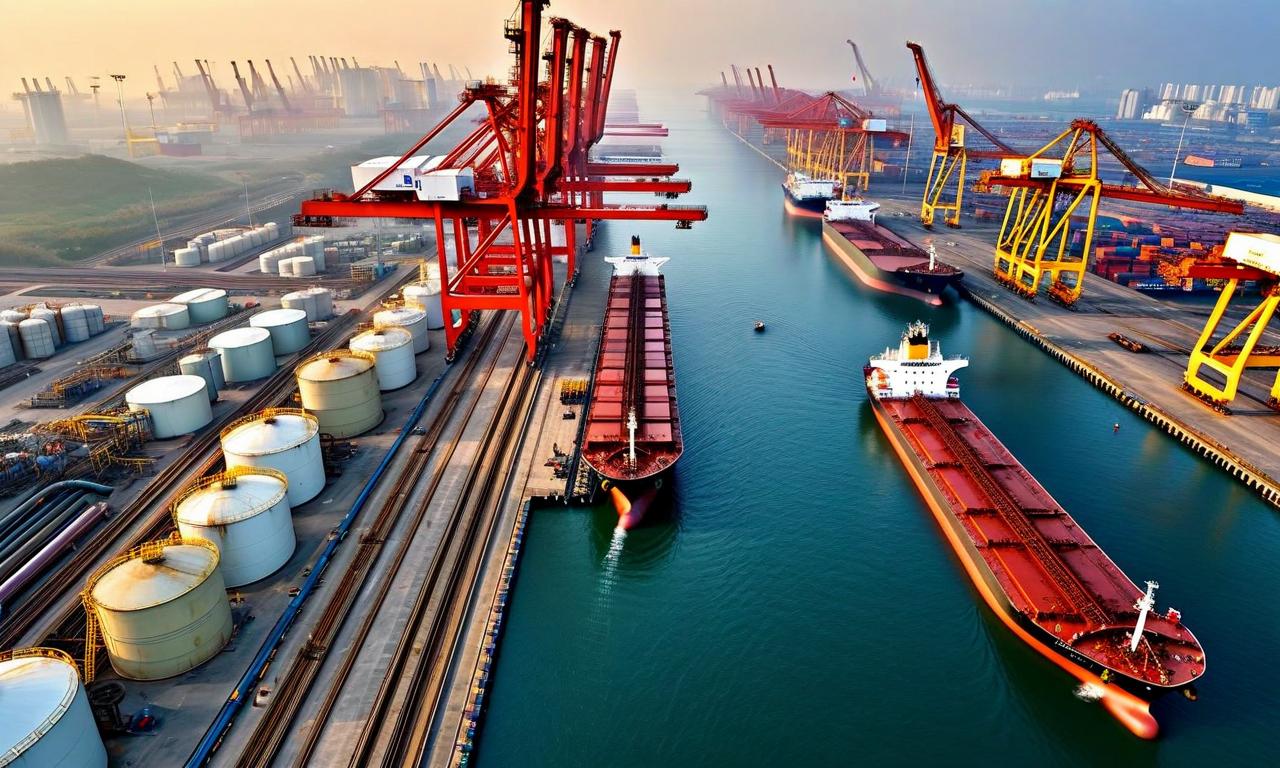
Adani Ports & Special Economic Zone Ltd, India's largest integrated ports and logistics company, witnessed its promoters increase their stake by 2.13 percentage points during the quarter. The company operates an extensive network of ports across India's coastline and plays a critical role in trade facilitation, cargo handling, and logistics infrastructure development.

Parameter: Details
Market Capitalisation: ₹3,10,962.80 crores
Share Price: ₹1,439.55
Promoter Stake Q2FY26: 65.89%
Promoter Stake Q3FY26: 68.02%
Stake Increase: 2.13%

The company's shareholding structure shows retail investors holding 4.99%, domestic institutional investors owning 13.89%, and foreign institutional investors maintaining 13.10% of the total equity.

Sundrop Brands Records Largest Promoter Increase

Sundrop Brands Ltd, operating in the fast-moving consumer goods sector with focus on edible oils and food products, experienced the most significant promoter stake enhancement among the three companies. The promoters increased their holdings by 4.99 percentage points, demonstrating strong conviction in the company's brand-led growth strategy and distribution expansion plans.

Parameter: Details
Market Capitalisation: ₹2,582.23 crores
Share Price: ₹685.00
Promoter Stake Q2FY26: 33.92%
Promoter Stake Q3FY26: 38.91%
Stake Increase: 4.99%

The company's ownership structure reveals retail investors as the largest shareholder group at 55.36%, followed by domestic institutional investors at 5.33% and foreign institutional investors holding 0.40%.

NDTV Promoters Strengthen Media Presence

New Delhi Television Ltd, the prominent Indian news broadcaster known for its television journalism legacy, saw its promoters increase their stake by 4.31 percentage points. The move reflects confidence in the company's ability to adapt to the evolving media landscape and changing viewer consumption patterns.

Parameter: Details
Market Capitalisation: ₹1,054.35 crores
Share Price: ₹93.45
Promoter Stake Q2FY26: 64.71%
Promoter Stake Q3FY26: 69.02%
Stake Increase: 4.31%

Retail investors constitute 30.92% of the shareholding, while domestic institutional investors hold no stake and foreign institutional investors maintain a minimal 0.05% ownership.

Market Performance and Investor Implications

Despite the increased promoter confidence, all three companies experienced minor share price declines on the trading day. Adani Ports shares decreased by 0.30%, Sundrop Brands fell by 0.25%, and NDTV declined by 1.50% compared to their previous closing prices. The promoter stake increases across these diverse sectors—port operations, FMCG, and media broadcasting—indicate positive long-term outlook despite short-term market fluctuations and mixed trading conditions.

like15
dislike

SEZ Duty Relief Debate Intensifies as Industry Pushes for Manufacturing Flexibility Ahead of Budget 2026

3 min read     Updated on 09 Jan 2026, 09:37 AM
scanx
Reviewed by
Ashish TScanX News Team
Overview

Industry bodies are demanding customs duty relief for SEZ domestic sales ahead of Budget 2026, arguing current rules create competitive imbalances undermining Make in India initiatives. While proponents advocate for duty payments only on imported input portions, policy experts warn against distorting tariff parity and disadvantaging domestic manufacturers. With SEZs generating ₹170.00 billion in exports, the government faces a critical decision on evolving SEZ frameworks versus maintaining export-focused structures.

29477246

*this image is generated using AI for illustrative purposes only.

As industry stakeholders finalize their wishlist for the Union Budget 2026, a contentious debate has emerged over customs duty relief for Special Economic Zone (SEZ) units selling goods into the domestic market. The proposal has divided industry leaders and policy experts, highlighting fundamental questions about India's manufacturing strategy and trade policy direction.

Current SEZ Duty Structure Creates Competitive Challenges

Under existing regulations, SEZ units face a complex duty structure that industry bodies argue creates significant competitive disadvantages. While domestic manufacturers can supply raw materials and inputs to SEZ units without restrictions, finished or semi-finished goods sold by SEZs into the domestic tariff area attract full import duties.

Current SEZ Framework: Details
Domestic to SEZ Supply: No restrictions on raw materials/inputs
SEZ to Domestic Sales: Full import duties applicable
SEZ Import Benefits: Duty-free imports for manufacturing
Export Performance: Approximately ₹170.00 billion in previous year

Industry representatives contend this structure undermines India's manufacturing competitiveness, particularly as the country pursues aggressive growth under Make in India initiatives while simultaneously expanding its free trade agreement portfolio.

Industry Advocates for Targeted Duty Reform

Aurag Sehgal, Principal at Price Waterhouse & Co LLP, articulates the industry's position as a measured approach aligned with government policy objectives. According to Sehgal, SEZ units should pay customs duty only on the portion of inputs that were imported duty-free, rather than on the entire value of goods cleared into the domestic market.

Sehgal emphasizes that this demand must be viewed within India's evolving trade and manufacturing ecosystem. With multiple FTAs being negotiated and signed, companies are fundamentally re-evaluating supply chains and manufacturing locations. In this environment, he argues, SEZs should realize their full potential not just as export enclaves but as competitive manufacturing hubs supporting domestic industry.

The approach was previously envisaged under the proposed DESH Bill, which sought to replace the SEZ Act but has remained stalled. While the Bill included both procedural and fiscal reforms, the government has already implemented regulatory easing by amending SEZ rules, including relaxing land requirements for priority sectors such as semiconductors and electronics.

Policy Experts Raise Tariff Parity Concerns

Former Central Board of Indirect Taxes and Customs (CBIC) chairman Najib Shah presents strong opposition to the industry's demand, cautioning against diluting SEZs' original purpose. Shah emphasizes that SEZs were created as specialized export-oriented zones designed to overcome India's domestic infrastructure, logistics, and regulatory constraints.

These zones already enjoy significant advantages not available to domestic tariff area manufacturers:

  • Duty-free imports for manufacturing purposes
  • Easier compliance norms and regulatory procedures
  • Superior infrastructure and logistics facilities
  • Streamlined export-oriented operational framework

Shah argues that allowing SEZ units to sell into the domestic market at lower duty rates would distort tariff parity and disadvantage domestic manufacturers who operate without similar benefits. He distinguishes between FTAs and SEZs, noting they serve different policy objectives—FTAs focus on tariff reduction and market access, while SEZs enable competitive exports through frictionless manufacturing environments.

Export Performance Supports Current Framework

Shah points to SEZ export performance as evidence that the zones continue delivering on their core mandate, with export numbers reaching approximately ₹170.00 billion in the previous year. This performance suggests SEZs can complement FTAs by producing competitive export goods rather than seeking preferential domestic market access.

Critical Policy Decision Ahead of Budget 2026

The debate highlights a fundamental policy question confronting the government: whether SEZs should evolve beyond their export-first design to support India's broader manufacturing ambitions, or whether maintaining tariff parity and original export focus remains critical for protecting domestic industry.

With Budget 2026 discussions intensifying, the government must balance industry calls for manufacturing flexibility against concerns over revenue impact and competitive fairness. The decision—whether involving targeted duty adjustments, further procedural reforms, or maintaining the status quo—will likely shape SEZs' future role in India's trade and industrial strategy.

like19
dislike
More News on adani ports and special economic zone
Explore Other Articles