NewsStocksIndia's Office Market Posts Record 61 Million Sq Ft Absorption in 2025; Strong Tailwinds for REITs
India's Office Market Posts Record 61 Million Sq Ft Absorption in 2025; Strong Tailwinds for REITs


India's office real estate market achieved record net absorption of 61.4 million sq ft in 2025, up 25% YoY, led by Bengaluru's 14.4 million sq ft and Delhi NCR's 10.9 million sq ft. GCCs drove 33% of leasing at 29.3 million sq ft, while gross leasing reached 88.7 million sq ft. Despite 53 million sq ft of new supply, vacancy rates fell 210 basis points. Rental growth of 12-14% in Mumbai and Hyderabad strengthens REIT outlook with improved cash flows and yield stability.

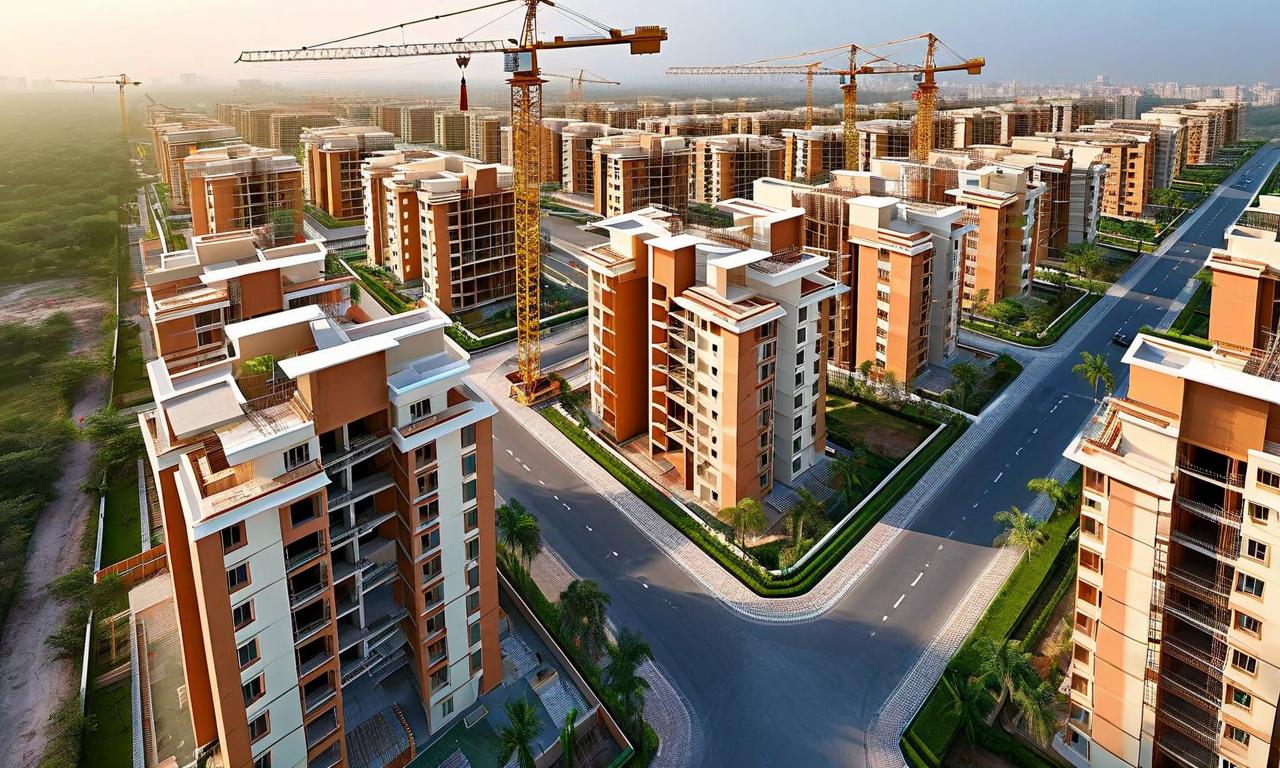
*this image is generated using AI for illustrative purposes only.
India Real Estate Market closed 2025 with its strongest performance on record, achieving net absorption of 61.4 million square feet across the top eight cities, up 25% year-on-year, according to Cushman & Wakefield's Q4 MarketBeat report. The milestone year signals improving cash-flow visibility, tightening vacancies and sustained rental upside for capital markets and listed office REITs.
Net absorption comfortably surpassed the 49.1 million square feet absorbed in 2024, with the acceleration coming despite a sharp rise in new supply. This performance underscores the depth of demand and reinforces the structural strength of India's office market at a time when global commercial real estate remains under pressure.
Core Markets Drive Record Absorption
Bengaluru continued to anchor demand, recording the highest net absorption across all cities. Delhi NCR followed as the second-largest contributor, driven by strong leasing momentum across established business districts.
| City | Net Absorption (Million Sq Ft) | Share of Total |
|---|---|---|
| Bengaluru | 14.40 | 23% |
| Delhi NCR | 10.90 | 18% |
| Mumbai | 9.60 | 16% |
| Hyderabad | 9.10 | 15% |
| Pune | 8.20 | 13% |
| Chennai | 7.00 | 11% |
Chennai emerged as the standout performer, recording a sharp 187% year-on-year jump in net absorption to 7.00 million square feet, highlighting its growing relevance as companies diversify their India office footprint. Mumbai, Hyderabad and Pune also posted solid absorption levels, reflecting sustained occupier activity across technology, BFSI and manufacturing-led demand.
Leasing Momentum Supports Growth Thesis
Gross leasing volumes remained resilient at approximately 88.7 million square feet, nearly matching the previous year's record high and marking the second consecutive year of peak leasing activity. Fresh leasing accounted for nearly 80% of total leasing volumes, signalling expansion-led demand rather than defensive renewals.
Bengaluru, Mumbai and Delhi NCR together contributed around 62% of total leasing, highlighting the continued dominance of gateway office markets that typically command premium rentals and higher occupancy stability. This mix of fresh demand and large-format transactions improves lease tenures, enhances tenant quality and supports predictable annuity-style income streams for investors.
GCC Expansion Drives Structural Demand
Global Capability Centres recorded a new high of 29.3 million square feet, accounting for 33% of total gross leasing volumes. The scale and consistency of GCC expansion reinforces India's role as a core node in global enterprise strategies, underpinned by talent availability, cost efficiencies and an expanding digital ecosystem.
| Sector | Share of Total Leasing | Performance |
|---|---|---|
| IT-BPM | 31% | Highest-ever annual volume |
| Flexible Workspace | 15.30% | Second-largest demand driver |
| BFSI & Engineering/Manufacturing | ~30% | Combined contribution |
| GCCs | 33% | Record high participation |
IT-BPM remained the largest occupier segment, contributing 31% of total leasing and posting its highest-ever annual leasing volume. The diversified demand base across sectors signals a more resilient market structure.
Supply Growth Amid Vacancy Compression
Developers delivered approximately 53 million square feet of new office space in 2025, a 17% year-on-year increase and the first time annual completions crossed the 50 million square feet threshold. Bengaluru and Pune together accounted for nearly half of new supply, easing availability constraints in some micro-markets.
Despite record completions, overall vacancy declined by a sharp 210 basis points year-on-year, representing the steepest annual compression on record. Vacancy levels fell across all major markets except Pune and Ahmedabad, while pre-commitments increased as occupiers moved early to secure quality Grade A assets.
Rental Growth Strengthens REIT Outlook
Rental values rose across all eight cities, with Hyderabad and Mumbai leading the growth trajectory. The combination of rising rentals, falling vacancies and long lease tenures strengthens distributable cash flows and enhances yield stability for listed office REITs.
| City | Rental Growth (YoY) |
|---|---|
| Hyderabad | 12-14% |
| Mumbai | 12-14% |
| Delhi NCR | 6-9% |
| Chennai | 6-9% |
| Ahmedabad | 6-9% |
Cushman & Wakefield noted that the 2025 performance reflects a durable growth cycle rather than a one-off spike, with GCC expansion, infrastructure upgrades and a diversified occupier base expected to sustain momentum into 2026. For capital markets, the data reinforces the case for India's office real estate as a steady, income-generating asset class amid global volatility.
 17
17