

Budget 2026-27: Industry Bodies Push for MSME Tax Relief and Manufacturing Support


Industry bodies are urging the government to prioritize manufacturing-led growth and MSME scaling in Budget 2026-27, with key demands including tax rationalization, lower capital costs, and enhanced trade competitiveness measures. While the government has implemented support measures including a ₹25,060-crore Export Promotion Mission and 2.75% interest subvention schemes, persistent challenges remain including inverted GST structures, high taxation on distributed profits, and limited access to affordable credit that continue to hinder MSME growth and formalization.

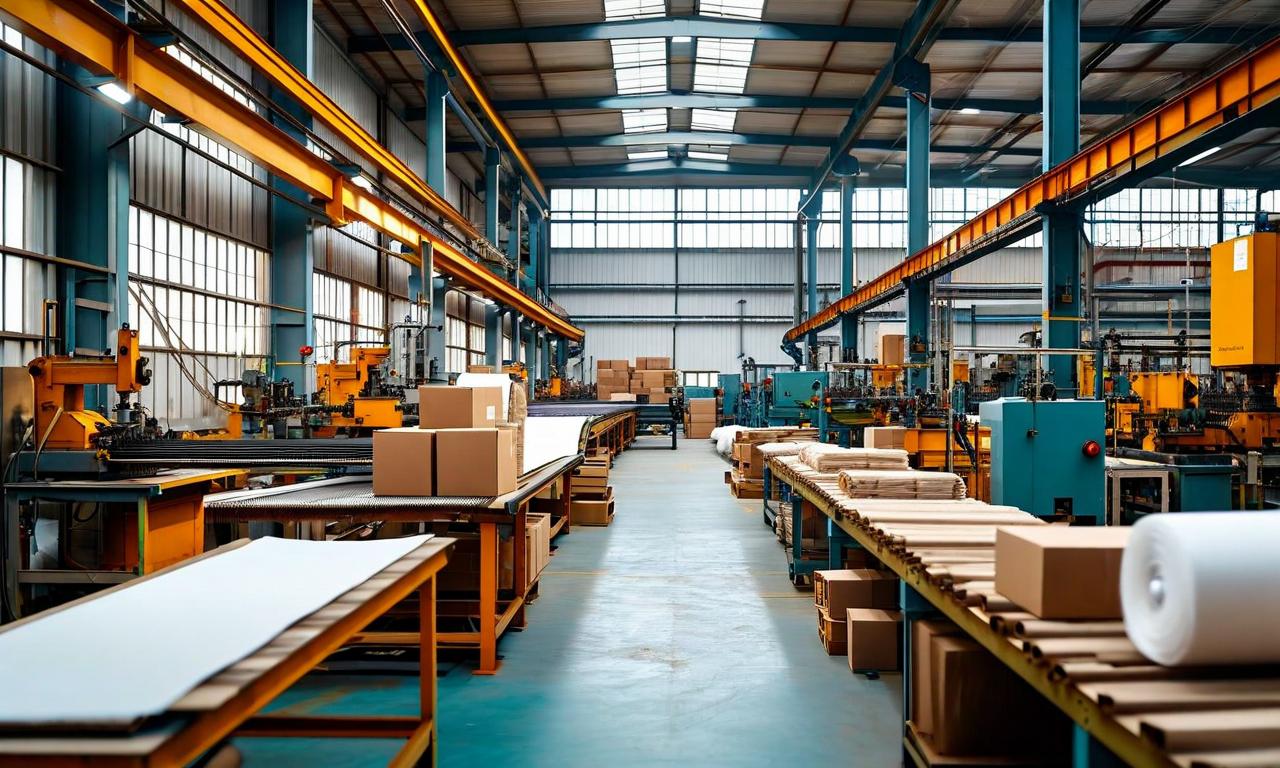

*this image is generated using AI for illustrative purposes only.
Industry stakeholders and various chambers of commerce have called upon the government to place manufacturing-led growth and scaling up of Micro, Small, and Medium Enterprises (MSMEs) at the center of its economic strategy for Budget 2026-27. With domestic demand showing signs of revival, the focus has shifted toward comprehensive support measures that can enable MSMEs to expand capacity, integrate into global value chains, and generate employment at scale.
Industry Demands for MSME Support
The PHD Chamber of Commerce and Industry (PHDCCI) has emphasized the critical need to scale up MSMEs to facilitate their transition into global value chains. The chamber highlighted that high input costs, long maturation periods, and global competition continue to restrict domestic manufacturing capacity, necessitating renewed focus on capital support and tax rationalization.
| Key Industry Demands: | Details |
|---|---|
| Tax Rationalization: | Lower effective taxation on distributed profits |
| Capital Support: | Reduced cost of capital for capacity expansion |
| Trade Competitiveness: | Enhanced measures for global market integration |
| Production Incentives: | Strengthened production-linked incentive schemes |
Paresh Parekh, partner and National Leader for Tax at EY India, noted that enhanced MSME support, promotion of digital payments, and targeted fiscal relief through lower personal taxes could strengthen disposable incomes and consumer sentiment, directly stimulating retail demand.
Structural Tax Challenges
Inverted GST structures remain a significant concern for the manufacturing sector. These structures, where inputs and services are taxed at higher rates than finished goods, continue to result in substantial credit accumulation, particularly affecting sectors with heavy spending on advertising, services, and capital goods. The Federation of Indian Micro and Small & Medium Enterprises (FISME) has highlighted that tax issues continue to discourage entrepreneurship, formalization, and scaling up of MSMEs.
| Current Tax Pain Points: | Impact on MSMEs |
|---|---|
| Inverted GST Structures: | Significant credit accumulation |
| High Effective Taxation: | Reduced profitability on distributed profits |
| Absence of GST Refunds: | Strained cash flows on plant and machinery |
| Regulatory Compliance: | Increased operational burden |
Government Support Measures
The government has recently implemented several initiatives to strengthen MSME exports and ease operational challenges. A ₹25,060-crore Export Promotion Mission was rolled out in December, designed to provide affordable trade finance, export credit support, and market diversification opportunities for MSME exporters facing steep tariffs of up to 50% from the US.
Under the mission's Niryat Protsahan component, the government launched an interest subvention scheme offering approximately 2.75% interest support on pre and post-shipment rupee export credit for MSME exporters, with additional incentives proposed for under-represented markets.
Authorities also withdrew multiple quality control orders (QCOs) covering key chemicals, petrochemicals, polymers, synthetic fibers, yarns, and other intermediate inputs used extensively in textiles, plastics, packaging, automotive components, and downstream manufacturing industries. This move aims to ease regulatory burdens on MSMEs and the broader manufacturing sector.
Persistent Challenges
Despite recent government initiatives, structural challenges continue to impact MSME growth. The Indian Small Business & Franchise Association (ISFA) has identified persistent issues including limited access to affordable credit, regulatory compliance hurdles, and high operating costs that hinder scalability and formalization.
FISME's budget submission emphasizes that while recent demand-boosting measures such as higher income-tax exemptions and GST simplification are expected to trigger a new growth cycle, the key challenge remains ensuring that increased demand is met by domestic production, particularly by MSMEs, to generate local employment and distribute economic gains more equitably.
Manufacturing-Focused Recommendations
PHDCCI has suggested comprehensive measures including rationalization of customs duties on critical raw materials, extension of concessional tax regimes for new manufacturing units, and stronger credit guarantee mechanisms and industrial infrastructure for MSMEs. The chamber emphasized that as manufacturing remains central to job creation, export growth, and supply chain resilience, Budget 2026-27 presents an opportunity to strengthen India's manufacturing capabilities by shifting from disjointed incentives toward a comprehensive framework that lowers risk, attracts private capital, and enables firms to scale efficiently.
 20
20












 Create Custom Screeners
  Access 200+ Pre-built Filters
  Use 50+ Readymade Screener





