

Blinkit Positioned to Control Nearly Half of India's Quick Commerce Market by Fiscal 2030E


Goldman Sachs projects Blinkit will maintain 40-45% market share in India's quick commerce sector through fiscal 2030E, supported by structural advantages in scale and infrastructure density. The analysis expects Blinkit to control over 100% of industry Ebitda profits starting fiscal 2027E while competitors face continued losses, suggesting inevitable consolidation among seven current players with Swiggy Instamart and Zepto as primary challengers.



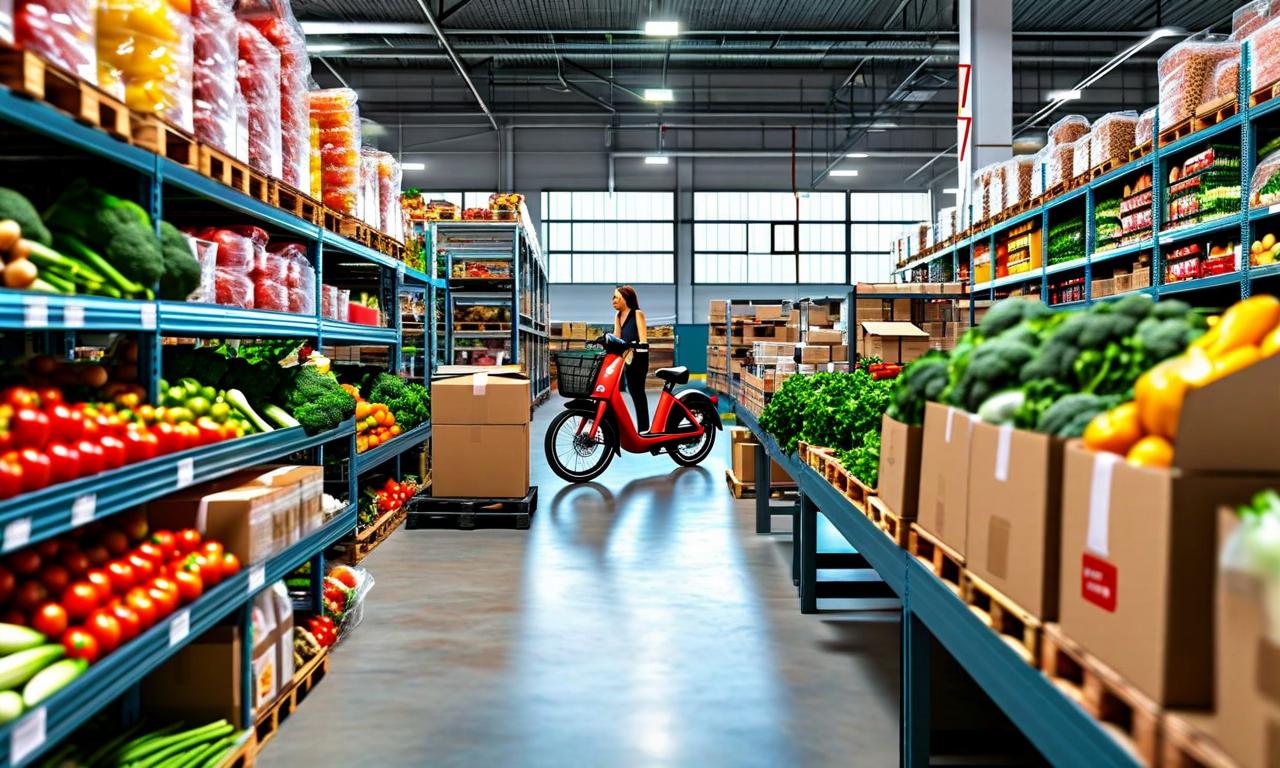
*this image is generated using AI for illustrative purposes only.
Goldman Sachs projects Blinkit will establish commanding control over India's quick commerce market, potentially holding close to half the sector through fiscal 2030E. The investment bank's analysis suggests this dominance extends beyond market share to encompass the entire profit pool, raising questions about the sustainability of competing platforms in an increasingly concentrated industry.
Market Share Projections Through Fiscal 2030E
Goldman Sachs estimates Blinkit currently commands 40-45% of India's quick commerce market share, a position expected to remain largely intact through fiscal 2030E. The brokerage characterises this leadership as structural rather than cyclical, supported by superior scale, infrastructure density, and improving unit economics.
| Market Position Metrics: | Current Status |
|---|---|
| Blinkit Market Share: | 40-45% |
| Dark Store Control: | Over 50% of 6,000+ stores |
| Market Penetration: | Around 5% of total addressable market |
| Active Players: | Seven companies |
Blinkit's control over more than 50% of India's 6,000+ dark stores provides decisive advantages in delivery speed, order density, and fulfilment costs. Goldman expects the market to evolve beyond a two-player structure while avoiding fragmentation, with their base case assuming Blinkit retains 40-45% share, two players holding 15-29% each, and one or two sub-scale operators on the margins.
Profit Pool Concentration Projections
The profitability outlook reveals a more pronounced competitive gap than market share distribution suggests. Goldman Sachs projects Blinkit will command more than 100% of the industry's Ebitda profit pool starting fiscal 2027E, maintaining this position for at least two to three years.
| Profitability Timeline: | Projections |
|---|---|
| Blinkit Ebitda Break-even: | Early fiscal 2027E |
| Industry Profit Share: | Over 100% from fiscal 2027E |
| EV/Ebitda Multiple: | 14x on fiscal 2030E margins |
| Peer Comparison: | Lower end of India internet group |
This projection indicates Blinkit could achieve profitability while competitors continue incurring losses. The implied EV/Ebitda multiple of 14x on fiscal 2030E normalised margins positions at the lower end of India's internet peer group, suggesting potential market underappreciation of earnings potential.
Competitive Landscape Analysis
Seven players currently operate in India's quick commerce space: Blinkit, Swiggy Instamart, Zepto, JioMart, BigBasket, Amazon, and Flipkart. Goldman's framework points toward inevitable consolidation, with Swiggy and Zepto remaining the most credible challengers despite widening gaps in store density and contribution margins.
Global platforms including Amazon and Flipkart may participate selectively but are unlikely to prioritise quick commerce profitability in the near term. The analysis suggests smaller or less focused players face increasing pressure as the market leader consolidates advantages.
Zomato Stock Performance Outlook
Goldman Sachs addresses recent corrections in Zomato's stock price, attributing investor concerns to perceived quick commerce growth slowdown and competitive pressures. The brokerage maintains these fears are overplayed, projecting Zomato's Ebitda growth exceeding 50% year-on-year through fiscal 2030E.
| Zomato Projections: | Details |
|---|---|
| Ebitda Growth: | Over 50% YoY through fiscal 2030E |
| Target Price: | ₹375.00 (revised from ₹390.00) |
| Bull Case Upside: | 73% |
| Bear Case Downside: | 22% |
Goldman notes their net order value growth estimates across all Zomato segments remain below management guidance, suggesting potential upside if targets are achieved. The asymmetric risk-reward profile supports continued positive stance on Zomato despite the modest target price adjustment to ₹375.00 from ₹390.00.
 17
17





 Create Custom Screeners
  Access 200+ Pre-built Filters
  Use 50+ Readymade Screener





