Blinkit Drops 10-Minute Delivery Branding Following Government Directive and Worker Strikes

3 min read     Updated on 14 Jan 2026, 12:20 PM
scanx
Reviewed by
Naman SScanX News Team
Overview

Blinkit has discontinued its 10-minute delivery branding following government directive and gig worker strikes involving over one lakh workers across 22 cities. The labour ministry instructed quick-commerce companies to remove delivery time limits after protests by unions including IFAT and TWGPU during Christmas and New Year's Eve. While the change addresses worker concerns about unrealistic expectations, actual delivery operations remain unchanged as platforms continue relying on dark store networks for speed.

29919017

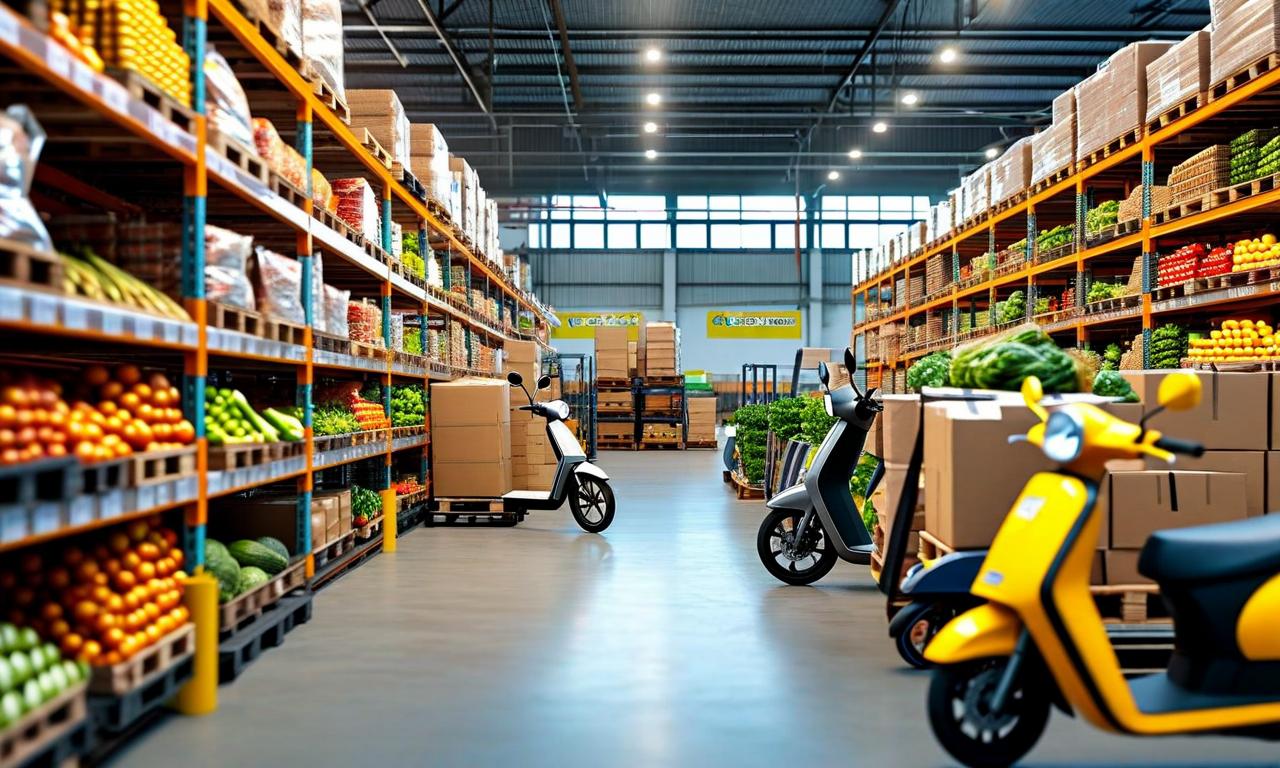
*this image is generated using AI for illustrative purposes only.

Blinkit has removed its widely promoted 10-minute delivery branding following a government directive and large-scale gig worker strikes, marking a significant shift in how quick-commerce platforms market their services. The change comes after the labour ministry instructed quick-commerce companies to drop delivery time limits, responding to worker protests that highlighted concerns about unrealistic delivery expectations and working conditions.

Government Intervention Follows Worker Protests

The decision followed coordinated strikes by over one lakh gig workers across 22 cities during Christmas and New Year's Eve. The protests were organized by unions including the Indian Federation of App-Based Transport Workers (IFAT) and the Telangana Gig and Platform Workers Union (TWGPU), highlighting concerns about working conditions and delivery pressure.

Strike Details: Information
Workers Involved: Over 1 lakh
Cities Affected: 22
Period: Christmas and New Year's Eve
Key Unions: IFAT and TWGPU

Sheikh Salauddin, general secretary of IFAT and founder-president of TWGPU, described the move as a victory for gig workers. "This shows the strength of the workers and the workers' voice," Salauddin stated, thanking the labour minister for responding to the protests.

Operational Reality Behind Quick Commerce

The speed of quick-commerce deliveries primarily depends on the dense network of dark stores rather than delivery partners racing against time. These small, hyperlocal warehouses are strategically located within residential neighborhoods, with orders automatically routed to the nearest facility where staff complete picking and packing within two to three minutes.

Zomato founder Deepinder Goyal has previously explained that delivery partners are not shown countdown timers or delivery deadlines. According to him, the average rider travels under two kilometers at approximately 15.00 kmph, well within normal city driving speeds.

Delivery Time Reality Check

Actual delivery times vary significantly based on distance from dark stores. Analysis of delivery estimates across major cities reveals the gap between marketing promises and ground reality:

Location Type: Distance Typical Delivery Time
Close proximity: 500-700 meters Under 10 minutes
Medium distance: 1.5-2 kilometers 15-20 minutes
Peak hours: Various 17-19 minutes

In Mumbai, locations show deliveries within 10.00 minutes for stores ranging from 100.00 meters to 1.60 kilometers away. A South Delhi location with a dark store 650.00 meters away sees deliveries close to 10.00 minutes, while another location 1.60 kilometers away averages 15.00 minutes.

Worker Concerns and Income Pressure

Despite platforms not explicitly pushing speed targets, delivery partners continue to rush through traffic due to income insecurity. Gig worker unions highlight that riders are paid per order and often work 12-14 hours daily to earn around ₹25,000.00 monthly. Completing more orders faster becomes crucial for meeting daily income targets.

Salauddin dismissed claims that scrapping ultra-fast delivery would hurt job creation, arguing that delivery platforms should compete on discounts and service quality rather than unrealistic delivery speeds. The unions are now consulting workers on the government's proposal under the Social Security Code 2020, which suggests a 90-day annual work threshold for accessing social security benefits.

Limited Impact on Operations

For customers, delivery times are unlikely to change meaningfully as the same dark store network, distances, and delivery logistics remain in place. The branding removal may slightly reduce pressure from unrealistic expectations but does not address deeper structural issues around pay, security, and algorithmic control for delivery partners.

The real impact may be psychological, as removing the explicit 10-minute promise could gradually reset consumer expectations built over years of instant gratification marketing. However, the operational system remains unchanged, with the 10-minute delivery promise having been more of a marketing tool than an operational reality for many customers.

like15
dislike

Blinkit Positioned to Control Nearly Half of India's Quick Commerce Market by Fiscal 2030E

2 min read     Updated on 10 Jan 2026, 12:41 PM
scanx
Reviewed by
Ashish TScanX News Team
Overview

Goldman Sachs projects Blinkit will maintain 40-45% market share in India's quick commerce sector through fiscal 2030E, supported by structural advantages in scale and infrastructure density. The analysis expects Blinkit to control over 100% of industry Ebitda profits starting fiscal 2027E while competitors face continued losses, suggesting inevitable consolidation among seven current players with Swiggy Instamart and Zepto as primary challengers.

29574705

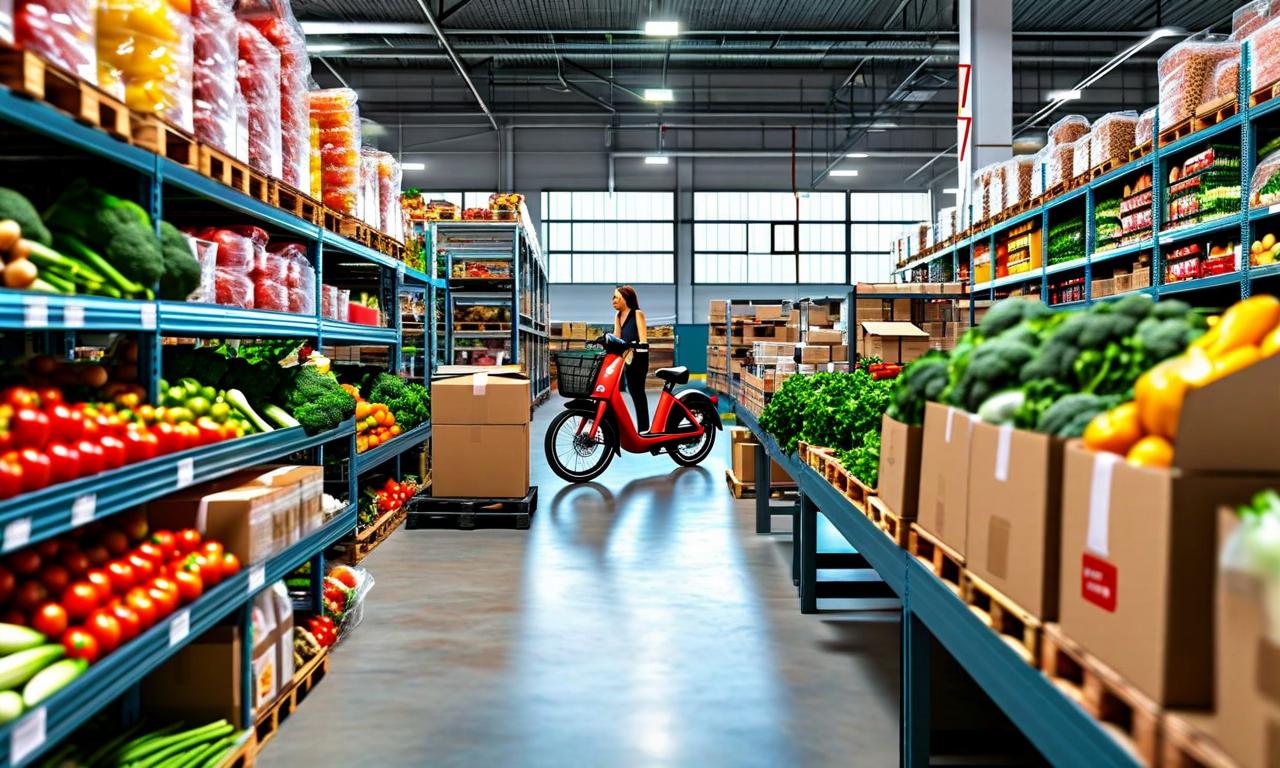
*this image is generated using AI for illustrative purposes only.

Goldman Sachs projects Blinkit will establish commanding control over India's quick commerce market, potentially holding close to half the sector through fiscal 2030E. The investment bank's analysis suggests this dominance extends beyond market share to encompass the entire profit pool, raising questions about the sustainability of competing platforms in an increasingly concentrated industry.

Market Share Projections Through Fiscal 2030E

Goldman Sachs estimates Blinkit currently commands 40-45% of India's quick commerce market share, a position expected to remain largely intact through fiscal 2030E. The brokerage characterises this leadership as structural rather than cyclical, supported by superior scale, infrastructure density, and improving unit economics.

Market Position Metrics: Current Status
Blinkit Market Share: 40-45%
Dark Store Control: Over 50% of 6,000+ stores
Market Penetration: Around 5% of total addressable market
Active Players: Seven companies

Blinkit's control over more than 50% of India's 6,000+ dark stores provides decisive advantages in delivery speed, order density, and fulfilment costs. Goldman expects the market to evolve beyond a two-player structure while avoiding fragmentation, with their base case assuming Blinkit retains 40-45% share, two players holding 15-29% each, and one or two sub-scale operators on the margins.

Profit Pool Concentration Projections

The profitability outlook reveals a more pronounced competitive gap than market share distribution suggests. Goldman Sachs projects Blinkit will command more than 100% of the industry's Ebitda profit pool starting fiscal 2027E, maintaining this position for at least two to three years.

Profitability Timeline: Projections
Blinkit Ebitda Break-even: Early fiscal 2027E
Industry Profit Share: Over 100% from fiscal 2027E
EV/Ebitda Multiple: 14x on fiscal 2030E margins
Peer Comparison: Lower end of India internet group

This projection indicates Blinkit could achieve profitability while competitors continue incurring losses. The implied EV/Ebitda multiple of 14x on fiscal 2030E normalised margins positions at the lower end of India's internet peer group, suggesting potential market underappreciation of earnings potential.

Competitive Landscape Analysis

Seven players currently operate in India's quick commerce space: Blinkit, Swiggy Instamart, Zepto, JioMart, BigBasket, Amazon, and Flipkart. Goldman's framework points toward inevitable consolidation, with Swiggy and Zepto remaining the most credible challengers despite widening gaps in store density and contribution margins.

Global platforms including Amazon and Flipkart may participate selectively but are unlikely to prioritise quick commerce profitability in the near term. The analysis suggests smaller or less focused players face increasing pressure as the market leader consolidates advantages.

Zomato Stock Performance Outlook

Goldman Sachs addresses recent corrections in Zomato's stock price, attributing investor concerns to perceived quick commerce growth slowdown and competitive pressures. The brokerage maintains these fears are overplayed, projecting Zomato's Ebitda growth exceeding 50% year-on-year through fiscal 2030E.

Zomato Projections: Details
Ebitda Growth: Over 50% YoY through fiscal 2030E
Target Price: ₹375.00 (revised from ₹390.00)
Bull Case Upside: 73%
Bear Case Downside: 22%

Goldman notes their net order value growth estimates across all Zomato segments remain below management guidance, suggesting potential upside if targets are achieved. The asymmetric risk-reward profile supports continued positive stance on Zomato despite the modest target price adjustment to ₹375.00 from ₹390.00.

like19
dislike
More News on blinkit
Explore Other Articles