NewsStocksAI Revolution in Financial Markets: Technology Democratizes Analysis But May Amplify Volatility
AI Revolution in Financial Markets: Technology Democratizes Analysis But May Amplify Volatility


Artificial intelligence is revolutionizing financial markets by democratizing analytical capabilities previously exclusive to professional fund managers, enabling instant processing of complex market data that once required weeks of human analysis. This technological shift narrows the advantage gap between institutional investors and individual traders while introducing new volatility risks. As AI accelerates herd behavior formation and dissolution, markets may experience sharper and more frequent volatility swings, fundamentally changing how investment returns are generated in the modern financial landscape.
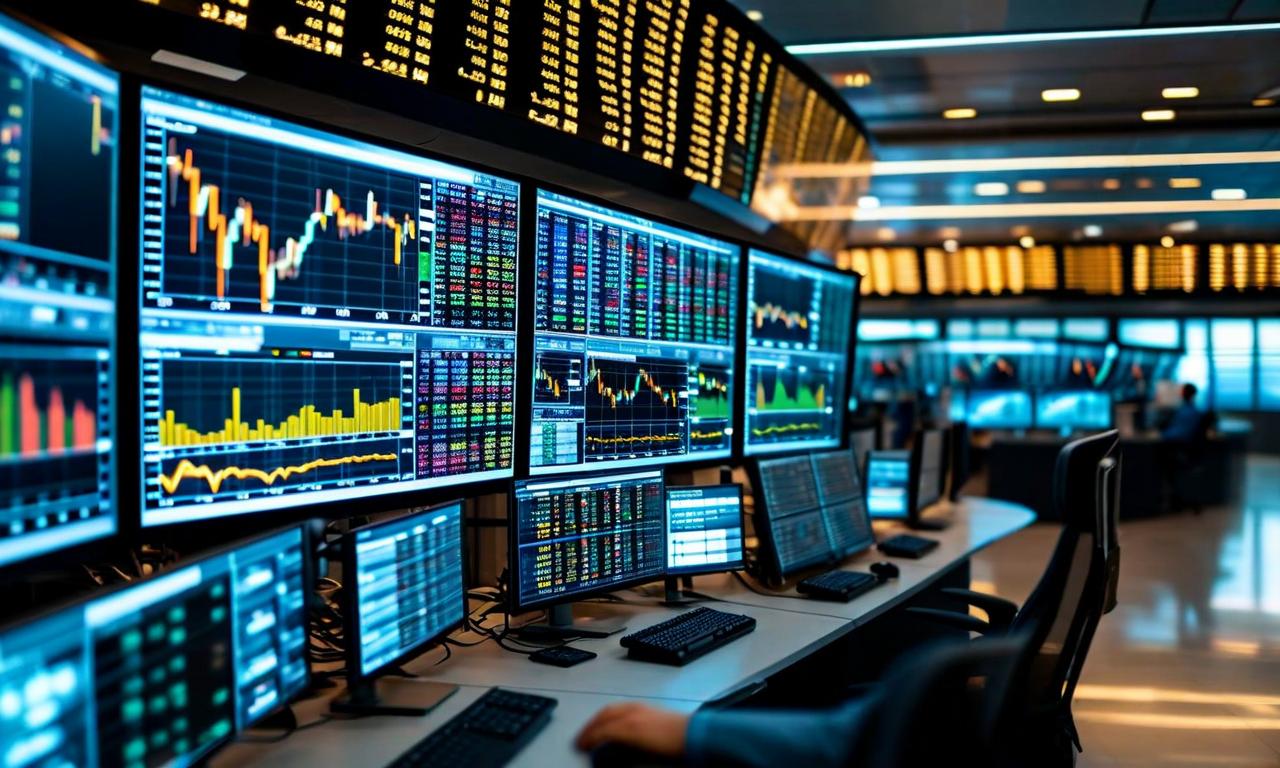
*this image is generated using AI for illustrative purposes only.
Artificial intelligence is reshaping financial markets in unprecedented ways, fundamentally altering how investment decisions are made and potentially increasing market volatility. The technology that creates realistic videos and generates human-like content is now penetrating the financial sector, raising questions about the future of market analysis and investor behavior.
AI Democratizes Market Analysis
The financial industry is experiencing a technological revolution that mirrors broader AI adoption across sectors. Market analysis, traditionally the domain of skilled professionals, faces steady disruption as artificial intelligence capabilities expand. The growing concern among financial analysts about potential job displacement reflects the technology's increasing sophistication and practical applications.
| Traditional Process | AI-Enhanced Process |
|---|---|
| Duration | Days to weeks |
| Resources Required | Teams of analysts |
| Tasks Automated | Report reading, company visits, model building |
| Output Generation | Manual presentations and forecasts |
Technology Narrows Investment Advantages
The internet initially weakened exclusive access to market data and company information. AI now erodes the analytical advantage that professional fund managers historically maintained over individual investors. Complex processes involving report analysis, company research, informal information gathering, financial modeling, and forecast generation can now be completed through simple software commands.
This technological shift creates a more level playing field between institutional fund managers and individual investors equipped with laptops and AI software. The democratization of analytical capabilities represents a fundamental change in market structure, moving beyond the data availability revolution of previous decades.
Herd Behavior Accelerates in Digital Age
Historical market studies, including Tony Plummer's research in "Forecasting Financial Markets," demonstrate how extended trends lead to increasingly irrational investor behavior. Traditional herd behavior patterns have shaped market decision-making for decades, often resulting in market excesses or significant collapses throughout financial history.
AI introduces new dynamics to this established pattern. The technology enables investors to join market crowds far more rapidly than previously possible. These digitally-formed crowds can assemble and disperse at unprecedented speeds, contributing to sharper and more frequent volatility fluctuations.
Market Structure Evolution
Today's market structure differs significantly from the historical data underlying traditional behavioral finance studies. Three key changes define this evolution:
- Information Flow: How market data reaches investors has fundamentally changed
- Interpretation Speed: AI processes and analyzes information instantaneously
- Action Timeline: The gap between data availability and investment decisions continues shrinking
Implications for Market Volatility
As artificial intelligence influence expands, more investors will likely delegate decision-making responsibilities to automated systems. This shift from human judgment to machine-driven choices may produce outcomes that appear rational individually but generate collective irrationality at market levels.
The acceleration of crowd formation and dissolution through AI-powered platforms suggests markets may experience more pronounced volatility patterns. The technology's ability to process vast amounts of information simultaneously across multiple market participants could amplify traditional boom-and-bust cycles.
Future of Investment Strategy
The transformation raises fundamental questions about human expertise value in increasingly automated markets. While AI democratizes analytical capabilities, the challenge for investors becomes learning to detach from rapidly-forming digital crowds that often reflect collective rather than optimal decision-making.
The financial markets are entering a phase where technological advancement continues accelerating the conversion of information into investment action. This evolution suggests that generating excess market returns will require new approaches as traditional analytical advantages become widely accessible through artificial intelligence platforms.
 19
19