
 News66% of RRTS Users Express Interest in Property Investment Along Transit Corridors: Knight Frank Report
66% of RRTS Users Express Interest in Property Investment Along Transit Corridors: Knight Frank Report


Knight Frank India's latest report reveals that 66% of existing RRTS users express willingness to invest in properties along transit corridors, with 80% associating improved connectivity with enhanced economic opportunities. The study shows that visible infrastructure upgrades increase investment confidence by over 2.25 times, while commercial activity and real estate development amplify investment intent by 10.2 times and 7.7 times respectively. The flagship Delhi-Ghaziabad-Meerut corridor, approved at over ₹30,000 crore cost spanning 82 km, exemplifies the RRTS potential to create significant investment opportunities while reducing travel times and supporting urban decentralisation efforts.

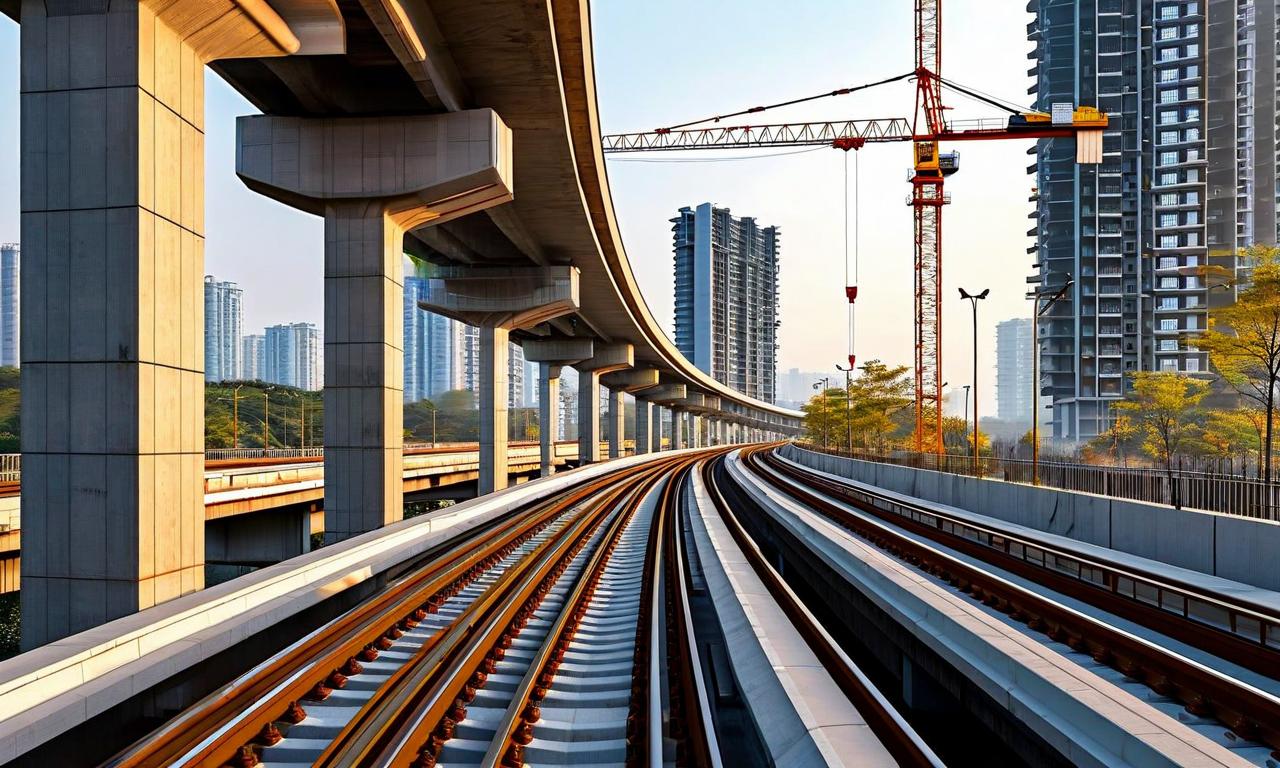

*this image is generated using AI for illustrative purposes only.
The Regional Rapid Transit System (RRTS) is transforming India's urban transport landscape while creating significant investment opportunities along its corridors. A comprehensive report by Knight Frank India reveals strong investor confidence and property investment appetite among existing RRTS users, highlighting the system's potential as a catalyst for economic development.
Strong User Confidence in Economic Impact
The research demonstrates overwhelming user confidence in RRTS's economic benefits, with nearly 80% of surveyed existing users associating improved RRTS connectivity with enhanced economic opportunities in their region. This positive sentiment translates into concrete investment interest, as infrastructure visibility plays a crucial role in building confidence.
| Impact Factor | User Response |
|---|---|
| Users linking RRTS to economic opportunities | 80% |
| Users willing to invest in corridor properties | 66% |
| Confidence increase from visible infrastructure | 2.25 times |
| Open to relocating from urban centres | 38% |
Investment Sentiment Drivers
The study identifies key factors that significantly amplify investment intent along RRTS corridors. Commercial activity presence emerges as the strongest driver, increasing investment sentiment by 10.2 times, while active real estate development boosts intent by 7.7 times. These findings underscore the importance of integrated development approaches that combine transportation infrastructure with commercial and residential projects.
Perceptions of economic development receive significant reinforcement where infrastructure upgrades are visible, increasing overall confidence by over 2.25 times among users. This visibility factor proves crucial in converting transit infrastructure into tangible investment opportunities.
Decentralisation Opportunities
The research reveals substantial potential for urban decentralisation, with 38% of respondents expressing openness to relocating away from core urban centres. However, this willingness remains closely tied to the availability of supporting social infrastructure, emphasizing the critical need for integrated residential, commercial, and civic development to unlock the full investment potential of RRTS corridors.
Flagship Delhi-Ghaziabad-Meerut Corridor
The Delhi-Ghaziabad-Meerut corridor, developed by the National Capital Region Transport Corporation (NCRTC), serves as the flagship example of RRTS implementation. This ambitious project demonstrates the system's transformative potential through significant infrastructure investment and operational efficiency.
| Project Parameter | Details |
|---|---|
| Total Project Cost | Over ₹30,000 crore |
| Total Corridor Length | 82 km |
| Travel Time Reduction | Delhi to Meerut under 1 hour |
| Current Status | Priority section operational |
Industry Perspective
Shishir Baijal, International Partner, Chairman and Managing Director of Knight Frank India, emphasized the RRTS's pivotal role in India's urban and regional transport landscape. He noted that commuters place premium value on time savings, safety, and reliability, showing readiness to adopt modern transport solutions when connectivity operates seamlessly.
For policymakers and city planners, Baijal highlighted integration as the key factor, both in mobility and urban development. For investors and developers, RRTS corridors represent tangible growth opportunities where infrastructure aligns with land-use planning and commercial momentum, creating sustainable investment ecosystems along transit routes.
 17
17






 Access 50+ Readymade Screeners
  Use 200+ Custom Filters
  Get Full Market Insights





