Costco Wholesale 15-year return turns $1,000 into $13,604

scanx
Reviewed by
Ritika DScanX News Team
Key Highlights

Costco Wholesale has achieved an 18.57% average annual return over 15 years, beating the market by 5.4%. With a market cap of $428.14 billion, a $1,000 investment from 15 years ago is now worth $13,604.76, demonstrating strong long-term compounding effects.

powered bylight_fuzz_icon
47321324

*this image is generated using AI for illustrative purposes only.

Costco Wholesale (NASDAQ: COST) has delivered an average annual return of 18.57% over the past 15 years, significantly outperforming the broader market by 5.4% on an annualized basis. This sustained performance underscores the power of long-term compounding for investors, with a hypothetical $1,000 investment made 15 years ago growing to $13,604.76 today.

The warehouse club giant currently commands a market capitalization of $428.14 billion, reflecting its dominant position in the retail sector. The stock’s performance over this period demonstrates consistent value creation, driven by operational efficiency and member loyalty that have allowed it to exceed market benchmarks by more than five percentage points annually.

Investment Performance Metrics

The following table outlines the key financial figures regarding Costco’s long-term performance and current valuation:

Metric Value
Average Annual Return 18.57%
Market Outperformance 5.4% (annualized)
Current Market Cap $428.14 billion
$1,000 Investment Value $13,604.76

An investor who purchased $1,000 worth of Costco shares 15 years ago would see that position grow to $13,604.76 based on the stock price of $965.34 at the time of writing. This calculation excludes dividends and assumes reinvestment of capital gains, illustrating how steady appreciation can multiply initial capital over extended periods.

What the Numbers Show

The divergence between Costco’s 18.57% annualized return and the broader market’s performance highlights the company’s ability to generate alpha over a full economic cycle. A 5.4% annualized outperformance is substantial in equity markets, where few companies sustain such margins above benchmark indices for 15 consecutive years. The resulting market capitalization of $428.14 billion indicates that this historical performance has translated into significant enterprise value, reinforcing investor confidence in the business model’s durability.

Can Costco sustain its 18.57% annualized return trajectory as its market capitalization approaches the half-trillion-dollar mark?

How might intensifying competition from Amazon and traditional retailers impact Costco's member loyalty and pricing power in the next five years?

What specific operational efficiencies or expansion strategies are driving Costco's continued ability to outperform the broader market by over 5% annually?

like16
dislike

Costco teams with Trinity Energy for off-grid power

scanx
Reviewed by
Ashish TScanX News Team
Key Highlights

Costco Wholesale partners with Trinity Energy to launch an off-grid solar and battery system at its Port St. Lucie distribution center. The platform ensures 24/7 reliability for critical loads, reduces grid strain, and avoids interconnection delays. The project serves as a model for large facilities seeking energy independence and cost stability.

powered bylight_fuzz_icon
46805614

*this image is generated using AI for illustrative purposes only.

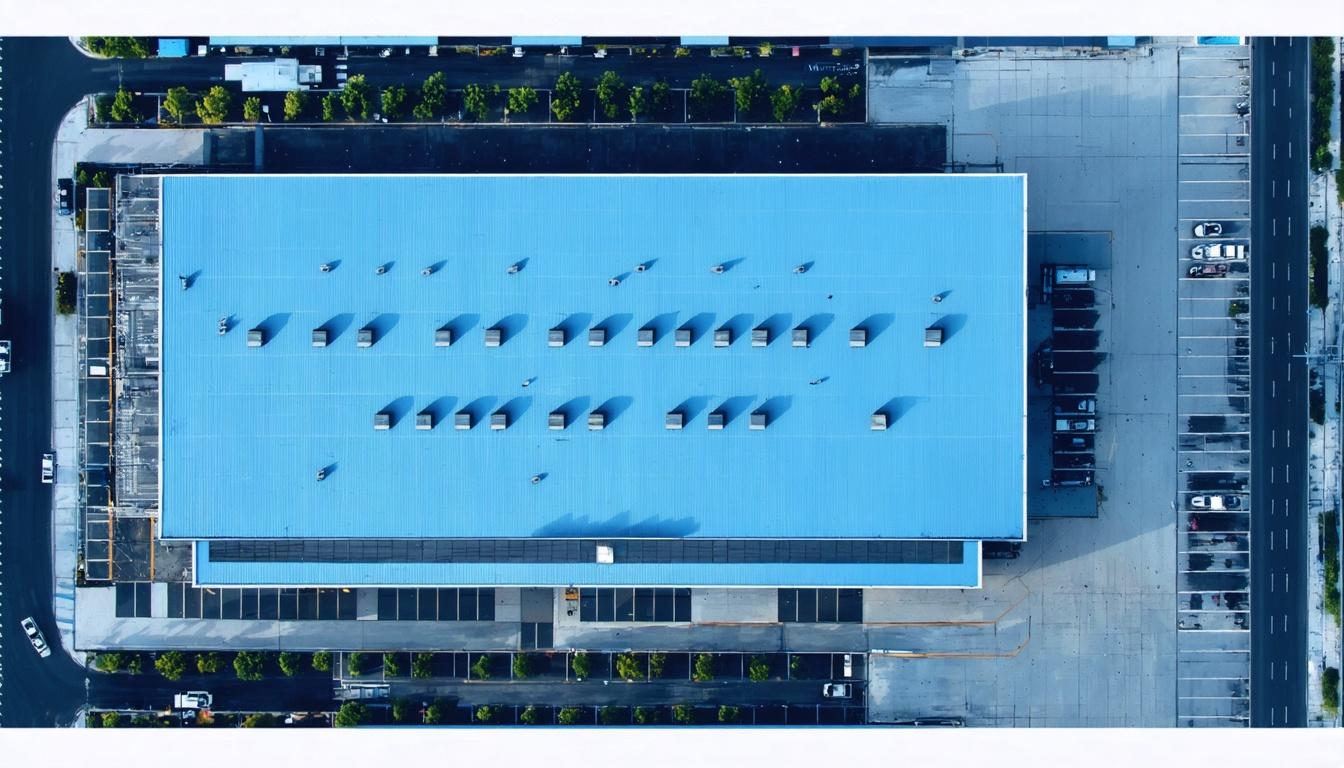
Costco Wholesale has achieved energy independence at its Port St. Lucie distribution center in Florida through a partnership with Trinity Energy. The retailer commissioned a fully integrated solar and battery platform that operates off-grid, providing 24/7 power reliability for mission-critical loads such as data centers, refrigeration, and electric vehicle charging. This strategic shift addresses rising U.S. energy challenges, including grid strain and soaring costs, while allowing Costco to bypass lengthy grid interconnection queues and permitting delays associated with traditional utility backup systems.

The project represents a significant operational milestone for Costco, enabling the company to accelerate readiness and avoid the burden of rising utility rates. By generating and managing its own power on-site, Costco reduces its reliance on the broader grid during peak demand periods. Shay Reed, AGMM and CEM at Costco Wholesale, stated that the investment strengthens facility reliability and preserves energy resources for the surrounding community. The system also positions Costco to benefit from long-term cost savings and IRA tax credits for solar and energy storage programs.

Trinity Energy provided the integrated operating system that powers the entire facility, including building equipment, lighting, HVAC, and EV charging infrastructure. The platform combines solar generation with battery storage to ensure uninterrupted power for technology that cannot tolerate outages. Gonzalo Stabile, VP of Design and Engineering at Trinity Energy, noted that the independent infrastructure enables businesses to maintain continuity during grid disruptions and better manage peak demand. The installation was completed significantly faster than traditional grid-connected alternatives.

Data collected from the platform allows Trinity Energy to provide insights into usage patterns, offering further significant energy savings through change management. Ime Ntekpere, Energy Buyer at Costco Wholesale, indicated that the project aims to inspire greater commitment from communities to ease grid capacity through behind-the-meter clean energy development. The solution balances energy needs across winter, summer, and year-round operations without adding burden to utilities.

Project Specifications

Feature Detail
Location Port St. Lucie, Florida
Technology Solar power and battery storage
Application Mission-critical loads, EV charging, HVAC
Partner Trinity Energy
Key Benefit 24/7 energy reliability, off-grid operation

What the Numbers Show

The Port St. Lucie project serves as a model for large-scale facilities, including hyperscale data center operators, semiconductor manufacturers, and major logistics operators. By shifting from grid-dependent models to self-directed power, companies can control costs and reduce risk regardless of outside grid conditions. This approach marks a turning point for commercial operations, where energy independence is becoming a practical necessity rather than just a sustainability goal.

Will Costco replicate this off-grid solar and battery model at other distribution centers, and if so, what is the estimated timeline for nationwide rollout?

How might this shift toward behind-the-meter energy independence impact traditional utility revenue streams and regulatory frameworks in high-growth states like Florida?

Could this project serve as a blueprint for hyperscale data center operators to mitigate grid interconnection delays, and are there existing partnerships in that sector?

like18
dislike

More News on Costco Wholesale Corp