
 NewsTulasee Bio-Ethanol Limited Confirms Non-Large Corporate Status Under SEBI Regulations for FY26
Tulasee Bio-Ethanol Limited Confirms Non-Large Corporate Status Under SEBI Regulations for FY26


Tulasee Bio-Ethanol Limited has officially confirmed to BSE that it does not qualify as a Large Corporate under SEBI circular SEBI/HO/DDHS/P/CIR/2021/613 for FY26. The company cited outstanding long-term borrowings below Rs. 100 crores and absence of credit rating as key factors. The undertaking was signed by Managing Director Mr. Kapil Nagpal and submitted as part of regulatory compliance requirements.


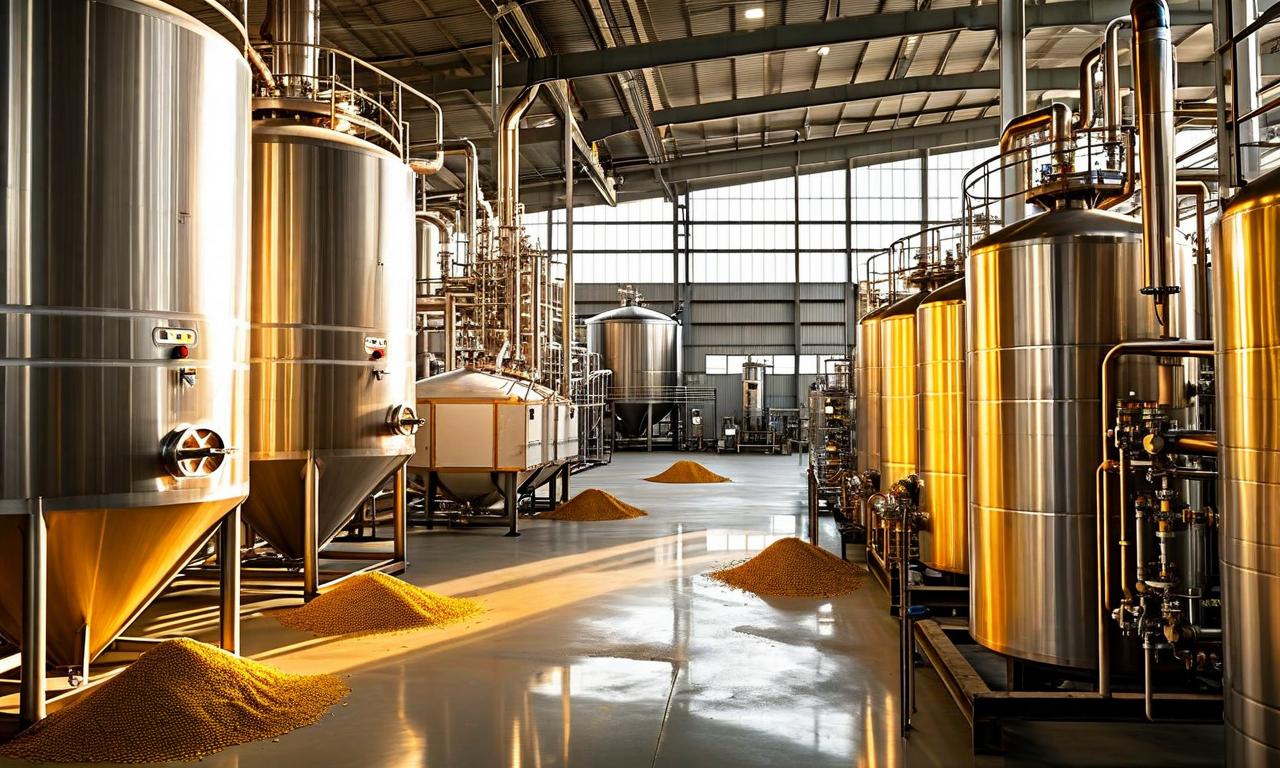
*this image is generated using AI for illustrative purposes only.
Tulasee bio-ethanol Limited has formally notified BSE Limited that it does not meet the criteria for Large Corporate classification under SEBI regulations for the financial year ended March 31, 2026. The communication was made through an official undertaking dated April 4, 2026, addressed to the Corporate Relationship Department of Bombay Stock Exchange Limited.
Regulatory Compliance Under SEBI Circular
The undertaking was submitted in compliance with SEBI circular SEBI/HO/DDHS/P/CIR/2021/613 dated August 10, 2021, which establishes criteria for Large Corporate classification. The company confirmed that its equity shares are listed on BSE Limited under the SEBI (Listing Obligations and Disclosures Requirements) Regulations, 2015, with company code 524514.
Key Financial Parameters
The company provided specific financial details to support its non-Large Corporate status:
| Parameter | Status |
|---|---|
| Outstanding Long-term Borrowing | Less than Rs. 100 crores |
| Credit Rating for Credit Facilities | NIL |
| Equity Shares Listing | BSE Limited |
| Company Code | 524514 |
Management Declaration
The undertaking was signed by Mr. Kapil Nagpal, Managing Director of Tulasee Bio-Ethanol Limited, bearing DIN 01929335. The document carries the official company stamp and signature, emphasizing the formal nature of this regulatory communication.
Company Background
Tulasee Bio-Ethanol Limited operates from its registered office located at Plot No. 41/3 & 41/5, Village Lohop, Lohop Chowk Road, Tal. Khalapur – 410 202, Dist. Raigad, Maharashtra. The company holds CIN L24115MH1988PLC048126 and was incorporated in 1988.
This declaration ensures the company remains compliant with SEBI's regulatory framework while confirming its current financial position does not warrant Large Corporate classification for FY26.
Historical Stock Returns for Tulasee Bio-Ethanol
| 1 Day | 5 Days | 1 Month | 6 Months | 1 Year | 5 Years |
|---|---|---|---|---|---|
| 0.0% | -2.40% | +22.45% | +60.98% | -28.49% | 0.0% |

What strategic initiatives might Tulasee Bio-Ethanol pursue to scale up operations and potentially qualify for Large Corporate status in future financial years?
How could the company's non-Large Corporate classification impact its ability to access capital markets and secure institutional funding for expansion?
Will Tulasee Bio-Ethanol's smaller scale affect its competitiveness in India's growing bio-ethanol sector dominated by larger players?
 16
16








 Access Market Heat-map & Insights
  Create, Save & Share your Screener
  Use 200+ Screening Filters





