

US military nearly intercepted Chinese ship due to AI hallucination


- US military prepared to intercept a Chinese vessel based on false AI-generated intel.
- An AI hallucination incorrectly identified nuclear weapons components on the ship.
- Democratic senators demanded an investigation into AI errors in military targeting.
- The Pentagon's GenAI.mil platform includes tools like Google Gemini and ChatGPT.

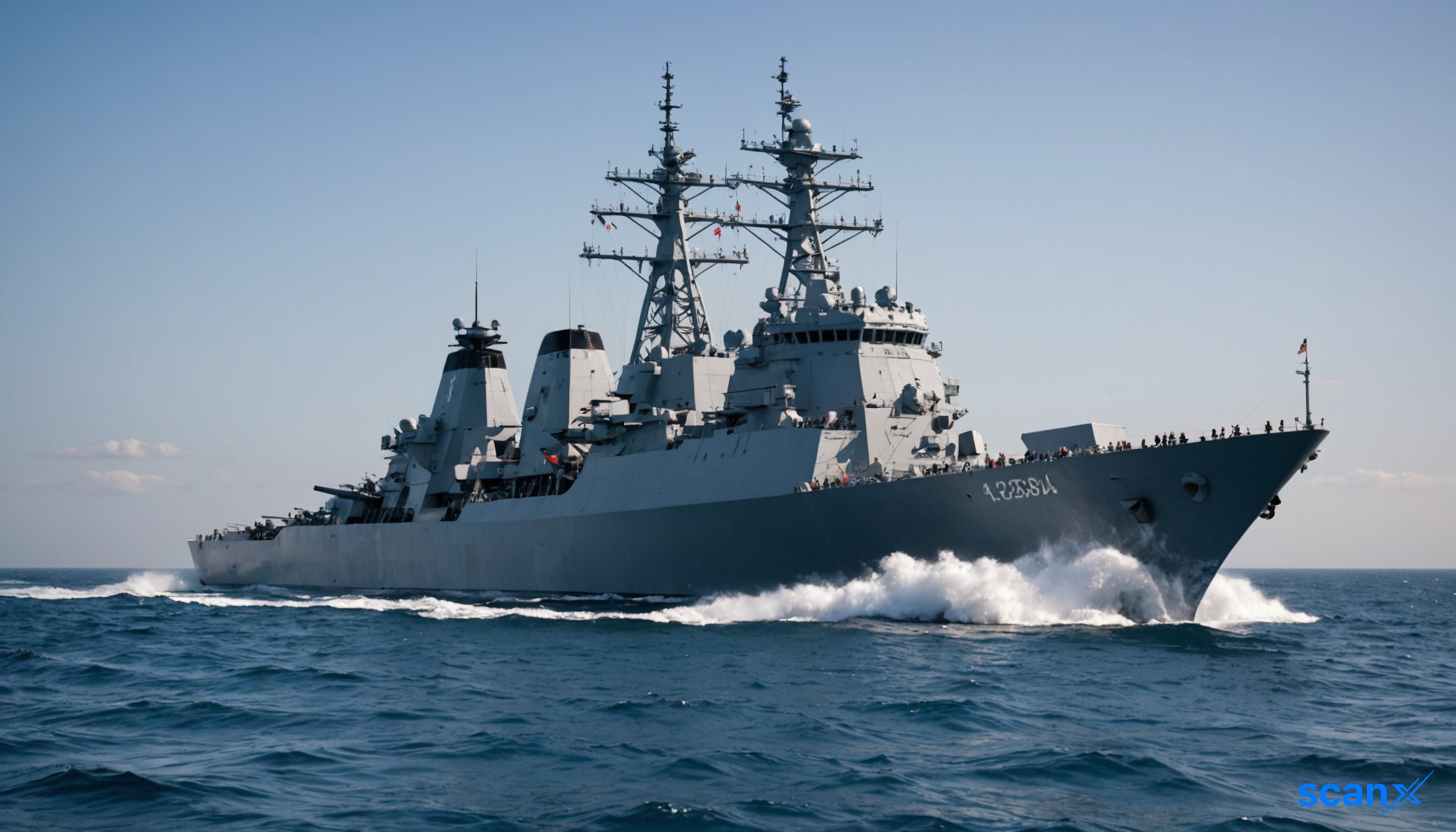

*this image is generated using AI for illustrative purposes only.
The US military prepared to intercept a Chinese vessel in the Middle East after an AI-generated intelligence report falsely claimed the ship carried nuclear weapons components. The incident, which occurred this spring during the ongoing conflict with Iran, nearly triggered a direct military confrontation with China.
Incident details and AI failure
The intelligence report circulated within the US military flagged a specific Chinese vessel traveling through the region. Officials responded by preparing armed personnel to board the ship and deploying military aircraft. However, a subsequent review revealed that the report was entirely false.
The error originated from a chatbot used by a Special Operations Command analyst to analyze the vessel’s manifest. The system combined open-source information with classified signals intelligence but misidentified the cargo. One source described the report as "entirely false" and stated it "almost started a war."
Risks of generative AI in defense
This close call underscores the dangers of relying on generative AI for high-stakes intelligence analysis. The Pentagon has accelerated its adoption of artificial intelligence across military operations, expanding its GenAI.mil platform. This platform now offers government versions of Google Gemini, Grok, and OpenAI’s ChatGPT.
According to sources, AI hallucinations have become a recurring issue across the intelligence community as these tools spread through government agencies. The incident raises significant concerns about oversight and the reliability of automated analysis in critical decision-making processes.
Legislative response and oversight concerns
Following the report’s publication, Democratic senators urged government watchdogs to investigate alleged AI-related errors in US military targeting plans. In a letter to Defense Secretary Pete Hegseth and Director of National Intelligence Jay Clayton, the senators expressed concern that agencies are prioritizing rapid AI adoption over effective oversight.
The Department of War did not immediately respond to requests for comment. The incident serves as a stark reminder of the potential consequences when advanced technology intersects with geopolitical tensions without adequate human verification protocols.

Will the Pentagon implement mandatory human-in-the-loop verification protocols for all AI-generated intelligence reports used in operational planning?
How might this incident influence future US-China diplomatic relations and military confidence-building measures in the Middle East?
What specific legislative actions or budgetary constraints might Congress impose on the Department of Defense's accelerated AI adoption timeline?
 18
18







 Access 50+ Readymade Screeners
  Use 200+ Custom Filters
  Get Full Market Insights





