

U.S. Permian Basin Oil Production Forecast to Hit Record High in 2025


The U.S. Energy Information Administration (EIA) projects Permian Basin oil production to increase by 260,000 barrels per day, reaching a record high of 6.54 million barrels per day by 2025. This surge could impact global oil prices, supply-demand dynamics, and the strategies of energy companies operating in the region. The forecast highlights the Permian Basin's growing importance in U.S. oil production and its potential influence on domestic and international energy markets.

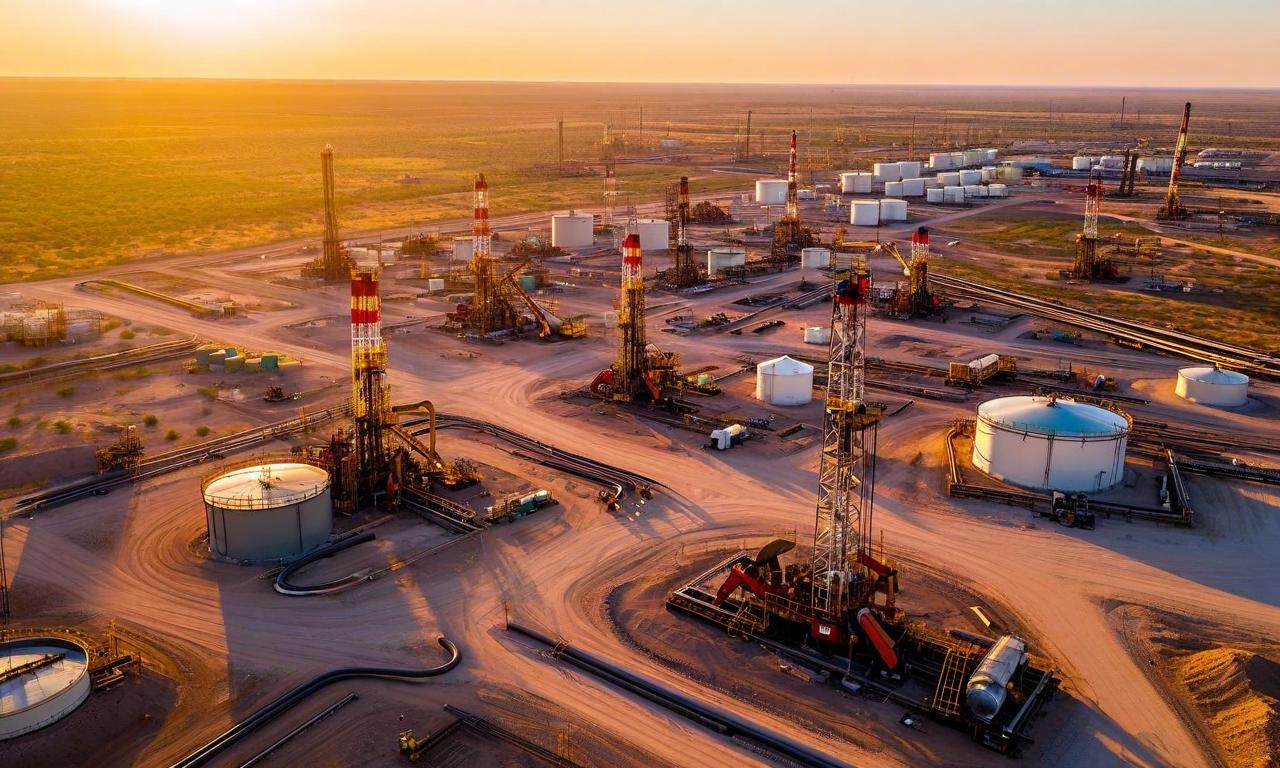

*this image is generated using AI for illustrative purposes only.
The U.S. Energy Information Administration (EIA) has released a forecast for oil production in the Permian Basin, projecting an increase that could have implications for the energy sector and global oil markets.
Key Forecast Details
| Metric | Value |
|---|---|
| Projected Increase | 260,000 barrels per day |
| Expected 2025 Production | 6.54 million barrels per day |
| Production Status | Record High |
Potential Impact on Energy Landscape
This projected surge in Permian Basin oil output may have several effects:
Oil Markets: The increased production could influence global oil prices and supply-demand dynamics.
Energy Companies: Firms operating in the Permian Basin may need to adjust their strategies to accommodate the higher production levels.
U.S. Energy Sector: The forecast suggests a potential strengthening of the United States' position in global energy production.
Supply Dynamics: The boost in output may affect broader supply patterns within the U.S. energy sector.
The EIA's forecast underscores the Permian Basin's importance as a key player in U.S. oil production. As the region approaches this projected production milestone, industry observers will likely monitor its impact on both domestic and international energy markets.
It's important to note that while this forecast suggests a strong trajectory for Permian Basin oil production, actual outcomes may be influenced by various factors including market conditions, technological advancements, and regulatory changes in the coming years.
 15
15






 Access 50+ Readymade Screeners
  Use 200+ Custom Filters
  Get Full Market Insights





