U.S. CENTCOM refutes IRGC mine claim in Strait of Hormuz

scanx
Reviewed by
Anirudha BScanX News Team
Key Highlights
  • U.S. CENTCOM stated no ships have struck mines in the Strait of Hormuz
  • CENTCOM disputed IRGC claims that a supertanker hit mines in the waterway
  • CENTCOM described the IRGC's assertions as false information intended to deter commercial shipping
  • The dispute centres on the safety of navigation through the Strait of Hormuz, a key global shipping route
powered bylight_fuzz_icon
49729086

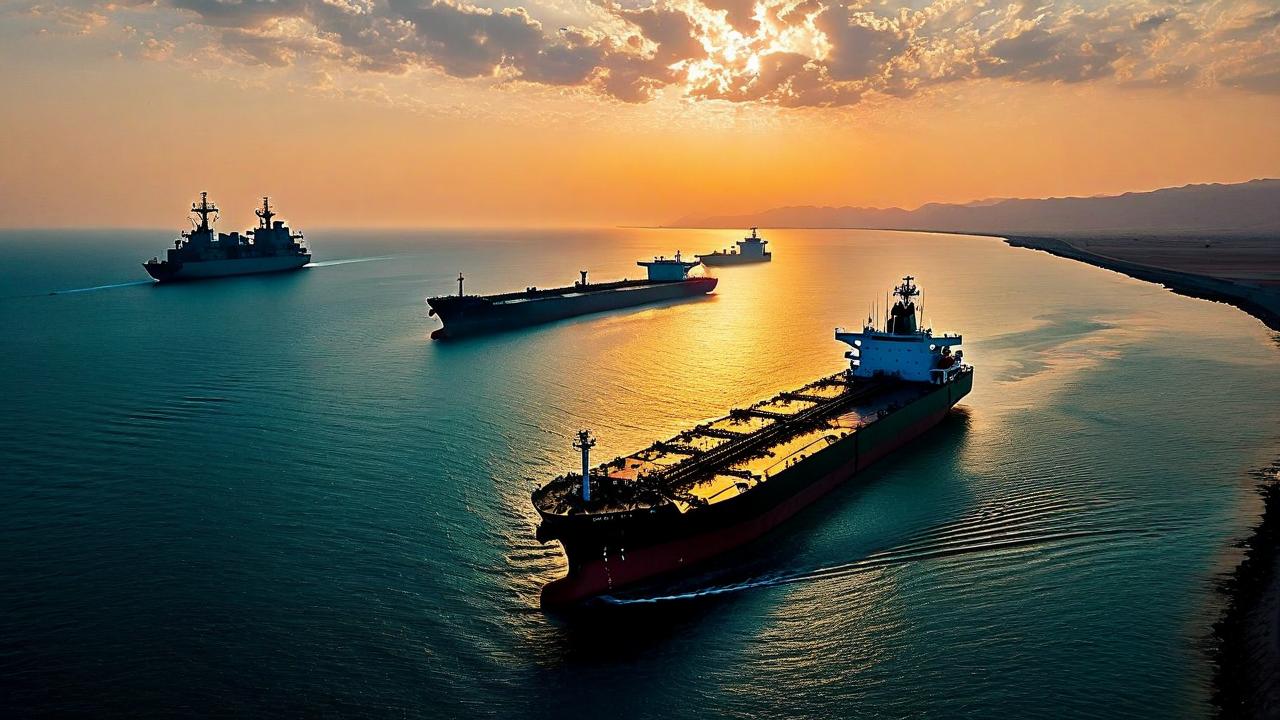
*this image is generated using AI for illustrative purposes only.

U.S. Central Command (CENTCOM) has disputed claims by Iran's Islamic Revolutionary Guard Corps (IRGC) that a supertanker struck mines in the Strait of Hormuz, stating no ships have hit mines in the waterway.

CENTCOM's rebuttal of IRGC claims

CENTCOM characterised the IRGC's assertions as an attempt to spread false information with the intent of scaring off commercial shipping from transiting the Strait of Hormuz. The command's statement directly contradicted the IRGC's account of the incident.

Key details of the dispute

Parameter Details
Disputed claim Supertanker struck mines in the Strait of Hormuz
CENTCOM position No ships have struck mines in the Strait of Hormuz
Attributed motive Attempt to deter commercial shipping through false information
Source of disputed claim IRGC

The Strait of Hormuz is a critical global shipping lane through which a significant volume of the world's seaborne oil trade passes. Disruptions or perceived threats to navigation in the strait have historically affected commercial shipping activity and energy markets.

Background on the dispute

The IRGC's claim, as characterised by CENTCOM, was identified as an effort to use misinformation to influence the behaviour of commercial vessels operating in the region. CENTCOM's public rebuttal signals a direct challenge to the credibility of the IRGC's account regarding mine activity in the strait.

How might insurance premiums for commercial vessels transiting the Strait of Hormuz adjust in response to these conflicting security narratives?

What specific measures is CENTCOM implementing to reassure shipping companies and maintain steady oil flow through the strait?

Could this dispute signal an escalation in hybrid warfare tactics, leading to increased cyber or disinformation campaigns against maritime logistics?

like18
dislike

Iran retaliates against US strikes; Brent crude rises to $89

scanx
Reviewed by
Anirudha BScanX News Team
Key Highlights
  • Iran retaliated against US strikes on Larak Island with missile attacks on US bases in Jordan
  • Brent crude rose 1.08% to $89.05 per barrel amid fears of disruption to the Strait of Hormuz
  • Global equity futures fell, with Nasdaq 100 down 0.33% and Asian markets trading lower
  • Jordan intercepted eight missiles entering its airspace during the Iranian retaliation
  • The Trump administration warned against laying new sea mines in the critical waterway
powered bylight_fuzz_icon
49686013

*this image is generated using AI for illustrative purposes only.

Iran launched missile and drone strikes on two US air bases in Jordan in retaliation for a US military attack on Larak Island near the Strait of Hormuz. The escalation has triggered immediate volatility in global markets, with Brent crude rising 1.08% to $89.05 per barrel.

Market Reaction

Global equities slid following the news. Late Sunday, Dow futures fell 75 points, or 0.14%, to 53,509.00. S&P 500 futures declined 19.25 points, or 0.25%, to 7,702.75. Nasdaq 100 futures slipped 98.25 points, or 0.33%, to 29,393.50.

Asian markets also traded lower. South Korea’s KOSPI fell 1.75% to 6,670.12, while Japan’s Nikkei 225 declined 1.61% to 65,334.40.

In commodities, WTI crude oil rose 0.90% to $84.15 per barrel. Natural gas futures fell 1.80% to $2.836 per MMBtu. The US dollar index stood at 99.615, down 0.06%.

Asset Change Level
Dow Futures -0.14% 53,509.00
S&P 500 Futures -0.25% 7,702.75
Nasdaq 100 Futures -0.33% 29,393.50
Brent Crude +1.08% $89.05
WTI Crude +0.90% $84.15

Escalation Details

US forces struck two rocket launchers on Larak Island after spotting the Islamic Revolutionary Guard Corps preparing to fire rockets carrying sea mines into the Strait of Hormuz, according to CENTCOM spokesperson Capt. Tim Hawkins. The IRGC stated it retaliated by striking two US air bases in Jordan. Jordanian authorities reported intercepting and destroying eight missiles that entered its airspace, with no casualties or property damage.

The IRGC called the US strike a "strategic and deadly mistake" by the Trump administration, citing casualties among Iranian forces and civilians. This marks the first US attacks on Iranian targets since late July.

Strategic Context

The Strait of Hormuz remains a focal point of concern, handling roughly one-fifth of the world’s oil shipments. The Trump administration warned that any vessel laying new mines would be "immediately and systematically destroyed." CENTCOM stated it had cleared sea mines from international shipping routes in the strait. Washington and Tehran remain without active negotiations as regional efforts continue to restore maritime traffic.

Will the disruption to shipping in the Strait of Hormuz push Brent crude prices above $95 per barrel in the coming week?

How might the US military's stated policy of 'immediate destruction' of mining vessels influence the risk premium for global energy markets?

Could this escalation prompt other regional actors, such as Hezbollah or Houthi rebels, to increase their military activities against Western interests?

like19
dislike