

Trump says stock market will rise despite Iran war volatility


- President Trump asserts US stock markets will rise despite Iran war volatility
- Major indices closed higher: Dow up 0.56%, S&P 500 up 0.46%, Nasdaq up 0.23%
- S&P 500 and Nasdaq have gained 11.78% and 12.83% year-to-date respectively
- Brent crude climbed to $95 a barrel amid renewed US strikes on Iranian targets
- Trump claims strong US control over the Strait of Hormuz oil transit

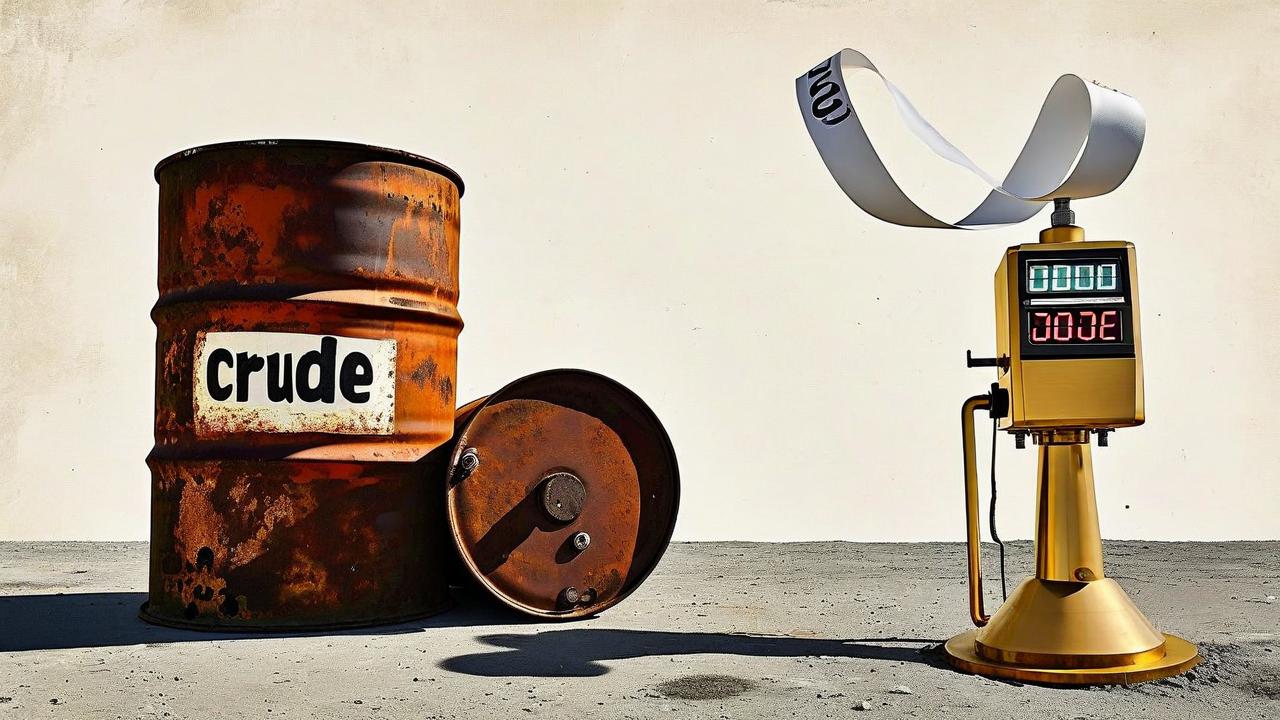

*this image is generated using AI for illustrative purposes only.
President Donald Trump stated Wednesday that US stock markets will continue to move higher, asserting they are "hitting new records every day" despite the ongoing military conflict with Iran and resulting oil price volatility.
Market Hits New Records Every Day
During a White House press briefing, Trump addressed renewed US strikes on Iranian targets and Brent crude climbing back to $95 a barrel. He noted that he had predicted over a year ago that confronting Iran’s nuclear program would carry an economic cost, expecting oil prices to rise and the stock market to fall.
Contrary to those predictions, he said the market has kept hitting new records. He added that the market would likely be even higher had it not been affected by the conflict at all.
"Believe it or not, the stock market will go up," he said.
Strait Of Hormuz Control
Trump claimed the US maintains "very strong control" of the Strait of Hormuz, moving "millions of barrels of oil" daily "for the most part... without trouble," while occasionally shooting down drones. He described the latest strikes as targeting Iranian efforts to rebuild radar systems and a missile system designed to drop naval mines.
He characterized the US ability to intercept nearly all incoming projectiles as "an amazing science." At the time of writing, Brent crude oil fell 0.35% to 95.294, while Crude oil fell 0.08% to 90.940.
Election Context
Trump stated his position on Iran is not shaped by political considerations ahead of the upcoming midterm elections. "I’m not affected by the election," he said. "Number one, I’m not running, but my party’s running, and I’m going to help my party, but I think my party respects the fact that we’re not allowing Iran to have a nuclear weapon."
Prediction markets on Polymarket put a 51% chance on Democrats sweeping both the House and Senate in November, up from just 26% a year ago.
Stock Markets performance
Major US indexes closed higher Wednesday. The Dow Jones Industrial Average rose 0.56% to 53,061.95, the S&P 500 gained 0.46% to 7,666.60, and the Nasdaq increased 0.23% to 26,217.82.
| Index | Close | Change |
|---|---|---|
| Dow Jones Industrial Average | 53,061.95 | +0.56% |
| S&P 500 | 7,666.60 | +0.46% |
| Nasdaq | 26,217.82 | +0.23% |
So far this year, the S&P 500 and Nasdaq have gained 11.78% and 12.83%, respectively.
What the Numbers Show
The divergence between Trump's initial prediction of a market decline due to geopolitical tension and the actual YTD gains of 11.78% for the S&P 500 highlights a disconnect between expected economic costs of the Iran conflict and current equity performance. Despite Brent crude reaching $95 a barrel, major indices continued to post positive returns, suggesting investors are currently pricing in resilience or other offsetting factors rather than immediate recessionary impacts from energy volatility.

How might sustained Brent crude prices above $95 impact corporate profit margins and consumer inflation expectations in the coming quarters?
Could the resilience of US equity markets during geopolitical conflict signal a shift in investor sentiment regarding the risk premium associated with Middle Eastern tensions?
What are the potential downstream effects on global supply chains if the US strategy of intercepting projectiles in the Strait of Hormuz escalates into broader regional conflict?
 15
15







 Access 50+ Readymade Screeners
  Use 200+ Custom Filters
  Get Full Market Insights





