

Cruz, Trump allege Chinese bot farms drive US data center opposition


- Ted Cruz and Cynthia Lummis join Donald Trump in alleging Chinese bot farms manipulate US opinion against data centers
- X Safety team identified ~200,000 suspected accounts in a bot farm, with 200 targeting AI/energy policy debates
- University of Pennsylvania survey shows 61% of Americans oppose local data centers, up from 49% four months ago
- US gas-fired power construction under development reached 378GW, driven by AI data center demand
- BNP Paribas warns decoupling from China's AI supply chain could increase infrastructure costs for US chipmakers

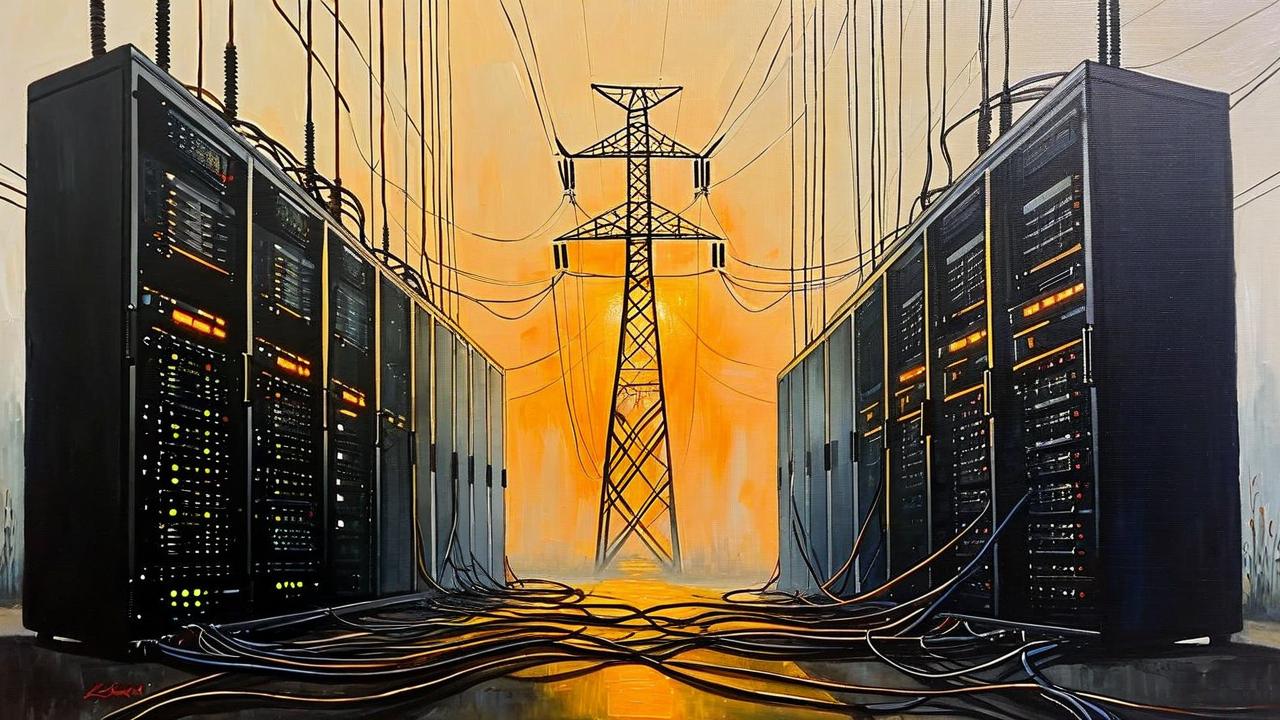

*this image is generated using AI for illustrative purposes only.
Senators Ted Cruz (R-Texas) and Cynthia Lummis (R-Wyo.) joined President Donald Trump in alleging that Chinese bot farms are manipulating American public opinion against data centers to weaken US AI leadership.
Political Stakes
Lummis posted on X that the Chinese Communist Party is "working overtime" to undermine America's position. She cited an Axios report detailing X's Safety team findings of a bot farm comprising approximately 200,000 suspected accounts. Within this network, 200 accounts were identified as posting content designed to manipulate debates on US AI and energy policy.
Cruz expanded on these claims on his Verdict with Ted Cruz podcast and on X. He described the alleged campaign as an effort to "deliberately" manipulate Americans into opposing data centers. "China’s objective isn’t complicated," Cruz said. "They want America to shut down every data center so we instead have to rely on Chinese data centers, Chinese AI, and the Chinese economy." He warned that online conversations appearing spontaneous could be coordinated efforts.
Trump escalated his advocacy on Truth Social, warning communities that reject these facilities risk becoming "backwards and poor." He contrasted this with areas that embrace them, which he claimed will become "successful and rich" with lower taxes and abundant jobs. Trump added, "if we kill the Golden Goose, you will only have yourselves to blame."
The stance drew mixed reactions. Former Republican congresswoman Marjorie Taylor Greene mocked Trump's position, saying, "Good luck winning the midterms now." Conversely, Senator Bernie Sanders (I-Vt.) noted that Americans opposing data centers "have every right to be concerned."
Public Sentiment
Polling data indicates significant public resistance to the infrastructure expansion. A University of Pennsylvania survey conducted earlier this month found that 61% of Americans now oppose new data centers in their area. This figure represents a sharp increase from 49% just four months prior.
| Metric | Finding | Source |
|---|---|---|
| Opposition to local data centers | 61% | University of Pennsylvania |
| View construction as good for country | 24% | YouGov |
| Believe bills will rise | 62% | YouGov |
A separate YouGov poll revealed that only 24% of Americans view data center construction as beneficial for the country, while 47% consider it harmful. Furthermore, 62% of respondents believe a new facility in their community would raise electricity bills.
Energy and Market Context
The U.S. surpassed China in new gas-fired power construction as AI data centers drove demand. Gas capacity under development had reached 378GW, potentially increasing power-sector emissions by up to 20% if completed. Global Energy Monitor warned the expansion could lock in pollution and volatile fuel costs.
Meanwhile, BNP Paribas warned that the Trump administration’s effort to remove China from the U.S. AI supply chain could make AI infrastructure more costly and difficult to build. This may affect companies such as Broadcom Inc., Marvell Technology Inc., Credo Technology Group Holding Ltd., Nvidia Corp., and Advanced Micro Devices Inc.
Earlier, Elon Musk called China "by far" the strongest AI competitor, reviving his 2011 warning that Beijing would become a major rival to Space Exploration Technologies Corp. in rocket technology.
What the Numbers Show
The divergence between political urgency and public sentiment is stark. While Trump, Lummis, and Cruz frame data center adoption as critical for national security and economic prosperity, a majority of Americans (61%) oppose local development. This opposition is driven largely by economic anxiety, with nearly two-thirds (62%) fearing higher utility costs rather than abstract geopolitical concerns. The political narrative attributes this opposition to foreign interference, while polling suggests domestic cost concerns remain the primary driver.

How might the Trump administration's decoupling of the AI supply chain from China impact the cost structures and deployment timelines for major chipmakers like Nvidia and Broadcom?
What regulatory or legislative measures could the US government implement to mitigate rising electricity costs for consumers while still supporting rapid data center expansion?
Will the attribution of public opposition to Chinese bot farms shift political strategies away from addressing domestic economic anxieties regarding utility bills and infrastructure strain?
 19
19





 Access Market Heat-map & Insights
  Create, Save & Share your Screener
  Use 200+ Screening Filters





