US Announces Indefinite Control Over Venezuelan Oil Sales to Drive Political Change


The US Department of Energy has announced plans for indefinite control over Venezuela's oil sales and revenue to drive political changes and economic stabilization. Energy Secretary Chris Wright outlined the framework at a Goldman Sachs conference, emphasizing the need for leverage to ensure Venezuela acts in America's interests. The system involves leading commodity marketers and key banks, with all proceeds flowing through US-controlled accounts and revenues designated for economic stabilization and eventual compensation to US oil majors.
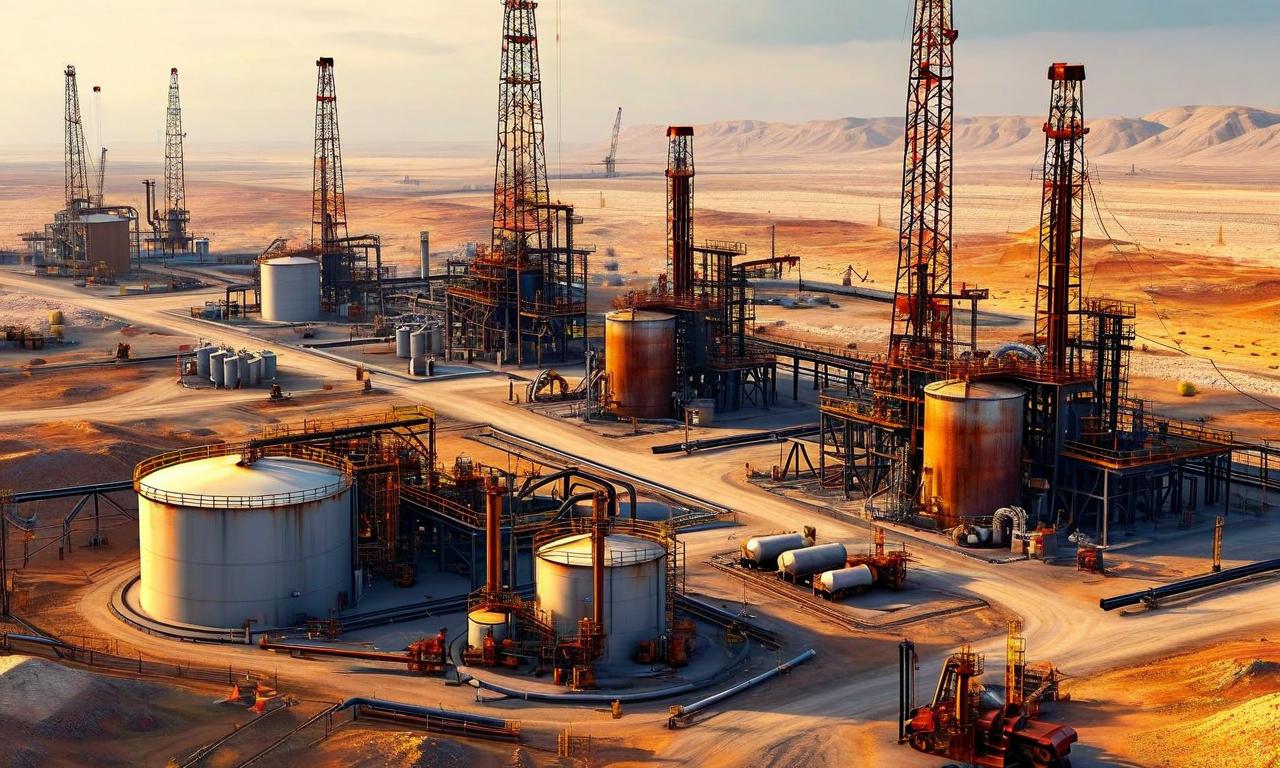
*this image is generated using AI for illustrative purposes only.
The US Department of Energy has announced plans to control Venezuela's oil sales and revenue indefinitely to stabilize the country's economy and ensure it acts in America's interests. Energy Secretary Chris Wright stated at the Goldman Sachs Energy, CleanTech & Utilities Conference that the US needs this leverage to drive necessary changes in Venezuela, following recent political developments in the country.
Strategic Control Framework
The Department of Energy has established an expanded framework involving leading commodity marketers and key financial institutions to facilitate Venezuelan crude oil sales. US Vice President JD Vance emphasized that controlling Venezuela's oil means controlling the country, stating that the regime will only be allowed to sell oil as long as it serves America's national interests.
| Component: | Details |
|---|---|
| Sales Execution: | Leading commodity marketers |
| Financing Partners: | Key banks |
| Revenue Settlement: | US-controlled accounts at globally recognized banks |
| Control Duration: | Indefinite |
| Oversight Authority: | Energy Secretary Chris Wright |
| Initial Export Value: | Up to $2.00 billion |
Revenue Allocation and Economic Stabilization
Energy Secretary Wright outlined that revenues from Venezuelan oil sales will be used to stabilize Venezuela's economy and eventually repay oil majors Exxon Mobil and ConocoPhillips for losses when their assets were nationalized by former President Hugo Chavez nearly two decades ago. The US will market stored Venezuelan oil first, followed by ongoing future production indefinitely, with all revenues deposited into US government-controlled accounts.
Industry Response and White House Engagement
Shares of US refiners Marathon Petroleum, Phillips 66 and Valero Energy rose between 2.50% and 5.00% following the announcements. President Trump is scheduled to meet with heads of major oil companies at the White House, with representatives from Exxon Mobil, ConocoPhillips and Chevron expected to attend discussions on raising Venezuela's oil production.
Production Recovery Prospects
Venezuela, which sits atop the world's largest oil reserves, currently accounts for only about 1.00% of global supply after decades of underinvestment. The country's production averaged about 1.10 million barrels per day last year, down from 3.50 million barrels per day in the 1970s. Wright indicated that Venezuelan production could be increased within a short period with equipment and technology infusion, though full recovery to past production levels would take years.
Political and Economic Implications
The announcement has drawn criticism from Democratic lawmakers, with Connecticut Senator Chris Murphy comparing the approach to stealing Venezuela's oil. Meanwhile, Venezuela's state-run oil company PDVSA confirmed it is progressing in negotiations with the United States for oil sales, with board member Wills Rangel stating the US will need to purchase cargoes at fair market prices. Trump announced that Venezuela has agreed to use oil sale proceeds to purchase American-made goods.
 17
17