

Iran's Qa'ani Warns of Expanded Fronts and Maritime Disruptions Amid Regional Conflict


Iranian Commander Qa'ani has warned that US-backed Israeli operations in Lebanon and Gaza will strengthen the Resistance Axis's determination, with additional fronts potentially mobilised. He stated that Bab al-Mandab traffic could be aligned with conditions at the Strait of Hormuz, raising concerns over coordinated disruptions to two of the world's most critical maritime trade and energy corridors.

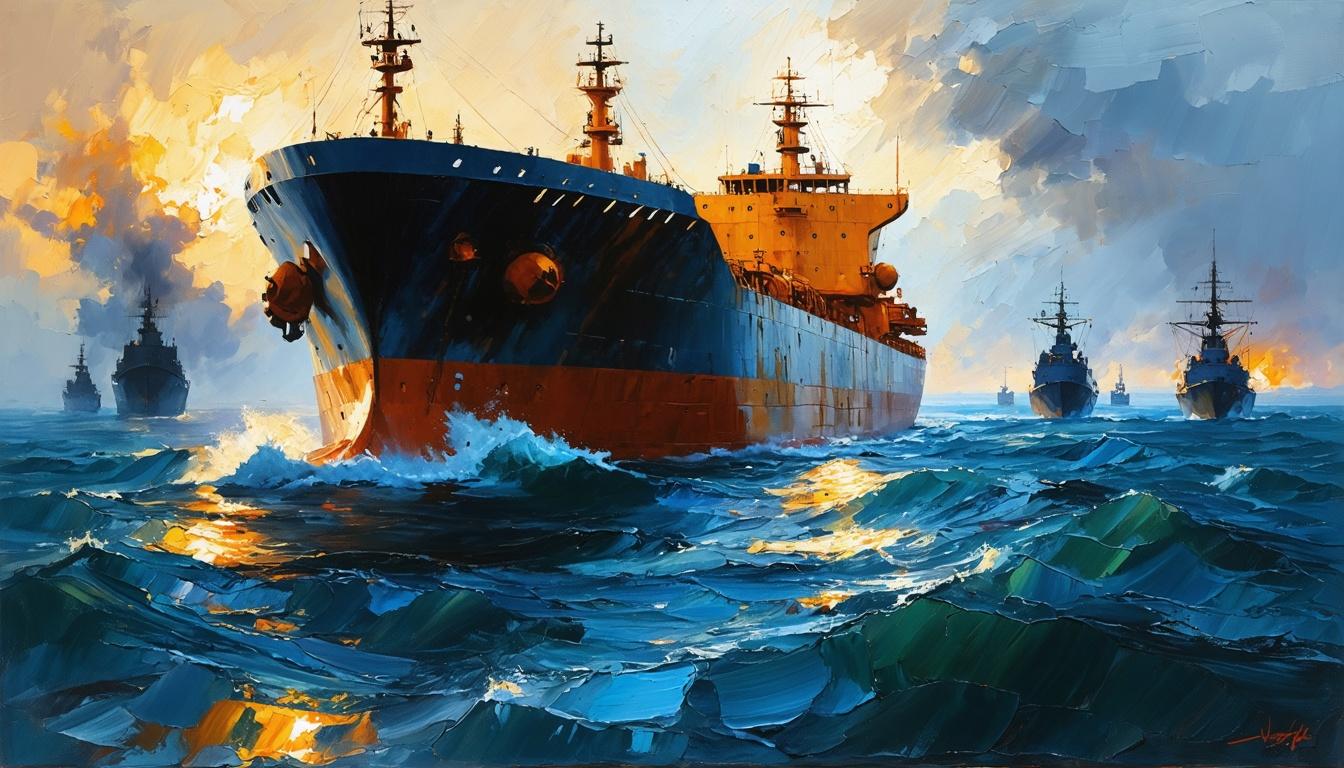

*this image is generated using AI for illustrative purposes only.
Iranian Commander Qa'ani has issued a stark warning that US-backed Israeli military operations in Lebanon and Gaza will strengthen the resolve of the Resistance Axis, while signalling that additional fronts may be mobilised. Critically, Qa'ani stated that traffic through the Bab al-Mandab Strait could be aligned with conditions at the Strait of Hormuz, escalating concerns over the security of two of the world's most vital maritime chokepoints.
Strategic Maritime Chokepoints at Risk
The statements point to a potential coordinated disruption across key global trade corridors. The Resistance Front and Iran have previously announced plans to fully close the Strait of Hormuz, and the latest remarks from Qa'ani suggest the Bab al-Mandab Strait may now face similar conditions.
| Strategic Location: | Reported Action |
|---|---|
| Strait of Hormuz | Full closure planned |
| Bab al-Mandab Strait | Traffic conditions may be aligned with Strait of Hormuz |
Implications for Global Shipping and Energy Trade
The Strait of Hormuz, located between Oman and Iran, serves as a primary export route for Gulf region energy producers and is a vital passage for a significant portion of the world's seaborne oil and liquefied natural gas (LNG) shipments. The Bab al-Mandab Strait, situated between Yemen and the Horn of Africa, is a critical corridor connecting the Red Sea to the Gulf of Aden, facilitating vessel transit between the Indian Ocean and the Mediterranean Sea via the Suez Canal. Any coordinated disruption across both chokepoints would compound risks for international shipping operators, insurers, and energy markets worldwide.
Geopolitical Context
Qa'ani's statement underscores the Resistance Axis's position that US-backed Israeli operations in Lebanon and Gaza are a catalyst for further mobilisation rather than a deterrent. The warning that additional fronts may be activated, combined with the explicit reference to aligning Bab al-Mandab traffic with Strait of Hormuz conditions, represents a significant escalation in stated intent. Regional and international stakeholders are closely monitoring these developments given the outsized role both straits play in facilitating global commerce and energy distribution.

How might the insurance industry adjust premiums and coverage terms for vessels transiting the Middle East if both straits face simultaneous disruptions?
What contingency plans are major global energy importers developing to secure alternative supply routes in the event of a coordinated blockade?
Could a simultaneous closure of the Bab al-Mandab and Strait of Hormuz trigger a shift in global trade patterns favoring the Cape of Good Hope route?
 17
17







 Access Market Heat-map & Insights
  Create, Save & Share your Screener
  Use 200+ Screening Filters





