

Nvidia Confronts Rising Competition and Market Challenges Despite AI Leadership


Nvidia's stock has declined 9.1% from October record highs, losing $460 billion in market value amid growing competition from AMD and tech giants developing custom chips. Despite maintaining 90% AI chip market share, the company faces pressure from clients like Alphabet and Amazon creating proprietary solutions. Wall Street remains bullish with 76 of 82 analysts recommending buy, projecting 57% profit growth for fiscal 2027 and 37% stock price upside potential.

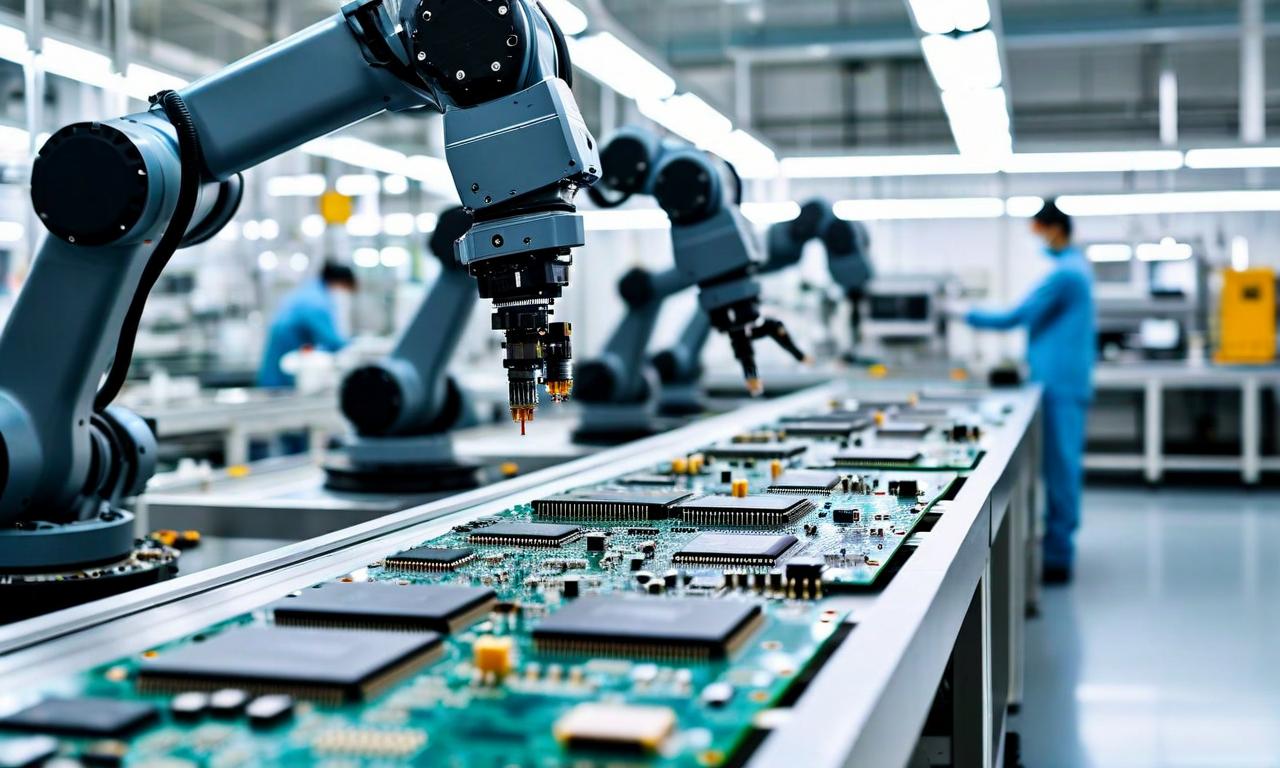

*this image is generated using AI for illustrative purposes only.
Nvidia, the world's most valuable company, faces mounting challenges as its stock experiences significant volatility despite maintaining dominance in the artificial intelligence chip market. The semiconductor giant's shares have declined 9.1% since reaching record highs on October 29, underperforming the broader S&P 500 Index as investors express concerns about AI spending sustainability and competitive pressures.
Market Performance and Valuation Impact
The recent decline represents a substantial shift for the AI chipmaker, which had achieved extraordinary growth over the past three years. The company's market performance tells a compelling story of both remarkable success and current uncertainty.
| Metric | Current Status | Previous Peak |
|---|---|---|
| Stock Performance Since Oct 29: | -9.1% | Record high |
| Three-Year Gain: | Nearly 1,200% | Over 1,300% |
| Market Cap Lost: | $460 billion | From $5+ trillion peak |
| S&P 500 Contribution: | 16% of bull run | Since October 2022 |
The Santa Clara, California-based company's influence on broader market performance cannot be understated, with its contribution to the S&P 500's advance significantly exceeding Apple's 7% contribution during the same period.
Intensifying Competitive Landscape
Nvidia's dominance in AI accelerators, commanding over 90% market share, faces unprecedented challenges from multiple fronts. Advanced Micro Devices has secured significant data center orders from OpenAI and Oracle, with projections showing AMD's data center revenue jumping approximately 60% to nearly $26 billion in 2026.
Major technology companies representing over 40% of Nvidia's revenue are developing proprietary chip solutions:
- Alphabet: Tensor processing units optimized for Gemini AI chatbot, with chip deal with Anthropic valued in tens of billions
- Amazon, Meta, Microsoft: Building custom chips to reduce dependency on Nvidia's $30,000+ processors
- Meta: Reportedly in talks to rent Google Cloud chips for 2026-2027 deployment
Broadcom has emerged as a significant beneficiary of this trend, with its application-specific integrated circuit (ASIC) business growth propelling the company to $1.6 trillion valuation, surpassing Tesla.
Strategic Response and Future Outlook
Nvidia has responded to competitive pressures through strategic acquisitions and technology licensing. The company's December 24 move to license technology and hire executives from startup chipmaker Groq demonstrates acknowledgment of growing demand for specialized, cost-effective chips. This acquisition provides access to low-latency semiconductors, offering alternative approaches for AI software deployment.
| Financial Projections | Fiscal 2027 Targets |
|---|---|
| Profit Growth: | 57% |
| Sales Increase: | 53% |
| Gross Margin Target: | ~75% |
| Current Gross Margin (FY26): | 71.2% |
Wall Street Sentiment and Investment Outlook
Despite recent challenges, analyst sentiment remains overwhelmingly positive. Wall Street maintains strong confidence in Nvidia's prospects, with 76 of 82 analysts holding buy ratings and only one recommending selling. The average price target implies 37% gains over the next 12 months, potentially pushing market value above $6 trillion.
The company's valuation remains attractive relative to peers, trading at 25 times expected 12-month profits—cheaper than most Magnificent Seven stocks except Meta and less expensive than over 25% of S&P 500 companies.
Market Dynamics and Capital Investment
The AI infrastructure investment cycle continues expanding, with projected capital expenditures by Amazon, Microsoft, Alphabet, and Meta exceeding $400 billion in 2026, primarily targeting data-center equipment. OpenAI's commitment to $1.4 trillion spending over coming years, despite questions about the startup's funding capacity, illustrates the scale of planned AI investments.
CEO Jensen Huang emphasized continued strong demand during CES presentations, stating that "demand for Nvidia GPUs is skyrocketing" as AI models increase by an order of magnitude annually. The upcoming Rubin chip generation nears release, with customer trials expected soon.
While Nvidia faces increased competition and market scrutiny, Bloomberg Intelligence analysts project the company will maintain market share dominance for the foreseeable future, supported by the vast scale of AI computing demand and the company's technological leadership position.
 16
16







 Access Market Heat-map & Insights
  Create, Save & Share your Screener
  Use 200+ Screening Filters





