

Musk warns clean energy alone won't stop climate crisis


- Elon Musk warns sustainable energy alone will not prevent severe extinction events
- Proposes sentient satellites launched from Moon to control Earth's temperature
- Claims humanity has about 50 years to act on coastal climate risks
- Berkeley Earth data shows 2025 was third-warmest year at 1.44°C above average
- Trump administration halts funding for Arctic Report Card climate assessment

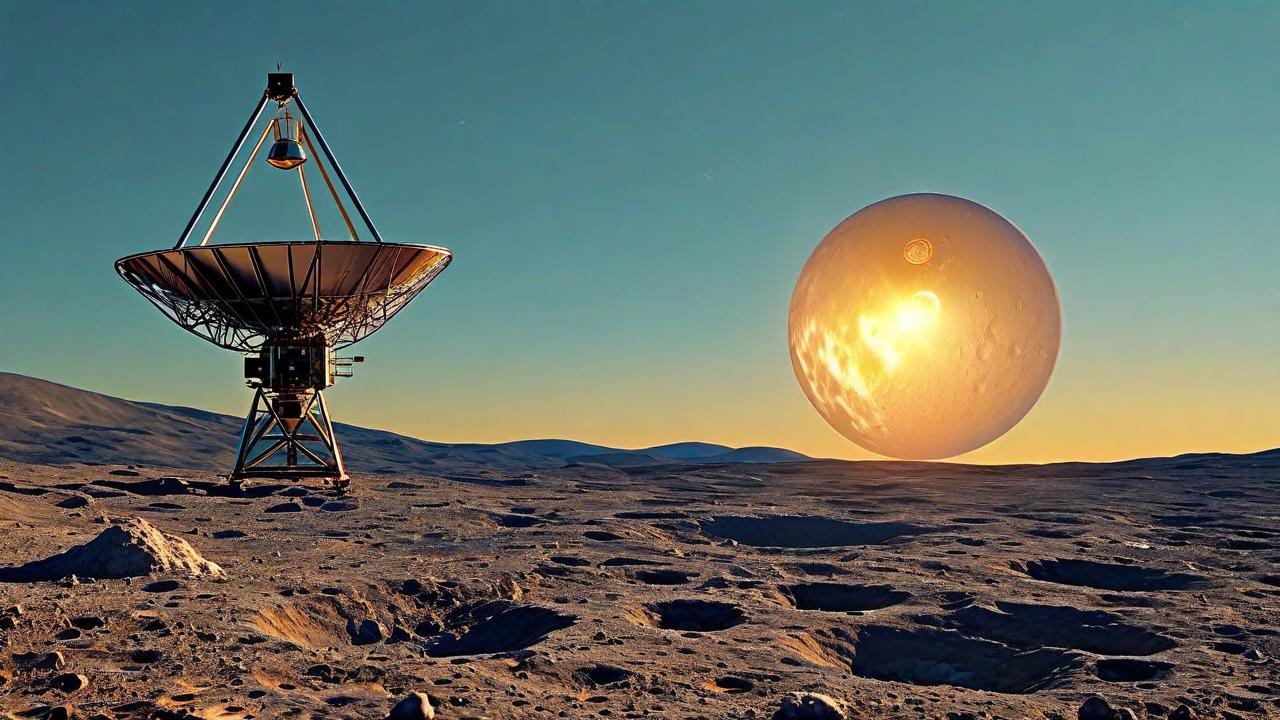

*this image is generated using AI for illustrative purposes only.
Tesla and SpaceX CEO Elon Musk warned that transitioning to sustainable energy may not be enough to protect Earth from long-term climate threats, suggesting massive space-based geoengineering could eventually be needed.
Satellite Swarm Proposal
Musk made the comments over the weekend while responding to a post suggesting that a superintelligent Dyson swarm could be the most practical way to cool the planet. He previously said a large solar-powered AI satellite constellation could potentially make tiny adjustments to the amount of solar energy reaching Earth.
This time, Musk took the idea further, saying "sentient satellites" could be launched toward Earth-Sun Lagrange points using mass drivers built on the Moon. He suggested such a system could potentially address global warming for around 1 billion years.
"Extremely severe extinction events happen every 100M years or so," he said, arguing that simply switching to sustainable energy would not be sufficient to prevent them.
"Space satellites to control temperature and massive geo-engineering will be needed or it will be game over," he wrote.
Timeline for Action
Musk said massive geoengineering could eventually become necessary, but stressed that action is needed much sooner. "We have about 50 years or so to take action," he said, referring to the risks facing people living in vulnerable coastal areas.
He noted this timeframe should be more than enough time for space satellites to solve any heating problems if people still want to live where the beach is today.
Climate Context
His comments come as climate data continues to show sustained global warming. Berkeley Earth estimates that 2025 was the third-warmest year in its instrumental record, at about 1.44 degrees Celsius above the 1850-1900 average.
The warning also comes amid concerns about U.S. climate research. The Donald Trump administration earlier this month said it would stop funding the Arctic Report Card, an annual assessment tracking changes in the rapidly warming Arctic, according to PBS. The decision is the latest in a string of actions by the administration to scale back climate research, which officials have criticized as being driven by misinformation and alarmist claims.

What are the primary technical and logistical hurdles SpaceX would face in constructing lunar mass drivers and deploying a Dyson swarm within the proposed 50-year timeline?
How might the international community respond to unilateral geoengineering efforts by a private entity, and what regulatory frameworks could emerge to govern space-based climate intervention?
Could Musk's advocacy for space-based geoengineering shift investor sentiment away from traditional renewable energy projects toward speculative aerospace infrastructure ventures?
 16
16







 Access 50+ Readymade Screeners
  Use 200+ Custom Filters
  Get Full Market Insights





