

PGSA refutes US control claims over Strait of Hormuz


Iran's Persian Gulf Strait Authority (PGSA) has rejected US claims of controlling the Strait of Hormuz, insisting the waterway remains blocked. This contradicts US Energy Secretary Chris Wright's report of 9 million barrels per day in flows and President Trump's assertion of total naval dominance. Amidst these conflicting narratives, Brent crude rose 0.57% to $89.42, reflecting persistent geopolitical risk premiums. Senate Minority Leader Chuck Schumer has demanded a briefing on security threats following reports of an Iranian threat during President Trump's recent trip to Turkey.

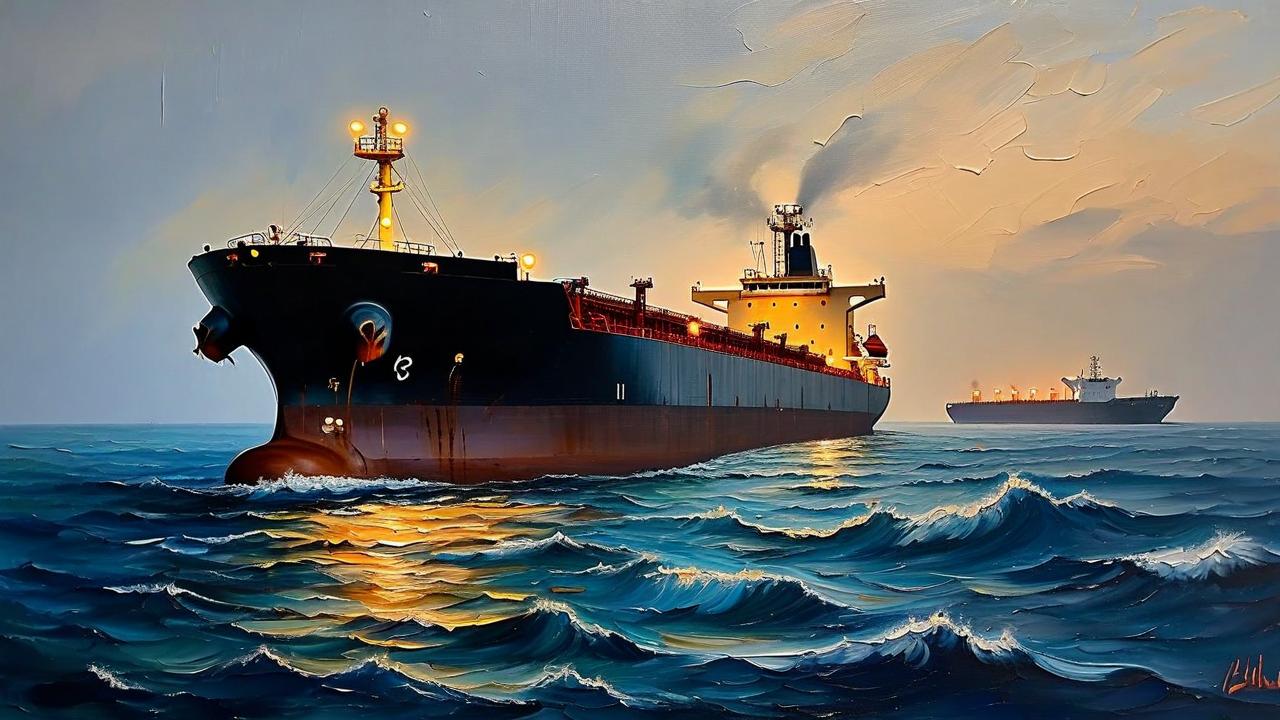

*this image is generated using AI for illustrative purposes only.
The Persian Gulf Strait Authority (PGSA), Iran's maritime regulator for the waterway, directly refuted President Donald Trump's recent claims that the United States exercises "total control" over the Strait of Hormuz. In a statement posted on X on Wednesday, the PGSA asserted that the waterway remains blocked and will not reopen until Tehran's specific conditions are accepted, contradicting the White House's narrative of restored stability.
Trump had posted on Truth Social that the US naval blockade was being referred to as a "wall of steel" and claimed Iran possessed "no navy" and "no Air force." He further argued that Iranian troops remain unpaid and that the country suffers from "300% inflation," describing it as "all talk and no action." The White House Rapid Response handle amplified these comments, reinforcing the administration's stance that the blockade is impenetrable to unauthorized vessels.
Conflicting Flow Data
Despite the PGSA's denial, US officials maintain that commercial activity is robust. Energy Secretary Chris Wright confirmed on Tuesday that average daily oil flows through the strait have surged to nearly 9 million barrels per day, exceeding pre-conflict averages. Wright attributed this increase to coordinated military efforts with Gulf allies and upgraded infrastructure, noting that total regional oil exports have reached approximately 15 million barrels per day. He cited data from the Department of Energy, which tracks vessels exiting the Arabian Gulf, arguing that private trackers often undercount traffic due to covert transits.
| Metric | Value | Change |
|---|---|---|
| Brent Crude Futures | $89.42 per barrel | +0.57% |
| WTI Crude Futures | $83.86 per barrel | +0.79% |
| Avg. Daily Flow (Strait) | ~9 million barrels/day | N/A |
| Total Regional Exports | ~15 million barrels/day | N/A |
PGSA Status and Sanctions
The PGSA, established in May this year, is tasked with authorizing maritime traffic and collecting tolls in the strait. According to a June report by The Guardian, over 300 vessels, mostly bound for Asian countries, had applied for permits with the authority. However, the agency operates under significant pressure; it was designated under US Treasury sanctions at the end of May pursuant to Executive Order 13224. The Treasury cited the agency for providing material support to the Islamic Revolutionary Guard Corps (IRGC).
Political Fallout
The geopolitical standoff has drawn attention from US lawmakers. Senate Minority Leader Sen. Chuck Schumer (D-NY) demanded that the Trump administration brief the Senate following reports that the President was moved to a different aircraft while leaving Turkey last month. Officials reportedly cited a credible Iranian threat after the NATO summit, leading to a secret switch from the legacy Air Force One to a smaller Air Force C-32A.
What the Numbers Show
The divergence between reported physical flows and official Iranian statements highlights deep uncertainty in global energy markets. While US data indicates throughput has recovered to prewar levels—nearly 9 million barrels per day through the strait plus additional pipeline exports—oil prices continue to trade at elevated levels, with Brent crude rising 0.57% to $89.42. This suggests investors are pricing in geopolitical risk premiums rather than immediate supply shortages. The reliance on covert transit data from the Department of Energy also introduces variability into public tracking metrics, potentially obscuring the true extent of commercial activity in the region.

How might the US Treasury's sanctions on the PGSA impact the ability of Asian nations to legally process toll payments or permits for vessels transiting the Strait?
If the Department of Energy's data on covert transits is accurate, what long-term implications does this have for global oil price volatility and risk premiums?
Could the discrepancy between US claims of 'total control' and Iran's assertion of a blockade lead to increased insurance premiums for commercial shipping in the region?
 15
15







 Access 50+ Readymade Screeners
  Use 200+ Custom Filters
  Get Full Market Insights





