
 NewsGlobal EV Market Faces Growth Slowdown as Major Players Navigate Policy Shifts and Market Challenges
Global EV Market Faces Growth Slowdown as Major Players Navigate Policy Shifts and Market Challenges


The global EV market faces significant deceleration with growth slowing from 23% to 12% in 2026, reaching 24.30 million units. The US experiences an 'EV winter' with 41% December sales decline following tax credit withdrawals, while Ford takes $19.50 billion in EV restructuring charges. China implements cooling measures including halved tax breaks and restricted subsidies, though manufacturers pursue aggressive export strategies with nearly one million overseas sales in Q1-Q3 2025. Despite policy headwinds, improving economics through 8% battery price reductions and upcoming affordable models under $35,000 may provide sector relief.

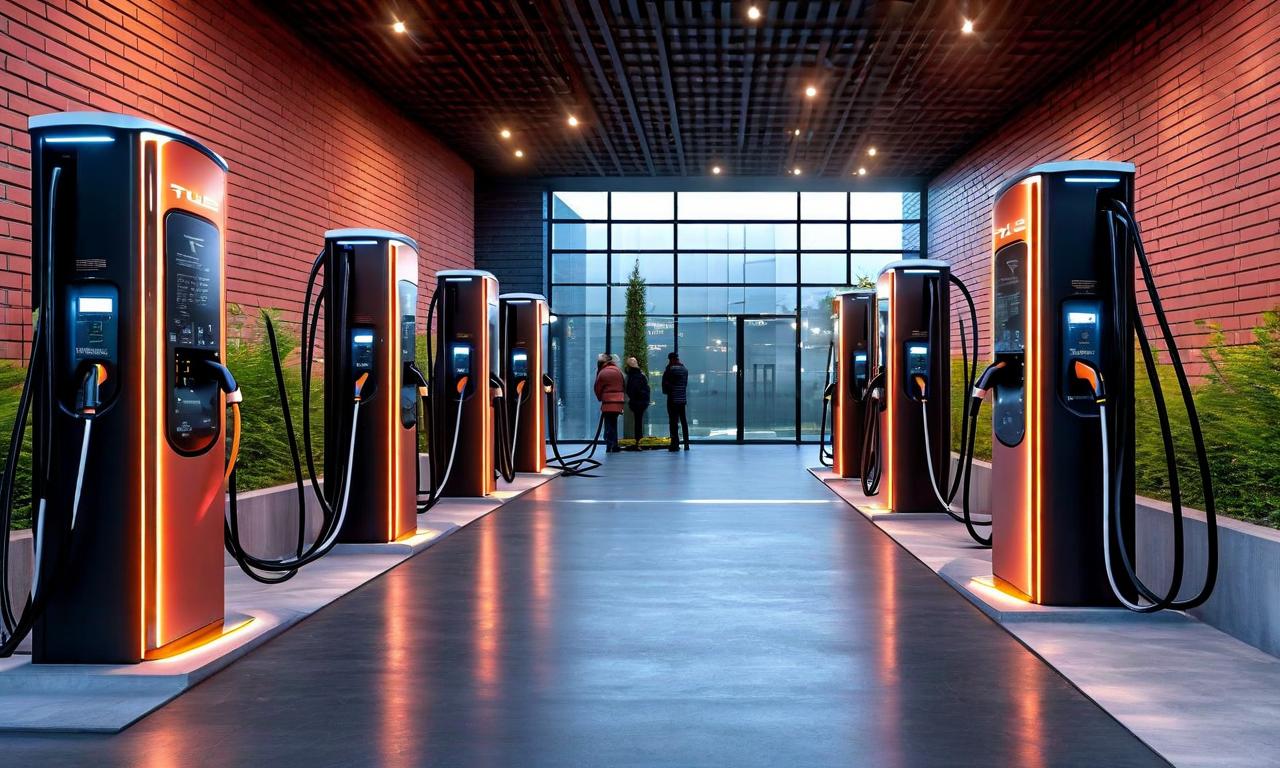

*this image is generated using AI for illustrative purposes only.
The global electric vehicle industry is bracing for a challenging period as growth momentum slows significantly across major markets. BloombergNEF projects that drivers will purchase 24.30 million passenger EVs in 2026, representing a modest 12% increase compared to the robust 23% growth recorded in the previous year. This deceleration reflects a confluence of policy changes, market saturation, and strategic pivots by major manufacturers worldwide.
US Market Faces 'EV Winter' Amid Policy Reversals
The United States is experiencing what industry experts describe as an "EV winter," with the market facing substantial headwinds. The Trump administration's decision to withdraw consumer tax credits of up to $7,500.00 after September, combined with the hollowing out of fuel-economy standards, has severely impacted demand. The immediate effects are stark, with US EV sales in December plunging 41% compared to the same period in the previous year.
Ford Motor's recent strategic overhaul exemplifies the sector's struggles. The company announced $19.50 billion in charges related to a comprehensive restructuring of its EV business, including the significant decision to convert its flagship F-150 Lightning electric truck to an extended-range hybrid vehicle. This move highlights the fragility of short-term prospects for electric vehicle manufacturers.
Boston Consulting Group's global lead for EVs and energy storage, Nathan Niese, suggests that manufacturers will need to navigate difficult months ahead before a potential sales revival in 2027 and 2028. The current environment offers little optimism for 2026 specifically, despite the positive long-term trajectory for battery-powered vehicles.
China Implements Market Cooling Measures
Even China, the world's dominant EV market, is experiencing a deliberate slowdown as authorities implement measures to cool what they describe as "rat-race competition" in the crowded automotive sector. The Chinese government has cut EV tax breaks in half for 2026 and introduced new restrictions on its cash-for-clunkers program, limiting eligibility for consumers.
| Market Metric: | 2025 Performance | 2026 Projection | Growth Change |
|---|---|---|---|
| China Passenger EV Sales: | 15.60 million units | Not specified | 27% to 13% |
| Global EV Sales Growth: | 23% | 12% | -11 percentage points |
| Chinese EV Exports (Q1-Q3): | Nearly 1 million units | 54% increase | Continued expansion |
BYD, China's EV champion, posted its weakest annual sales growth since 2020 as competition intensified from rivals including Geely Automobile Holdings and technology giant Xiaomi. The company faces increasing pressure as Chinese automakers expand into more challenging markets, including smaller cities and rural areas where growth rates are naturally slower.
To offset domestic market softening, Chinese manufacturers have aggressively pursued export opportunities. In the first three quarters of 2025, Chinese companies sold nearly one million EVs overseas, marking a 54% increase from 2024. BYD alone aims to export 1.60 million vehicles according to Citi analysts, while brands like Geely's Zeekr, Chery Automobile, and SAIC Motor are all targeting international markets.
European Market Shows Mixed Signals
The European Union remains the top destination for Chinese vehicles despite implementing tariffs on imports. However, the bloc has recently softened its ban on combustion vehicle sales, contributing to slowing EV adoption rates. This policy wavering creates additional uncertainty for manufacturers planning their European strategies.
Improving Economics Offer Hope
Despite challenging policy environments, the fundamental economics of electric vehicles continue to improve. Battery prices, which represent the most expensive component of any electric car or truck, fell an additional 8% in 2025 according to BloombergNEF estimates. This cost reduction addresses one of the largest barriers to EV adoption in the US market.
Several manufacturers are preparing to launch affordable models targeting the crucial midsize SUV segment, where American drivers purchase approximately 2.50 million vehicles annually. The market sweet spot of $35,000.00 or less represents 40% of this segment, and at least five new or substantially overhauled models will launch around this price point in 2026.
| Upcoming Affordable Models: | Details |
|---|---|
| Toyota C-HR BEV: | All-new model targeting $35,000 price point |
| Subaru Uncharted: | New entry in midsize SUV segment |
| Kia EV3: | Affordable SUV option |
| Slate Auto Model: | Startup entry in competitive segment |
BloombergNEF analyst Huiling Zhou notes that "carmakers that can cut costs and offer affordable models in the most desirable vehicle segments are likely to see sustained sales growth," suggesting that manufacturers focusing on value propositions may weather the current downturn more successfully than premium-focused competitors.
 18
18







 Create Custom Screeners
  Access 200+ Pre-built Filters
  Use 50+ Readymade Screener





