

Ford's Labor Woes Highlight Broader US Skilled Worker Shortage


Ford Motor Company is struggling with 5,000 open mechanic positions, offering salaries up to $120,000. This reflects a wider US labor crisis with over one million unfilled critical job openings across various sectors. The manufacturing industry alone has 400,000+ open jobs, with over 50% of companies citing recruitment and retention as their biggest challenge. Ford has responded by eliminating its lowest wage tier and agreeing to a 25% salary increase over four years with the UAW union. CEO Jim Farley attributes the shortage to insufficient trade schools and complex skills requiring extensive training. However, Gen Z enrollment in vocational programs has increased by 16%, reaching a record high since 2018.

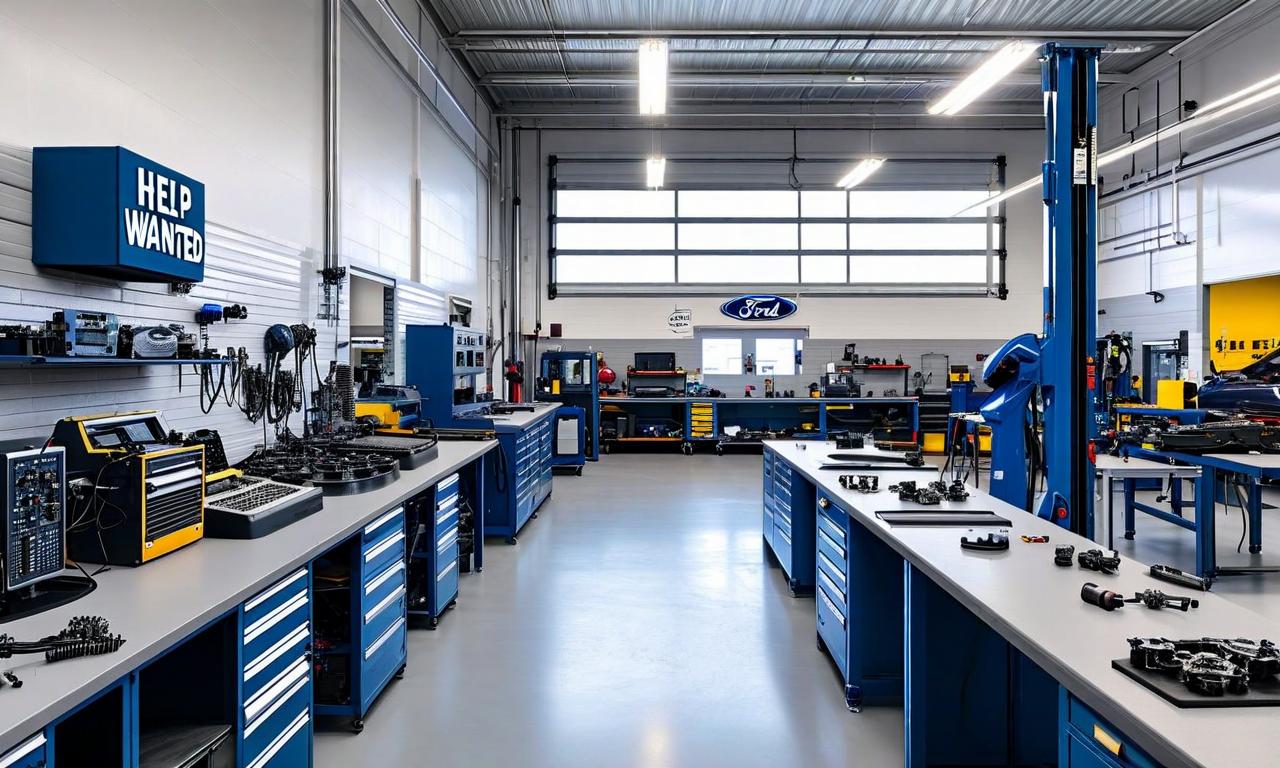

*this image is generated using AI for illustrative purposes only.
Ford Motor Company is grappling with a significant labor shortage, shedding light on a wider crisis affecting various industries across the United States. CEO Jim Farley recently revealed that the automotive giant has 5,000 open mechanic positions, offering salaries that nearly double the median American wage.
Key Highlights
- Ford has 5,000 unfilled mechanic positions
- Salaries for these roles reach up to $120,000
- This issue is part of a broader US labor crisis affecting multiple sectors
The Bigger Picture
The labor shortage at Ford is just the tip of the iceberg. According to Farley, the US is facing a labor crisis that extends far beyond the automotive industry. Over one million critical job openings remain unfilled across various sectors, including:
- Emergency services
- Trucking
- Factory work
- Plumbing
- Electrical work
- Other skilled trades
Manufacturing Sector Hit Hard
The manufacturing industry, in particular, is feeling the pinch of this labor shortage:
| Metric | Value |
|---|---|
| Open manufacturing jobs | 400,000+ |
| US unemployment rate | 4.30% |
| Companies identifying recruiting and retention as biggest challenge | Over 50% |
Source: Bureau of Labor Statistics, Manufacturing Institute and Deloitte study
Ford's Response to the Labor Challenge
Ford has taken several steps to address the labor shortage and improve worker conditions:
- Eliminated its lowest wage tier
- Agreed to a 25% salary increase over four years with the United Auto Workers union
Root Causes and Potential Solutions
Farley points to systemic issues contributing to the skilled labor shortage:
- Insufficient trade schools and training programs
- Complex skills requiring at least five years of instruction
However, there are signs of positive change. Gen Z enrollment in vocational programs surged 16% last year, reaching the highest level since tracking began in 2018.
Implications for the US Economy
This widespread labor shortage in critical industries could have far-reaching consequences for the US economy. As companies struggle to fill essential positions, it may lead to:
- Increased production costs
- Delays in services and manufacturing
- Potential impact on economic growth
The situation at Ford serves as a wake-up call for policymakers, educational institutions, and industries to address the growing skills gap and ensure a robust workforce for the future.
 20
20






 Access 50+ Readymade Screeners
  Use 200+ Custom Filters
  Get Full Market Insights





