
 NewsElon Musk Calls Money 'Worthless Database,' Predicts AI Will Transform Economy Within 20 Years
Elon Musk Calls Money 'Worthless Database,' Predicts AI Will Transform Economy Within 20 Years


Elon Musk has outlined his unconventional economic philosophy, describing money as merely a 'database for exchange' with no inherent value, while emphasizing that goods and services constitute the real economy. He identifies labor as the primary constraint limiting economic output and predicts that artificial intelligence and robotics will eliminate this bottleneck within 10-20 years. Musk envisions a future where work becomes optional, goods and services cost almost nothing, and traditional retirement planning becomes irrelevant due to technological abundance.

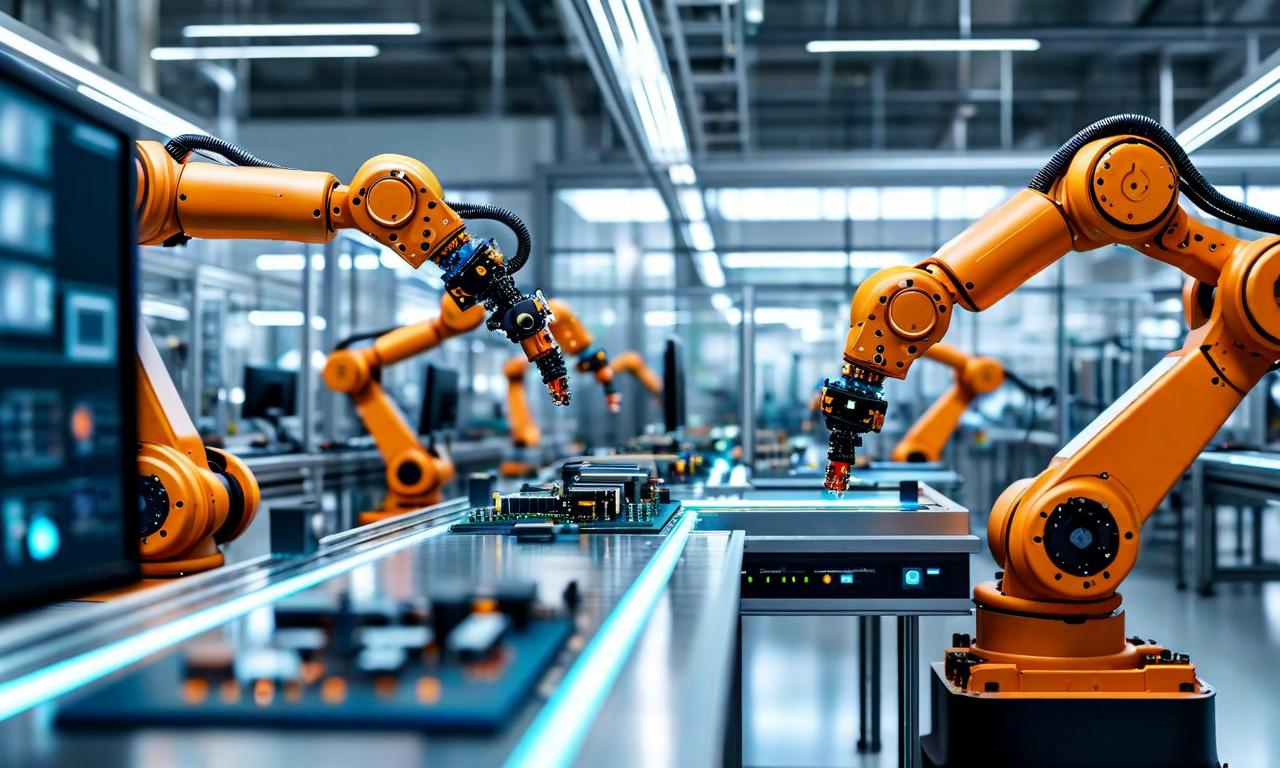

*this image is generated using AI for illustrative purposes only.
Tesla and SpaceX CEO Elon Musk has shared his distinctive perspective on money and economics, challenging conventional understanding of financial systems and predicting radical changes driven by artificial intelligence. His comments, spanning from April 2022 interviews to recent social media posts, present a vision where traditional economic concepts may become obsolete.
Money as Information System, Not Value Store
Speaking to Mathias Döpfner, CEO of Axel Springer, on the WELT Documentary channel in April 2022, Musk explained his fundamental view of monetary systems. "What is an economy? People get confused, sometimes they think an economy is money. Money is a database for exchange requisite services and for time-shifting the exchange of written services, that's it. Money is a database, it doesn't have power in and of itself," he stated.
To illustrate his point, Musk presented hypothetical scenarios that highlight the distinction between financial wealth and practical value:
| Scenario | Financial Asset | Practical Value |
|---|---|---|
| Shipwrecked on remote island | Trillion dollars in Swiss bank account | Worthless compared to can of soup |
| Isolated situation | All Bitcoin in the world | Still leads to starvation |
| Real economy | Currency systems | Goods and services |
Labor as Economic Constraint
Musk identified labor as the primary bottleneck in economic production. "The limiting factor for the economy is labour and so if you address the limiting factor for the economy then it's not clear that an economy in the traditional sense has any meaning. Because you have no constraint on goods and services, we decide to make things scarce, like a particular piece of art," he explained during the 2022 interview.
This perspective forms the foundation of his predictions about future economic transformation through technological advancement.
AI-Driven Economic Revolution
Musk's recent statements suggest he believes artificial intelligence will fundamentally alter economic structures within the next two decades. He has made several specific predictions about this transformation:
Retirement Planning Obsolescence
Musk recently advised against traditional retirement savings, stating: "One like side recommendation I have is, don't worry about squirreling money away for retirement. In 10 or 20 years, you won't need to save for retirement. If any of the things that we've said are true, saving for a retirement will be irrelevant." He suggested that healthcare, housing, and income needs will be met by an abundant society.
Work as Optional Activity
In October 2025, Musk posted on X (formerly Twitter): "AI and robots will replace all jobs. Working will be optional, like growing your own vegetables, instead of buying them from the store." This statement reflects his belief that technological advancement will eliminate the necessity of traditional employment.
Near-Zero Cost Goods and Services
During an interview with United States Senator Ted Cruz, Musk described a future economic model where "tens of billions of robots will make you anything or provide any service you want for basically next to nothing." This vision suggests that automation could drive the cost of goods and services to minimal levels.
Economic Philosophy and Future Implications
Musk's economic philosophy centers on the distinction between financial systems and productive capacity. His arguments suggest that current monetary frameworks may become irrelevant as artificial intelligence and robotics address what he considers the fundamental constraint of human labor. These perspectives challenge traditional economic thinking about value creation, wealth accumulation, and the role of work in society.
The billionaire's predictions span a 10-20 year timeframe, during which he expects artificial intelligence-led advances to create conditions of material abundance that could reshape fundamental economic relationships and eliminate traditional concerns about financial security.
 19
19







 Access 50+ Readymade Screeners
  Use 200+ Custom Filters
  Get Full Market Insights





