

EIA Revises U.S. Natural Gas Consumption and Production Forecasts


The Energy Information Administration (EIA) has updated its U.S. natural gas forecasts. For 2025, consumption is projected to increase to 91.80 BCF/D from 91.60 BCF/D. The 2025 dry gas output forecast remains at 107.70 BCF/D, while the 2026 production forecast has been significantly raised to 109.10 BCF/D from 107.80 BCF/D. These revisions suggest potential growth in domestic energy supply and export opportunities.

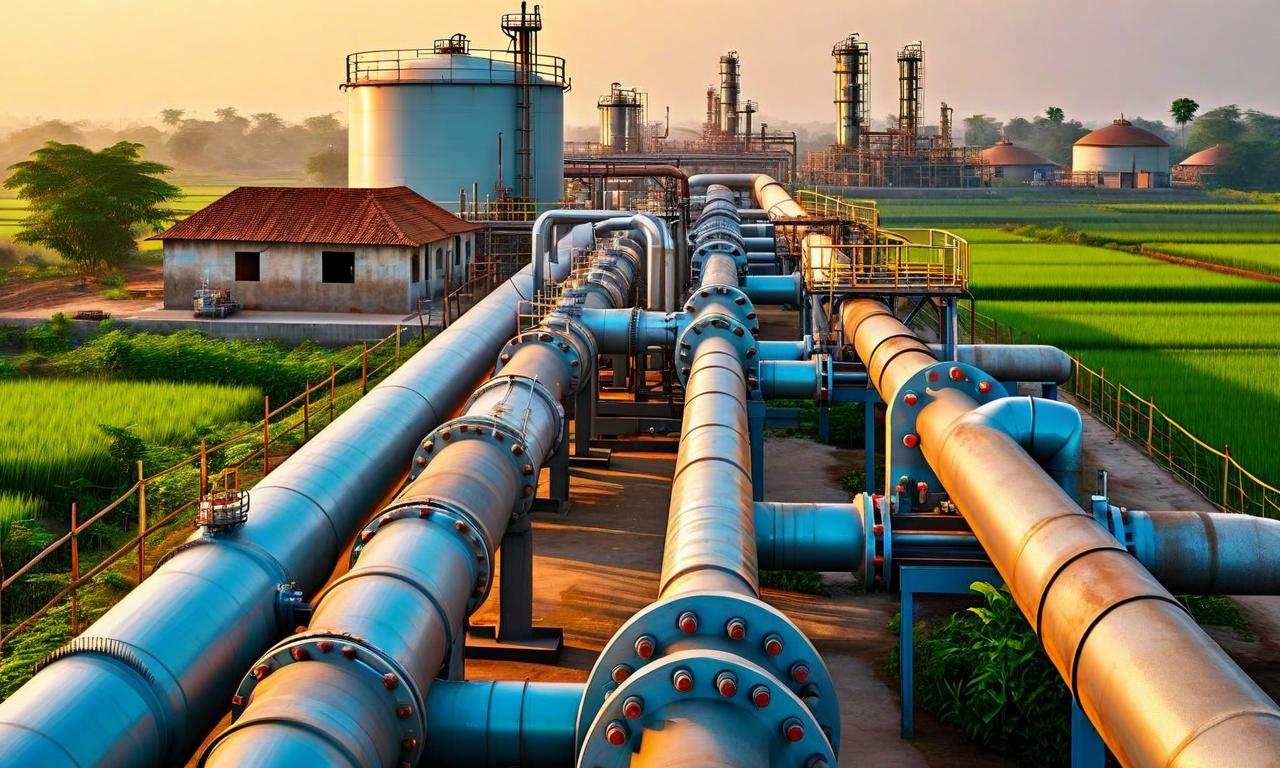

*this image is generated using AI for illustrative purposes only.
The Energy Information Administration (EIA) has updated its forecasts for U.S. natural gas consumption and production, indicating potential changes in the energy landscape for upcoming years.
Consumption Outlook
The EIA has raised its projection for U.S. natural gas consumption in 2025. The new forecast estimates consumption at 91.80 billion cubic feet per day (BCF/D), up from the previous estimate of 91.60 BCF/D. This upward revision suggests a potential increase in demand for natural gas in the United States.
Production Forecasts
While the 2025 dry gas output forecast remains unchanged at 107.70 BCF/D, the EIA has made a significant adjustment to its 2026 projection:
| Year | Previous Forecast (BCF/D) | New Forecast (BCF/D) | Change |
|---|---|---|---|
| 2025 | 107.70 | 107.70 | 0.00 |
| 2026 | 107.80 | 109.10 | +1.30 |
The increase in the 2026 dry natural gas production forecast indicates that the EIA anticipates potential growth in U.S. energy production capacity.
Implications
These revised forecasts may have several implications:
Domestic Energy Supply: The higher production forecast suggests the possibility of a more abundant domestic energy supply in the coming years.
Export Potential: With production potentially outpacing consumption, there may be increased opportunities for natural gas exports.
Energy Market Dynamics: The forecasts could influence natural gas prices and investment decisions in the energy sector.
Environmental Considerations: Changes in natural gas consumption and production may have environmental implications that policymakers and industry stakeholders might need to address.
It's important to note that these are forecasts, and actual figures may vary based on various factors, including technological advancements, policy changes, and global energy market dynamics.
 15
15






 Access Market Heat-map & Insights
  Create, Save & Share your Screener
  Use 200+ Screening Filters





