

China's $11 Trillion Stock Market Lags Behind US Despite Reform Efforts


China's stock market, valued at $11 trillion, has significantly underperformed compared to the US market over the past decade. A $10,000 investment in China's CSI 300 would have yielded only $3,000 additional over ten years, while the same in the S&P 500 would have tripled. Structural issues stem from the market's original design to funnel savings into state-owned enterprises. Recent reforms include reducing IPOs and increasing dividends, but their impact remains limited compared to global standards. Authorities are now balancing between financing crucial tech sectors and protecting investor interests.

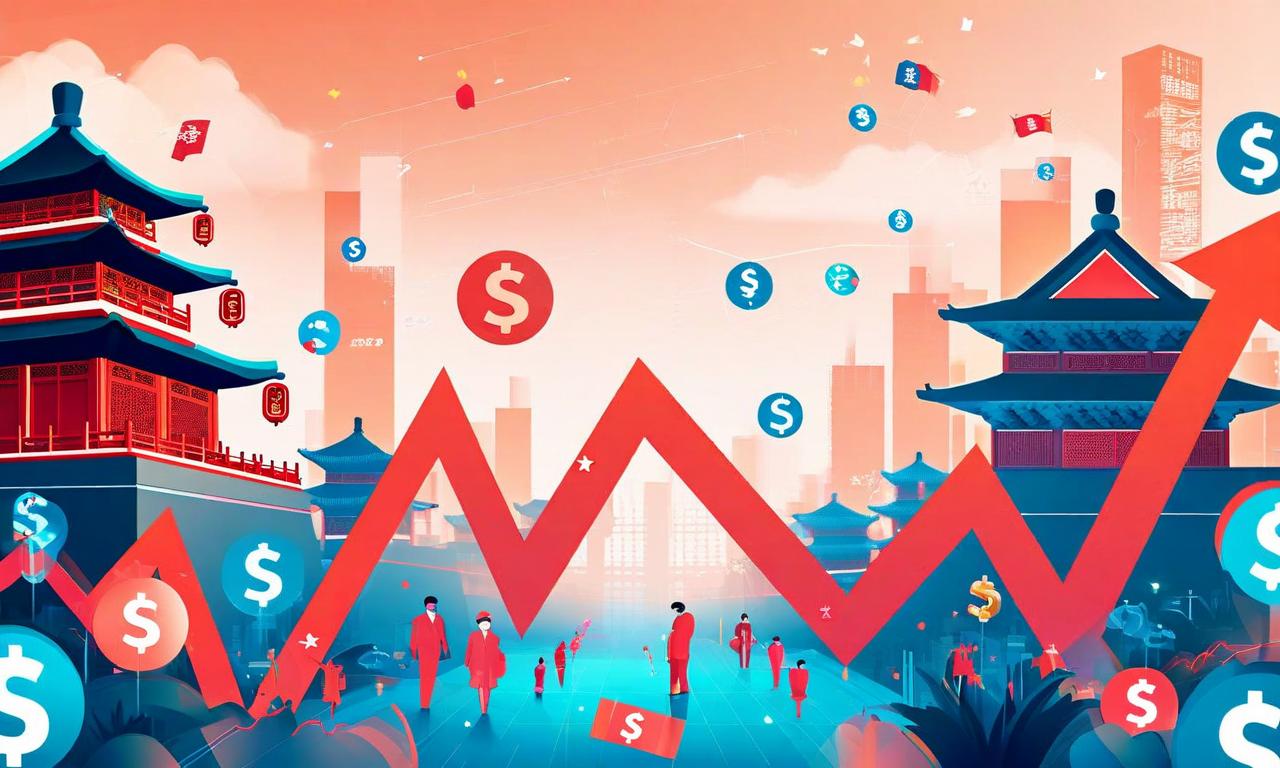

*this image is generated using AI for illustrative purposes only.
China's stock market, despite its massive $11 trillion valuation, has significantly underperformed compared to its US counterpart over the past decade, raising concerns about its ability to deliver returns to investors.
Stark Performance Contrast
A stark comparison reveals the extent of this underperformance:
- A $10,000 investment in China's CSI 300 benchmark would have yielded only an additional $3,000 over the last ten years.
- In contrast, the same investment in the S&P 500 would have tripled, highlighting the vast disparity in returns between the two markets.
Structural Challenges
The roots of this underperformance can be traced back to the market's original design. China's stock market was initially conceived as a mechanism to funnel household savings into state-owned enterprises for infrastructure development, rather than prioritizing investor returns. This foundational approach has led to persistent structural issues, including:
- Oversupply of shares
- Questionable post-listing practices
Economic Implications
The poor performance of Chinese equities has had far-reaching consequences for the country's economy. It has encouraged Chinese consumers to save rather than spend, creating significant challenges for President Xi Jinping's ambitious 5% economic growth target.
Recent Reforms and Progress
In response to these challenges, Chinese authorities have implemented several reforms:
- IPOs have been reduced to nearly a third of 2023 levels
- Cash dividends increased by 9% to 2.4 trillion yuan
However, the impact of these reforms appears limited when compared to global standards. For instance, CSI 300 companies spent only 0.2% of their market value on share buybacks, a figure that pales in comparison to the nearly 2% spent by S&P 500 firms.
Balancing Act: Financing vs. Investor Protection
Recent regulatory moves indicate a shift in focus. Authorities are now:
- Resuming listings of unprofitable companies
- Encouraging more IPO filings to fund tech companies
These actions aim to finance crucial sectors for competition with the US, including AI, semiconductors, and robotics. However, this approach risks prioritizing financing needs over investor protection once again.
Looking Ahead
As China's stock market continues to evolve, the balance between fueling economic growth and delivering investor returns remains a critical challenge. The success of ongoing reforms and the market's ability to attract both domestic and international investors will be crucial in determining its future trajectory in the global financial landscape.
 19
19





 Create Custom Screeners
  Access 200+ Pre-built Filters
  Use 50+ Readymade Screener





