
 NewsChina Mandates 50% Domestic Equipment Rule for Chipmakers to Build Self-Sufficient Supply Chain
China Mandates 50% Domestic Equipment Rule for Chipmakers to Build Self-Sufficient Supply Chain


China has implemented a 50% domestic equipment mandate for chipmakers adding new capacity, requiring proof through procurement tenders for state approval. The policy, part of President Xi Jinping's "whole nation" semiconductor self-sufficiency effort, has accelerated following 2023 US export restrictions. Domestic equipment makers like Naura Technology and Advanced Micro-Fabrication Equipment are gaining significant market share, with strong financial performance and patent filing increases, while China approaches 50% self-sufficiency in key equipment categories previously dominated by foreign suppliers.

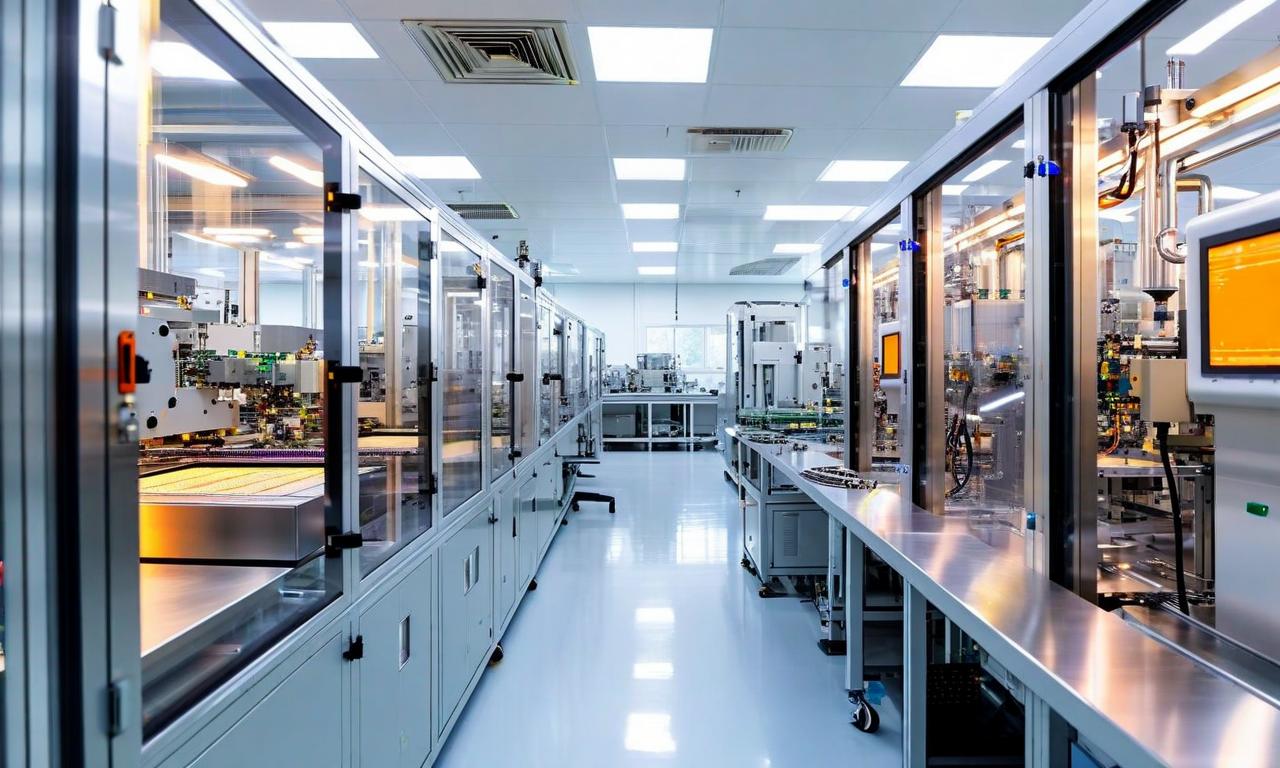

*this image is generated using AI for illustrative purposes only.
China has introduced a significant new requirement for its semiconductor industry, mandating that chipmakers use at least 50% domestically made equipment when adding new production capacity. The rule, while not publicly documented, has been communicated to manufacturers seeking state approval for plant construction or expansion in recent months.
Policy Implementation and Requirements
Chipmakers must demonstrate through procurement tenders that at least half their equipment will be Chinese-made to secure government approval. Applications failing to meet this threshold are typically rejected, though authorities provide flexibility depending on supply constraints. The requirements are relaxed for advanced chip production lines where domestically developed equipment is not yet fully available.
| Policy Parameter | Details |
|---|---|
| Minimum Domestic Equipment | 50% of total equipment |
| Application Process | Proof required through procurement tenders |
| Flexibility | Granted based on supply constraints |
| Advanced Production Lines | Relaxed requirements due to limited domestic availability |
| Ultimate Goal | 100% domestic equipment usage |
Authorities prefer percentages much higher than 50%, with sources indicating the eventual aim is for plants to use 100% domestic equipment. This mandate represents one of the most significant measures Beijing has introduced to reduce dependence on foreign technology, particularly following US export restrictions implemented in 2023.
Strategic Context and Government Support
President Xi Jinping has called for a "whole nation" effort to build a fully self-sufficient domestic semiconductor supply chain, involving thousands of engineers and scientists at companies and research centers nationwide. This comprehensive approach spans the entire supply-chain spectrum, with Chinese scientists working on prototypes of machines capable of producing cutting-edge chips.
To support the local chip supply chain, Beijing has invested hundreds of billions of yuan through the "Big Fund," which established a third phase in 2024 with 344 billion yuan ($49.00 billion) in capital. State-affiliated entities placed a record 421 orders for domestic lithography machines and parts this year, worth around 850 million yuan, signaling surging demand for locally developed technologies.
Market Impact and Industry Transformation
The policy is already yielding significant results in critical manufacturing areas. Before the 2023 US export restrictions, domestic fabrication facilities like Semiconductor Manufacturing International Corporation (SMIC) preferred US equipment and rarely gave Chinese firms opportunities. However, the restrictions forced Chinese fabs to work with domestic suppliers.
Key Performance Indicators
| Company | Financial Performance | Patent Activity |
|---|---|---|
| Naura Technology | Revenue jumped 30% to 16 billion yuan (H1 2025) | Filed record 779 patents in 2025 |
| Advanced Micro-Fabrication Equipment | Revenue increased 44% to 5 billion yuan (H1 2025) | Filed 259 patents |
Technological Advancement and Market Share Gains
China's largest chip equipment group, Naura, is testing its etching tools on SMIC's cutting-edge 7nm production line, following successful deployment on 14nm processes. This represents rapid advancement in etching technology, a critical chip manufacturing step involving material removal from silicon wafers to create transistor patterns.
Naura has become a key partner for Chinese memory chipmakers, supplying etching tools for advanced chips with more than 300 layers. The company developed electrostatic chucks to replace worn parts in Lam Research equipment that could no longer be serviced after 2023 restrictions.
Competitive Landscape Shifts
Analysts estimate China has reached approximately 50% self-sufficiency in photoresist-removal and cleaning equipment, a market previously dominated by Japanese firms but now locally led by Naura. Advanced etching tools, once predominantly supplied by foreign firms such as Lam Research and Tokyo Electron, are being partially replaced by Naura and Advanced Micro-Fabrication Equipment.
The domestic equipment market is expected to be dominated by two to three major manufacturers, with Naura positioned as a definitive leader. This transformation is viewed with concern by global competitors as foreign suppliers face displacement from the Chinese market, while domestic firms rapidly improve their capabilities through accelerated government requirements.
 18
18





 Access Market Heat-map & Insights
  Create, Save & Share your Screener
  Use 200+ Screening Filters





