

AI's Memory Hunger Creates Global Chip Crisis as Tech Giants Queue in South Korea


Global memory chip shortages have forced tech giants including Apple, Google, Microsoft, and Nvidia to send executives to South Korea for extended negotiations with Samsung and SK hynix. AI demand for High-Bandwidth Memory, requiring three times more manufacturing capacity than standard DRAM, has created unprecedented supply constraints. Memory prices surged 40-50% in Q4 2025, with SK hynix securing full 2026 production demand, marking an industry shift from commodity to strategic resource.

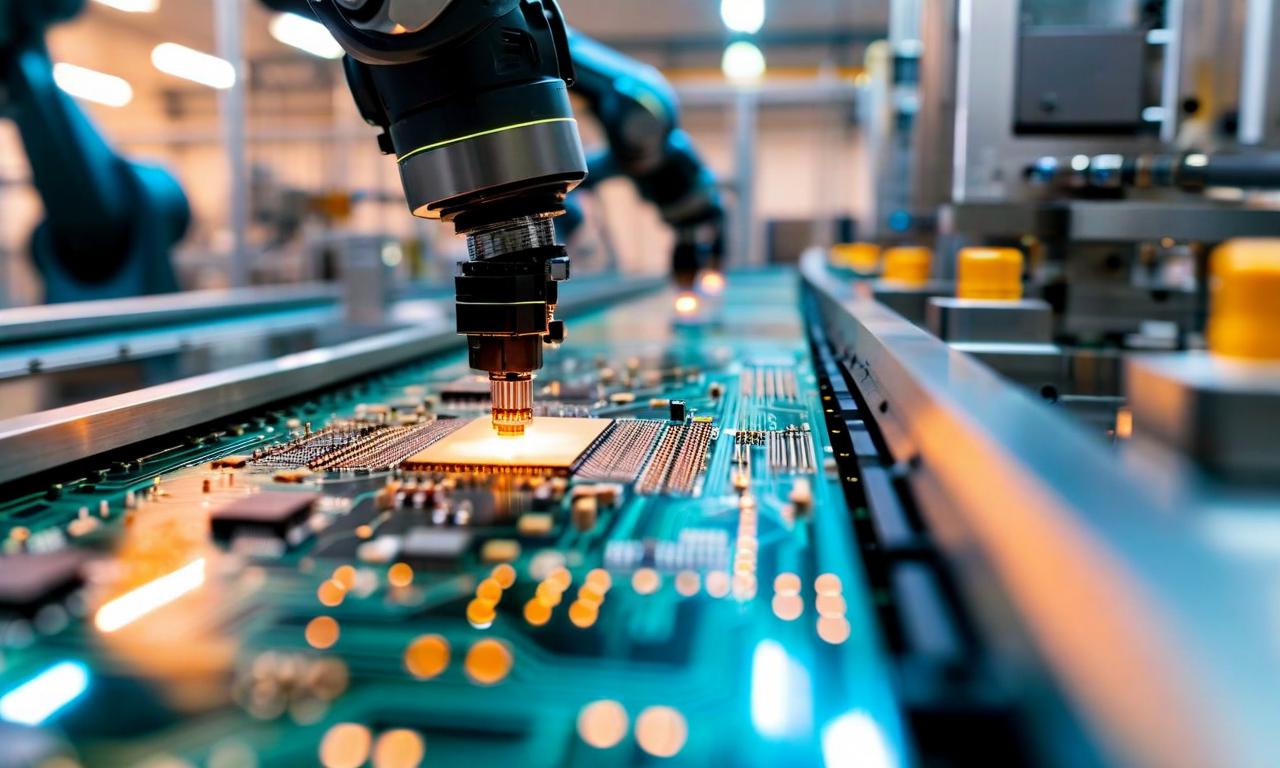

*this image is generated using AI for illustrative purposes only.
A global shortage of memory chips has transformed one of technology's most invisible supply chain components into its most powerful bottleneck, forcing even the world's largest technology companies into unprecedented negotiations. Senior procurement executives from major tech firms are now traveling to Seoul for extended stays near chipmaker facilities, negotiating directly with Samsung Electronics and SK hynix in what industry insiders have begun calling "DRAM beggars."
Apple's procurement executives have established what amounts to a permanent presence in South Korea, booking extended hotel stays near Samsung Electronics' and SK hynix's chip plants in Hwaseong to secure long-term DRAM and RAM supplies. This represents an extraordinary shift for an industry traditionally accustomed to quarterly negotiations conducted remotely, with senior deal-makers now lingering for weeks or even months just to secure memory allocations for future devices.
Tech Giants Scramble for Memory Access
Apple is not alone in this desperate scramble. Executives from Google, Microsoft, Nvidia, and Amazon have also been making repeated trips and extended stays near Korea's memory manufacturing hubs. The unusual on-the-ground presence underscores how tight the DRAM market has become and the anxiety levels among even the largest technology companies.
| Company | Action Taken |
|---|---|
| Apple | Extended hotel stays near Samsung/SK hynix facilities |
| Repeated trips to Korean memory hubs | |
| Microsoft | Extended executive presence in South Korea |
| Nvidia | Regular negotiations at chip manufacturing sites |
| Amazon | On-ground presence for memory allocation talks |
AI Demand Transforms Memory Economics
Memory chips, particularly DRAM, have evolved beyond commodity components for phones and PCs into strategic resources for artificial intelligence infrastructure. Every AI data center requires vast quantities of high-end memory, especially High-Bandwidth Memory (HBM), which operates alongside powerful AI processors. HBM used in AI accelerators demands roughly three times the manufacturing capacity per gigabyte compared to conventional DRAM, significantly reducing chipmakers' ability to supply everyday memory products.
Memory manufacturers are reallocating production capacity away from standard DRAM toward HBM and premium server memory, where demand is surging and profit margins are substantially higher. This strategic shift creates a cascading effect throughout the supply chain, as memory fabrication facilities can only produce limited wafer quantities.
Supply Constraints Drive Price Surge
The financial impact has been severe and immediate. According to Counterpoint Research's Memory Price Tracker for January 2026, memory chip prices climbed sharply in Q4 2025, with combined DRAM and NAND prices rising 40-50% during the quarter.
| Metric | Q4 2025 Performance |
|---|---|
| DRAM Price Increase | 40-50% |
| NAND Price Increase | 40-50% |
| Market Pressure | Unusually High |
| Supply Outlook | Critically Tight |
Wonjin Lee, president and head of global marketing at Samsung Electronics, acknowledged the pricing pressure at CES 2026, stating: "Prices are going up even as we speak. Obviously, we don't want to convey that burden to the consumers, but we're going to be at a point where we have to actually consider repricing our products."
Memory Makers Maintain Strategic Control
For memory producers, this represents the first sustained period of market leverage after years of cyclical downturns. Rather than increasing production to meet demand, companies are maintaining tight supply control while demand remains elevated. SK hynix reported in its third-quarter FY25 results that it had already secured full customer demand for all DRAM and NAND production throughout 2026.
Industry analysts note this crisis differs fundamentally from the COVID-era semiconductor shortage, which resulted from logistical disruptions and factory shutdowns. The current shortage stems from long-term investment choices and a strategic pivot toward AI-centric components, with memory makers rationing capacity to maximize returns.
Broader Market Implications
The effects extend far beyond major technology companies. PC and smartphone manufacturers face rising costs as memory becomes more expensive, while enterprise IT budgets experience pressure from higher server memory prices. Smaller hardware manufacturers, lacking the bargaining power of hyperscale cloud providers, face the greatest risk of supply disruptions.
A Hankyung analyst consensus report indicates the memory market is entering an "unprecedented supercycle," with limited new fabrication facility output and continued capital expenditure discipline keeping DRAM inventories tight. This dynamic maintains pricing power with suppliers while pushing buyers toward long-term supply commitments and supporting elevated memory prices across all market segments.
Historical Stock Returns for Hatsun Agro Product
| 1 Day | 5 Days | 1 Month | 6 Months | 1 Year | 5 Years |
|---|---|---|---|---|---|
| +0.58% | -4.73% | +1.39% | -1.19% | -0.13% | +23.84% |
 16
16






 Access Market Heat-map & Insights
  Create, Save & Share your Screener
  Use 200+ Screening Filters





