

SK Hynix hits first-ever daily limit as AI chip demand surges


SK Hynix shares hit a historic 30% daily limit in South Korea, closing at 1.718 million won, as Asian chip stocks rebounded from earlier sell-offs. The rally was supported by record Q2 revenue of 79.32 trillion KRW and a 557% jump in operating profit to 60.54 trillion KRW, driven by surging AI memory demand. Although operating profit missed analyst estimates, net profit reached 93.92 trillion KRW, bolstered by non-operating gains. The stock's surge also increased the value of Chairman Chey Tae-won's recent share purchase, while analysts cite tight supply conditions lasting until 2028 as a key support factor.



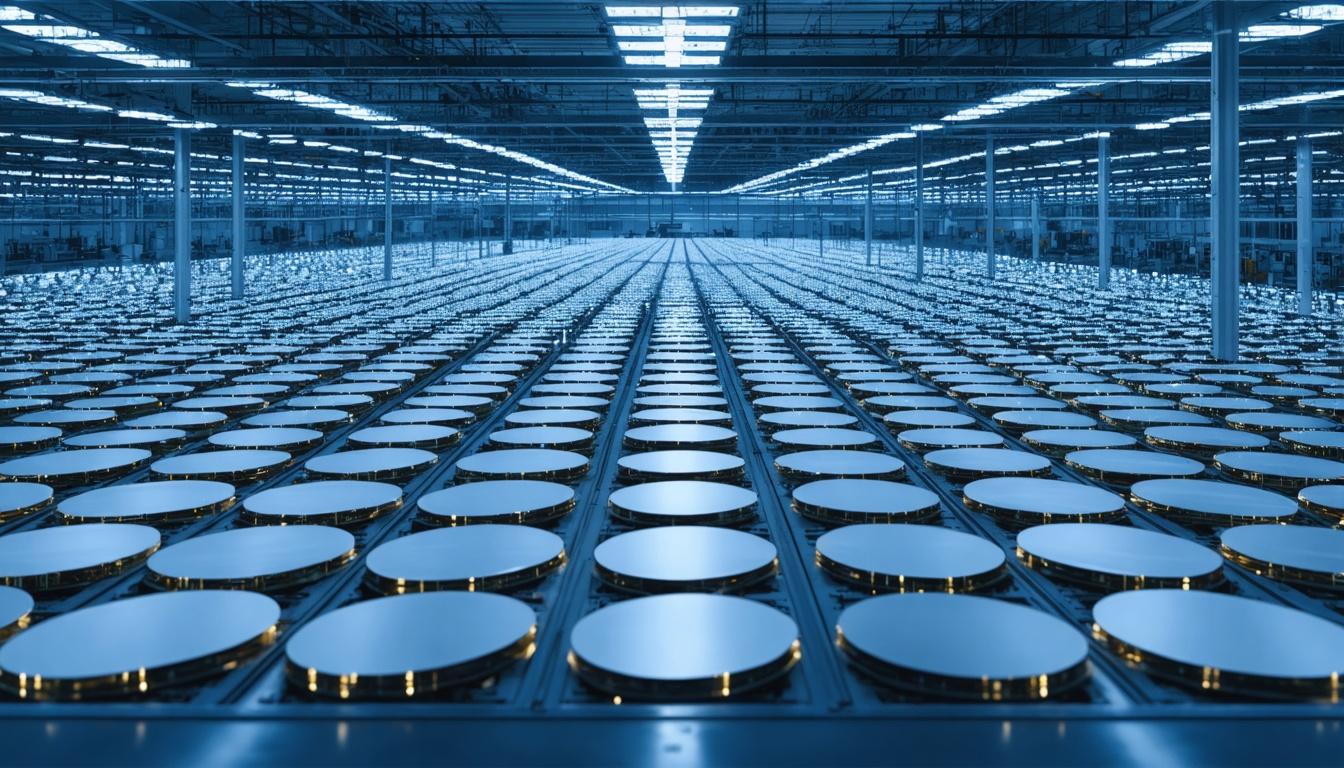
*this image is generated using AI for illustrative purposes only.
SK Hynix Inc. (NASDAQ: SKHY) shares hit their first-ever intraday price limit on Friday, surging 29.95% to close at 1.718 million won. The milestone move reflects a sharp recovery in Asian semiconductor stocks following a steep sell-off earlier in the week driven by AI valuation concerns and competition from Chinese memory chipmakers. The rally was further fueled by stronger-than-expected cloud earnings from Amazon.com Inc. and Microsoft Corp., which sent the iShares Semiconductor ETF up 8.5% overnight.
The stock opened 28.37% higher at 1.697 million won before climbing to the South Korean exchange's 30% daily cap, a limit raised from 15% in June 2015. In after-hours trading on the NASDAQ, SK Hynix's American depositary receipts climbed 3.29%. The surge also amplified the value of a recent stake purchase by SK Group Chairman Chey Tae-won, who bought 3,620 shares for 4.9 billion won ($3.41 million) on Thursday; the position gained approximately 1.3 billion won ($904,000) in value within a single day.
Record Earnings Drive Momentum
The market reaction follows SK Hynix's report of record second-quarter results, underpinned by booming demand for AI memory chips. While revenue more than tripled to a record 79.32 trillion KRW (about $56.7 billion), operating profit rose 557% year over year to 60.54 trillion KRW (about $43.2 billion). This figure fell short of analyst estimates of 64 trillion KRW (about $45.7 billion), though net profit climbed significantly to 93.92 trillion KRW (about $67.1 billion), aided by non-operating gains. The company posted a record 76% operating margin during the period.
| Metric | Value | Context |
|---|---|---|
| Operating Profit | 60.54 trillion KRW | +557% YoY; missed 64 trillion KRW estimate |
| Revenue | 79.32 trillion KRW | Record high; tripled YoY |
| Net Profit | 93.92 trillion KRW | Driven by non-operating gains |
| Operating Margin | 76% | Record level |
Supply Dynamics and Outlook
Analysts continue to view tight supply and robust AI-driven demand as key supports for the memory sector. Wolfe Research analyst Chris Caso noted that meaningful oversupply is unlikely before 2028 due to the extended timeline required to build new chip manufacturing capacity. Despite risks from pricing pressure and Chinese competition, SK Hynix remains a central player in the AI memory market, with investors balancing near-term earnings strength against longer-term supply chain dynamics.

How might the recent 30% daily price limit increase impact trading volatility and liquidity for SK Hynix shares in future market swings?
Given the analyst prediction that meaningful oversupply is unlikely before 2028, how prepared are competitors like Samsung and Micron to accelerate capacity expansion without triggering a price war?
What specific measures is SK Hynix taking to mitigate the growing competitive threat from Chinese memory chipmakers amidst current geopolitical tensions?
 20
20






 Create Custom Screeners
  Access 200+ Pre-built Filters
  Use 50+ Readymade Screener





