Rupee Falls 3 Paise to 89.90 Against US Dollar in Early Trade

2 min read     Updated on 31 Dec 2025, 10:02 AM
scanx
Reviewed by
Radhika SScanX News Team
Overview

The Indian rupee weakened by 3 paise to 89.90 against the US dollar in early trade on Thursday, reversing Wednesday's gains of 31 paise. The decline was attributed to rising global crude oil prices, continued foreign institutional investor outflows worth ₹1,527.71 crore, and negative sentiment in domestic equity markets with Sensex falling 255.86 points and Nifty declining 65.90 points.


28701164

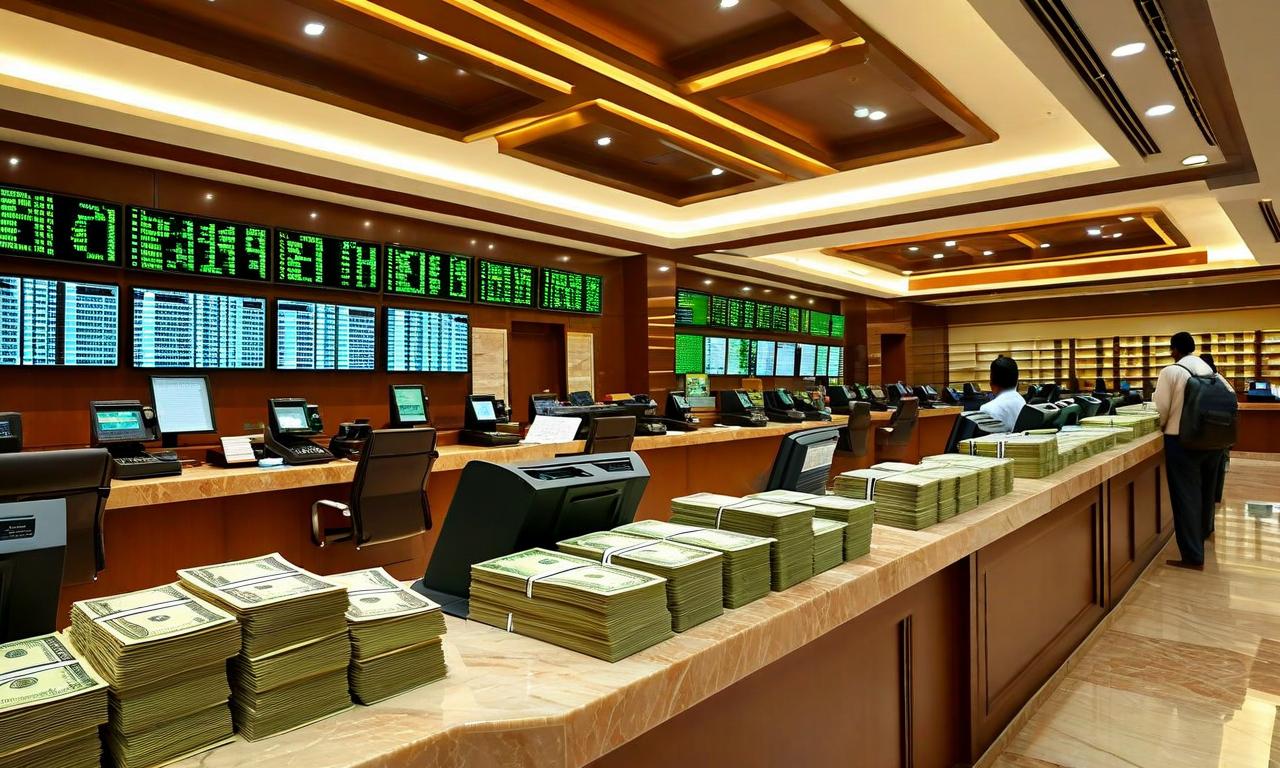
*this image is generated using AI for illustrative purposes only.

The Indian rupee weakened against the US dollar in early trade on Thursday, falling 3 paise to 89.90 amid rising global crude oil prices and foreign institutional investor outflows. The currency faced additional pressure from a strengthening dollar and weaker sentiment in domestic equity markets.

Currency Performance and Market Dynamics

At the interbank foreign exchange market, the rupee opened at 89.96 against the dollar before strengthening to 89.90, representing a decline of 3 paise from its previous close. This marks a reversal from Wednesday's session when the currency had gained 31 paise to close at 89.87.

Parameter: Current Session Previous Session Change
Opening Rate: 89.96 - -
Current Rate: 89.90 89.87 (close) -3 paise
Previous Day Move: -3 paise +31 paise -

Foreign institutional investors continued their selling pattern, offloading equities worth ₹1,527.71 crore on Wednesday, according to exchange data. This sustained outflow has been contributing to the ongoing pressure on the rupee's performance.

RBI Intervention and Expert Analysis

Anil Kumar Bhansali, Head of Treasury and Executive Director at Finrex Treasury Advisors LLP, highlighted the Reserve Bank of India's active market intervention. "The RBI capped the dollar strength against rupee at 90.30 and did not allow it go beyond this by selling at 90.22 levels on Wednesday, despite the constant dollar demand from FPIs and importers who kept buying dollars on all dips up to 89.75," Bhansali explained.

Looking ahead, Bhansali noted that "today the upside seems to be capped while the downside could extend to 89.50 if the RBI continues to intervene in the market."

Global Market Context

The broader currency and commodity landscape showed mixed pressures on the rupee:

Instrument: Level Change
Dollar Index: 98.69 +0.01%
Brent Crude: $60.19/barrel +0.38%

The dollar index, which measures the greenback's strength against six major currencies, traded marginally higher at 98.69, up 0.01%. Brent crude futures, the global oil benchmark, rose 0.38% to $60.19 per barrel, adding to the rupee's challenges as higher oil prices typically increase India's import bill.

Domestic Equity Market Performance

Domestic equity markets opened on a negative note, contributing to the overall pressure on the currency. The Sensex declined 255.86 points to 84,705.28 in early trade, while the Nifty slipped 65.90 points to 26,074.85.

Index: Opening Level Change
Sensex: 84,705.28 -255.86 points
Nifty: 26,074.85 -65.90 points

The combination of rising crude oil prices, continued FII outflows, and weak domestic market sentiment has created a challenging environment for the rupee, despite the RBI's intervention efforts to maintain stability around key levels.

like20
dislike

Foreign Investors Dump Record $1.6 Billion Indian Bonds as Rupee Erodes Returns

3 min read     Updated on 31 Dec 2025, 09:33 AM
scanx
Reviewed by
Radhika SScanX News Team
Overview

Global funds dumped a record $1.60 billion worth of Indian government bonds in December, marking the largest monthly outflow since the Fully Accessible Route was created in 2020. The massive selloff was driven by the rupee's poor performance as Asia's worst-performing currency, delivering negative 10% returns to euro-based investors, while monetary policy expectations shifted as the central bank signaled higher inflation ahead.

28699384

*this image is generated using AI for illustrative purposes only.

Foreign investors have initiated a massive exodus from Indian government bonds, with December witnessing a record $1.60 billion outflow as the rupee continues its decline and monetary policy expectations shift. The withdrawal represents the largest monthly outflow since the establishment of the Fully Accessible Route (FAR) in 2020, highlighting growing concerns among international investors about India's bond market prospects.

Record Monthly Outflows Hit Indian Bond Market

According to data from the Clearing Corporation of India, global funds have sold 143 billion rupees ($1.60 billion) worth of bonds in December. This unprecedented outflow surpasses all previous monthly withdrawals since the FAR structure was created in 2020, which exempts certain government bonds from foreign investment restrictions.

Metric: Details
December Outflow: $1.60 billion (₹143 billion)
Previous Record: Largest since FAR creation (2020)
Bond Category: Fully Accessible Route eligible bonds
Data Source: Clearing Corporation of India

Standard Chartered Plc has indicated that these outflows are likely to persist in the upcoming months, suggesting continued pressure on the Indian bond market.

Rupee Weakness Drives Investor Concerns

The Indian rupee has emerged as Asia's poorest performing currency this year, adding to investor anxiety. In December, the currency fell below the closely monitored 91-per-dollar threshold, reaching an all-time low before recovering due to central bank interventions. For euro-based investors, the rupee's total return has been a significant negative 10.00% this year, while Hungary's forint and the Mexican peso have posted double-digit returns.

Currency Performance: Returns
Indian Rupee (Euro-based): -10.00%
Hungary's Forint: Double-digit positive
Mexican Peso: Double-digit positive
Regional Ranking: Asia's worst performer

Rajeev De Mello, global macro portfolio manager at Gama Asset Management, noted that foreign investors have been reallocating their emerging-market local bond investments to countries with higher yields and greater potential for currency appreciation.

Impact on Government Borrowing Costs

The foreign investor withdrawals are creating significant pressure on Indian bonds, which are experiencing their largest monthly decline in four months during December. Several factors are contributing to this pressure, including substantial state debt issuance adding to supply concerns and increased government borrowing costs due to the sell-off. The selloff has pushed up government borrowing costs even as India faces potential harsh US tariffs in Asia.

Monetary Policy and Market Dynamics

Expectations for significant interest rate cuts are diminishing after the central bank indicated higher inflation prospects for the upcoming year. This shift in monetary policy outlook has reduced the attractiveness of Indian bonds for foreign investors who had been anticipating more aggressive rate reductions. Year-end profit-taking also drove some foreign selling as investors trimmed bond holdings and entered interest-rate derivative trades after a jump in swap rates, according to Vikas Jain, head of India fixed income, currencies and commodities trading at Bank of America Corp.

Future Outlook and Potential Catalysts

Despite current challenges, developments next year have the potential to shift momentum back in favor of Indian securities. Should a US trade deal materialize, it may revive foreign interest in local bonds, as lower tariffs would ease pressure on the rupee. Analysts at Australia and New Zealand Banking Group see scope for the currency to strengthen as much as 1.50% to 88.50 per dollar if an accord is reached.

Potential Positive Catalysts: Impact
US Trade Deal: Rupee strength to 88.50 per dollar
Bloomberg Index Inclusion: Increased real-money flows
Existing JPMorgan Index: Already included in EM gauge
Currency Appreciation Potential: Up to 1.50%

The prospect of more global bond-index compilers including Indian securities next year may spur foreign demand for Indian debt. India may get included in the Bloomberg global index next year, which should help bring in more real-money flows, while India's index-eligible bonds are already part of JPMorgan Chase & Co.'s widely followed emerging market gauge.

like17
dislike
More News on Indian Rupee
Explore Other Articles