

Westinghouse eVinci microreactor achieves zero-power criticality milestone


- Westinghouse completed zero-power criticality testing for the eVinci microreactor on August 24, 2026
- The test validated core design assumptions at the Nevada National Security Site
- Partners included Los Alamos and Idaho National Laboratories and the NNSA
- The reactor uses TRISO fuel and heat pipes for eight-year operation without refueling
- Future steps involve prototype testing to validate operability and manufacturability

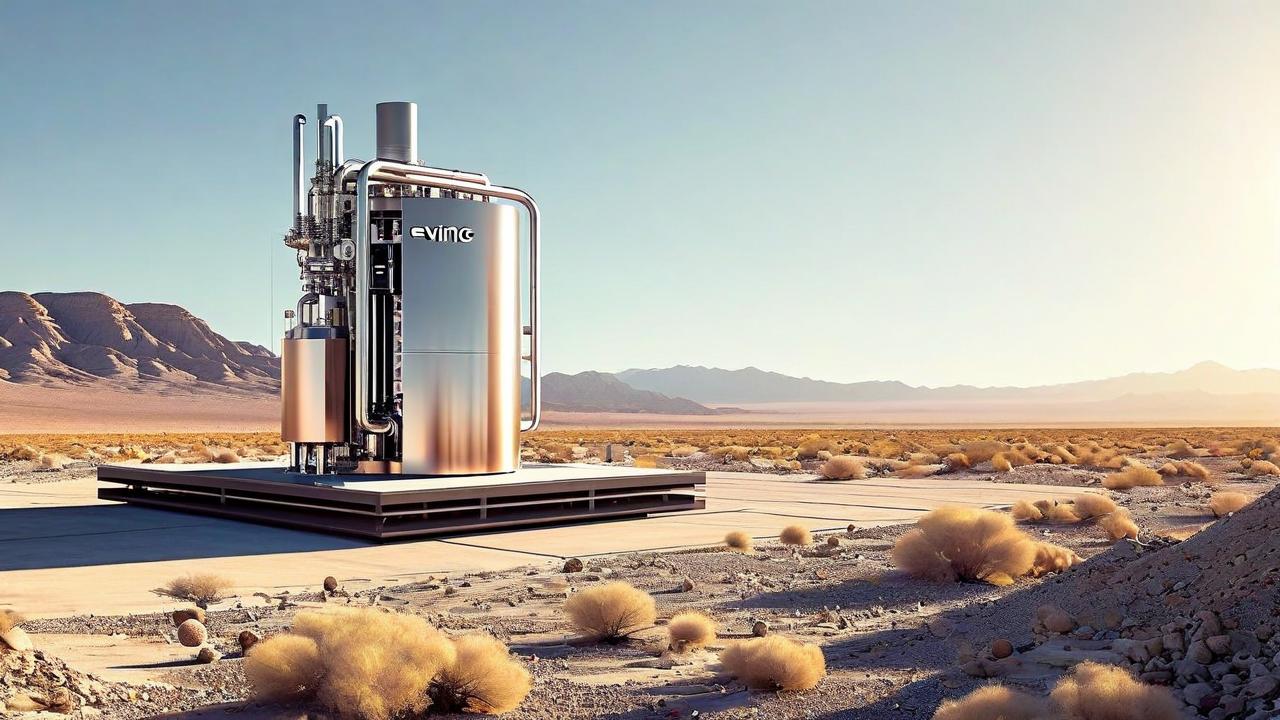

*this image is generated using AI for illustrative purposes only.
Westinghouse Electric Company successfully completed zero-power criticality testing for its eVinci microreactor on August 24, 2026. The milestone validates key design assumptions and advances the company’s strategy for deploying resilient nuclear technology in remote and challenging environments.
The test concluded at 10:39 am PT at the National Criticality Experiments Research Center (NCERC), a National Nuclear Security Administration (NNSA) facility located at the Nevada National Security Site (NNSS). Westinghouse conducted the exercise in partnership with Los Alamos National Laboratory and Idaho National Laboratory.
Technical Validation and Design
The achievement confirms the models and core design assumptions underpinning the eVinci technology. This step is part of Westinghouse’s rapid product development philosophy, which integrates testing, modeling, simulation, and design improvements to accelerate technology maturation while reducing technical risk.
The eVinci microreactor utilizes a compact architecture combining advanced heat pipe technology, TRISO fuel, graphite core materials, and control drum components. The design aims to provide continuous electricity for eight years without refueling, targeting applications in defense and space sectors.
Strategic Implications
Dr. Lou Martinez Sancho, Westinghouse Chief Technology Officer, stated that the milestone reflects the company’s heritage of innovation and its push toward the next frontier of nuclear energy. He acknowledged the collaboration with the U.S. Department of Energy, NNSA, and partner laboratories.
Future phases will focus on integrated prototype testing and demonstrations to further validate performance, operability, and manufacturability. Learnings from each stage will guide subsequent development and prototype improvements.
What the Numbers Show
While no financial figures were disclosed, the operational timeline indicates a structured validation process. The completion of zero-power criticality testing serves as a binary gate: it confirms physical adherence to theoretical models before capital-intensive high-power demonstrations proceed. This reduces downstream technical risk by verifying core physics assumptions early in the development cycle.

How will the successful zero-power criticality test influence Westinghouse's timeline and budget for the upcoming high-power integrated prototype demonstrations?
What specific regulatory hurdles might the eVinci microreactor face when transitioning from defense and space applications to commercial grid deployment in remote areas?
How does the adoption of TRISO fuel and heat pipe technology in eVinci position Westinghouse competitively against other microreactor developers in terms of safety and maintenance costs?
 18
18




 Access 50+ Readymade Screeners
  Use 200+ Custom Filters
  Get Full Market Insights





