

Tata Motors FY26 PAT ₹3,000 Cr; FY27 Capex at ₹3,000 Cr


Tata Motors Limited delivered record Q4 and FY26 results, with consolidated revenue growing 10% to ₹83,900 Cr and PAT reaching ₹3,000 Cr. Standalone revenue increased 22% in Q4 to ₹24,452 Cr, while EBITDA margins expanded to 13.9%. The Board recommended a final dividend of ₹4.00 per share and provided FY27 guidance, targeting Capex of around ₹3,000 Cr and EBITDA margins in the teens.



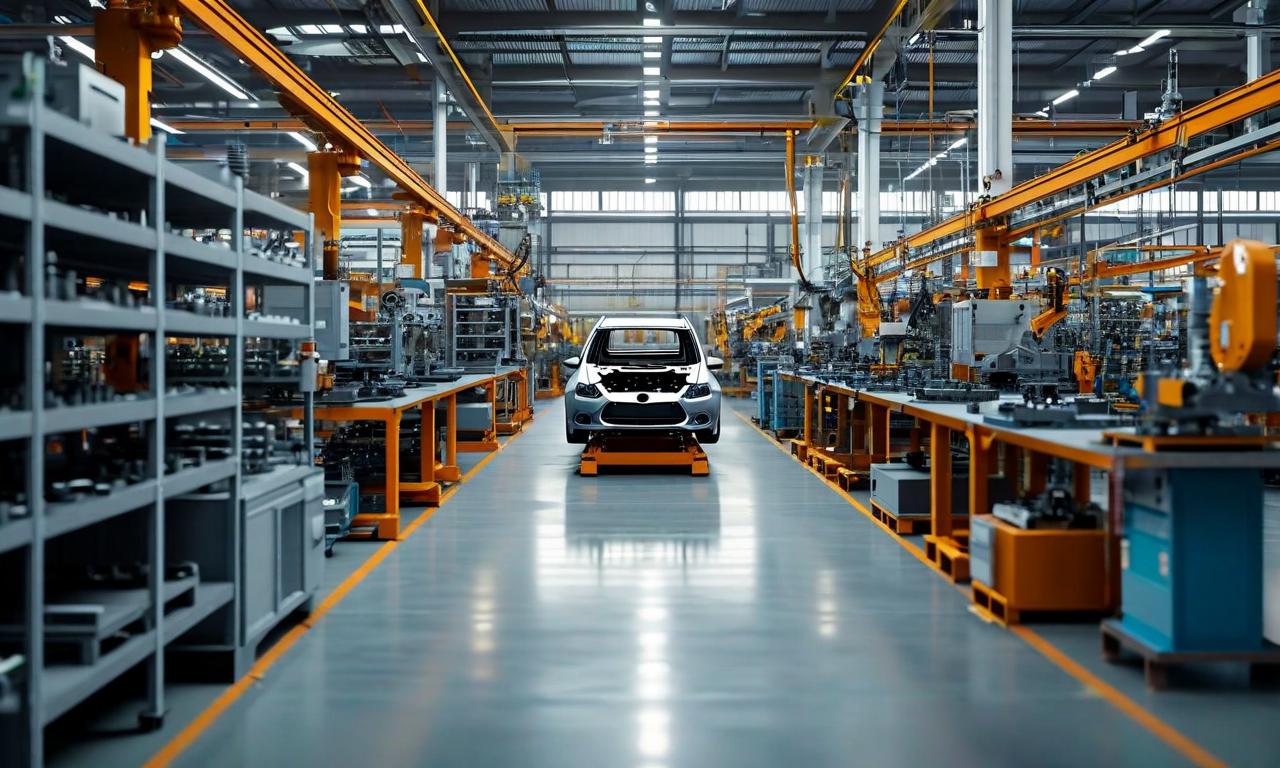
*this image is generated using AI for illustrative purposes only.
Tata Motors Limited delivered a record quarterly and full-year performance for Q4 and FY26, driven by disciplined execution, improved realizations, and efficient capital management. The Board of Directors, at its meeting held on May 13, 2026, approved the audited standalone and consolidated financial results under Ind AS for the fourth quarter and financial year ended March 31, 2026. The Company has transitioned to a pure play commercial vehicle entity following the demerger effective October 1, 2025, and now presents standalone financials including joint operations with Tata Cummins as its primary lens.
Consolidated Financial Performance
On a consolidated basis, Tata Motors reported strong year-on-year growth across all key financial metrics in Q4 FY26. The latest reported figures reflect a significant improvement in profitability and operating efficiency. The table below presents the updated consolidated Q4 performance:
| Metric: | Q4 FY25 | Q4 FY26 | YoY Change |
|---|---|---|---|
| Net Profit (Rupees): | 14.4b | 24.06b | Positive |
| Revenue (Rupees): | 200b | 244b | +22% |
| EBITDA (Rupees): | 24.3b | 33b | +35.80% |
| EBITDA Margin (%): | 12.19% | 13.52% | +133 bps |
For the full year FY26, consolidated revenues stood at ₹83,900 Cr (+10%), with EBITDA margin at 12.30% (+100 bps) and EBIT margin at 10.20% (+160 bps). Full-year PBT (bei) was ₹6,100 Cr and PAT was ₹3,000 Cr. Free Cash Flow for Q4 FY26 and full year FY26 was ₹8,000 Cr and ₹12,400 Cr respectively, with net cash as at March 31, 2026 at ₹13,700 Cr.
| Metric: | Q4 FY25 | Q4 FY26 | YoY Change | FY25 | FY26 | FY YoY Change |
|---|---|---|---|---|---|---|
| Wholesales (K units): | 107.6 | 133.7 | +24% | 384.7 | 435.2 | +13% |
| Revenue (₹K Cr.): | 21.9 | 26.1 | +19% | 76.4 | 83.9 | +10% |
| EBITDA %: | 11.60% | 13.10% | +150 bps | 11.30% | 12.30% | +100 bps |
| EBIT %: | 9.20% | 11.50% | +230 bps | 8.60% | 10.20% | +160 bps |
| PBT (bei) (₹K Cr.): | 1.8 | 2.4 | +0.5 | 5.7 | 6.1 | +0.4 |
| PAT (₹K Cr.): | 1.3 | 1.8 | +0.5 | 4.0 | 3.0 | (0.9) |
| FCF (₹K Cr.): | 5.3 | 8.0 | +2.7 | 5.9 | 12.4 | +6.5 |
| Net Cash (₹K Cr.): | 4.0 | — | — | — | 13.7 | — |
Standalone Financial Performance
Tata Motors' standalone operations (including joint operations with Tata Cummins) delivered robust growth across all key metrics in Q4 FY26 and for the full year FY26. Quarterly revenue stood at ₹24,452 Cr (+22%), with EBITDA at ₹3,404 Cr (+35%). The Company achieved teens EBITDA margin at 13.90% (+130 bps), ahead of its mid-term guidance. EBIT margin expanded to 12.10% (+220 bps), aided by higher volumes, improved realizations, and continued cost efficiencies. PBT (bei) for the quarter stood at ₹2,970 Cr (+58%), while profit after tax for the quarter was ₹2,409 Cr. Finance costs dropped to ₹126 Cr in Q4 FY26 from ₹219 Cr in Q4 FY25.
For the full year FY26, revenue stood at ₹77,398 Cr (+11%), with EBITDA of ₹10,206 Cr (+22%) and EBITDA margin at 13.20% (+120 bps). EBIT margin for FY26 stood at 11.00% (+180 bps). PBT (bei) for the full year came in at ₹8,681 Cr (+46%). Profit after tax for the year was ₹3,364 Cr, including the impact of exceptional items. Net cash for the domestic business stood at ₹7,500 Cr as of March 31, 2026. The Company's Auto ROCE stood at 72% in FY26.
| Metric: | Q4 FY25 | Q4 FY26 | YoY Change | FY25 | FY26 | FY YoY Change |
|---|---|---|---|---|---|---|
| Revenue (₹ Cr.): | 19,999 | 24,452 | +4,453 (+22%) | 69,419 | 77,398 | +7,979 (+11%) |
| EBITDA (₹ Cr.): | 2,517 | 3,404 | +887 | 8,364 | 10,206 | +1,842 |
| EBITDA %: | 12.60% | 13.90% | +130 bps | 12.00% | 13.20% | +120 bps |
| EBIT %: | 9.90% | 12.10% | +220 bps | 9.20% | 11.00% | +180 bps |
| PBT (bei) (₹ Cr.): | 1,883 | 2,970 | +1,087 (+58%) | 5,958 | 8,681 | +2,723 (+46%) |
| PAT (₹ Cr.): | 1,416 | 2,409 | +993 | 4,345 | 3,364 | (981) |
| FCF (₹ Cr.): | 5,352 | 4,016 | (1,336) | 7,007 | 9,186 | +2,179 |
PBT (bei) Bridge — Q4 FY26
The improvement in Q4 FY26 PBT (bei) was driven by volume and mix gains, improved net realization, and other operational efficiencies, partially offset by rising variable costs. The detailed waterfall is presented below:
| Component: | Value (₹ Cr.) | EBIT % Impact |
|---|---|---|
| PBT (bei) Q4 FY25: | 1,883 | 9.90% |
| Volume, Mix: | 793 | +1.80% |
| Realisation (net): | 332 | +0.70% |
| Variable costs: | (203) | (0.50)% |
| Other costs (D&A, Employee, Others): | 70 | +0.20% |
| FX & Others (PLI, Incentives, Others): | 95 | 0.00% |
| PBT (bei) Q4 FY26: | 2,970 | 12.10% |
Free Cash Flow and Investment Spending
Strong full-year FCF of ₹9,186 Cr was driven by robust operational performance and disciplined working capital management. The cash conversion cycle improved marginally to 31 days in FY26 from 32 days in FY25. Total investment spending for FY26 stood at ₹2,793 Cr, comprising total R&D of ₹1,699 Cr (Capitalized R&D: ₹917 Cr; Expensed R&D: ₹782 Cr) and capital and other investments of ₹1,094 Cr. Capex and PDE as a percentage of revenue remained within the guided range of 2%–4%, at 3.60% for FY26.
| FY26 FCF Bridge: | ₹ Cr. |
|---|---|
| PBT (bei): | 8,681 |
| Non-cash and Other: | 1,850 |
| Tax: | (952) |
| Cash Profit after Tax: | 9,579 |
| Capex: | (2,011) |
| Working capital changes: | 1,743 |
| Finance expense (net) and dividend: | (125) |
| Free Cash Flow: | 9,186 |
Business Highlights and Volume Performance
The CV segment delivered strong volume growth during the year, with Q4 FY26 wholesales at 132K units (+25%) and full-year FY26 wholesales at 428K units (+14%). Overall domestic CV VAHAN market share for FY26 stood at 35.70%, with HCV market share at 55.00%, ILMCV at 39.50%, SCV & PU at 26.80%, and CV Passenger at 36.40%. The Company launched 17 Next-Generation Trucks and the Ace Pro range — India's most affordable 4-wheel mini-truck. It secured its biggest order for 70,000 Yodha and Ultra T.7 Vehicles for deployment in Indonesia and won pan-India orders of over 5,000 buses from multiple State Transport Undertakings. The Tata Motors Pantnagar Plant won the Golden Peacock Award for Quality, and the Company won top honours across multiple segments at the Apollo CV Awards 2026.
| Category: | Q4 FY25 | Q3 FY26 | Q4 FY26 | FY25 | FY26 | YoY Growth |
|---|---|---|---|---|---|---|
| HCV: | 31.8K | 33.4K | 40.9K | 106.5K | 120.1K | 29% |
| ILMCV: | 17.9K | 20.0K | 22.8K | 62.3K | 74.5K | 28% |
| SCV Cargo & Pickup: | 35.0K | 43.7K | 43.7K | 138.9K | 150.4K | 25% |
| CV Passenger: | 15.0K | 10.5K | 17.6K | 50.8K | 55.0K | 17% |
| Exports: | 5.9K | 7.7K | 6.9K | 18.3K | 28.2K | 17% |
| Total Wholesales: | 105.5K | 115.2K | 131.8K | 376.8K | 428.1K | 25% |
Sustainability and Electric Vehicles
On the sustainability front, Tata Motors recorded 2,400 SCV EV retails in Q4 FY26 — the highest since FAME incentives were discontinued. TMSCML deployed 3,815 cumulative E-buses. The Company initiated deliveries of the BillionE E.55S, received an order for 250 EV buses, and signed an MoU for 40 hydrogen trucks. Cumulative green kilometres across all deployed e-buses crossed 53+ Cr since inception.
FY27 Outlook: Capex, Margins, and Growth Strategy
Looking ahead, management has provided guidance on capital expenditure, margin trajectory, and volume growth for FY27. The Company expects FY27 capital expenditure to be around INR 3,000 Crores, broadly similar to FY26 levels, with a focus on growth and technology investments. On the margin front, management has guided EBITDA margin to remain in the "teens" — clarifying the target is not "mid-teens" — while expressing a strong commitment to sustaining good margins despite headwinds from high commodity costs and currency depreciation.
Management has guided single-digit growth for Q1 FY27, despite strong volume increases recorded in April and May, and has adopted a quarter-by-quarter strategy given prevailing uncertainties. On the cost front, management flagged bigger commodity challenges in Q1 FY27 compared to the 100 basis points impact seen in Q4, which has already prompted a 2% price hike in April. The Company plans to absorb some cost increases to keep demand strong while focusing on cost management to support margins. High material costs caused a 50 basis point increase in variable costs in Q4, and geopolitical events resulted in a strategic inventory increase and adjusted export plans for the Middle East and North Africa.
| FY27 Management Guidance: | Details |
|---|---|
| Expected Capex: | ~INR 3,000 Crores |
| EBITDA Margin Target: | Teens (not mid-teens) |
| Q1 FY27 Volume Growth: | Single-digit |
| April Price Hike: | 2% |
| Q4 Variable Cost Impact: | +50 bps |
| Q4 Commodity Cost Impact: | 100 bps |
| International Strategy: | Quarter-by-quarter |
On the international front, the Company noted uncertainties including fuel shortages in Sri Lanka and a two-month halt in shipments to the Middle East due to geopolitical issues. An order from Indonesia is anticipated to help mitigate these challenges, as the Company continues to navigate a dynamic global operating environment.
Dividend, Iveco Acquisition, and Investor Day
The Board of Directors recommended a final dividend of ₹4.00 per fully paid-up ordinary share of ₹2.00 each for the year ended March 31, 2026, subject to shareholder approval. The resultant cash outflow would be ₹1,473 Cr. The dividend, if declared at the 2nd Annual General Meeting scheduled for Monday, June 29, 2026, shall be paid to eligible shareholders on or before July 2, 2026. Regarding the proposed acquisition of Iveco Group N.V., most regulatory approvals have been received, with the last pending approvals being actively pursued. Tata Motors expects to complete the transaction by Q2 FY27. The Company has also announced its Investor Day 2026, scheduled for Tuesday, June 23, 2026.
| Corporate Action: | Details |
|---|---|
| Final Dividend per Share: | ₹4.00 |
| Face Value per Share: | ₹2.00 |
| Dividend as % of Face Value: | 200% |
| Total Cash Outflow: | ₹1,473 Cr |
| AGM Date: | June 29, 2026 |
| Dividend Payment Deadline: | July 2, 2026 |
| Iveco Transaction Expected Closure: | Q2 FY27 |
| Investor Day 2026: | June 23, 2026 |

How will the completed Iveco Group acquisition reshape Tata Motors' competitive positioning in global commercial vehicle markets, and what revenue synergies can realistically be expected in the first two years post-integration?
Given management's guidance of 'teens but not mid-teens' EBITDA margins for FY27 amid rising commodity costs and currency headwinds, what specific cost levers does the company have left to defend margins if commodity pressures intensify beyond current projections?
With domestic CV VAHAN market share at 35.7% and HCV share at 55%, how sustainable is this dominance as competitors ramp up next-generation truck launches, and which segments are most vulnerable to market share erosion in FY27?
 17
17













 Create Custom Screeners
  Access 200+ Pre-built Filters
  Use 50+ Readymade Screener





