

Tamboran Resources Q4FY26 Results: Delivers first gas sales, raises $186M


- Delivered first gas sales to Northern Territory market after 20 days of flow
- Raised $186 million net of fees, ending quarter with $225 million cash position
- Completed Sturt Plateau compression facility $9 million under budget
- Local red sand usage projected to save $4 million per well in completion costs
- Plans to drill at least six additional wells over next 18 months

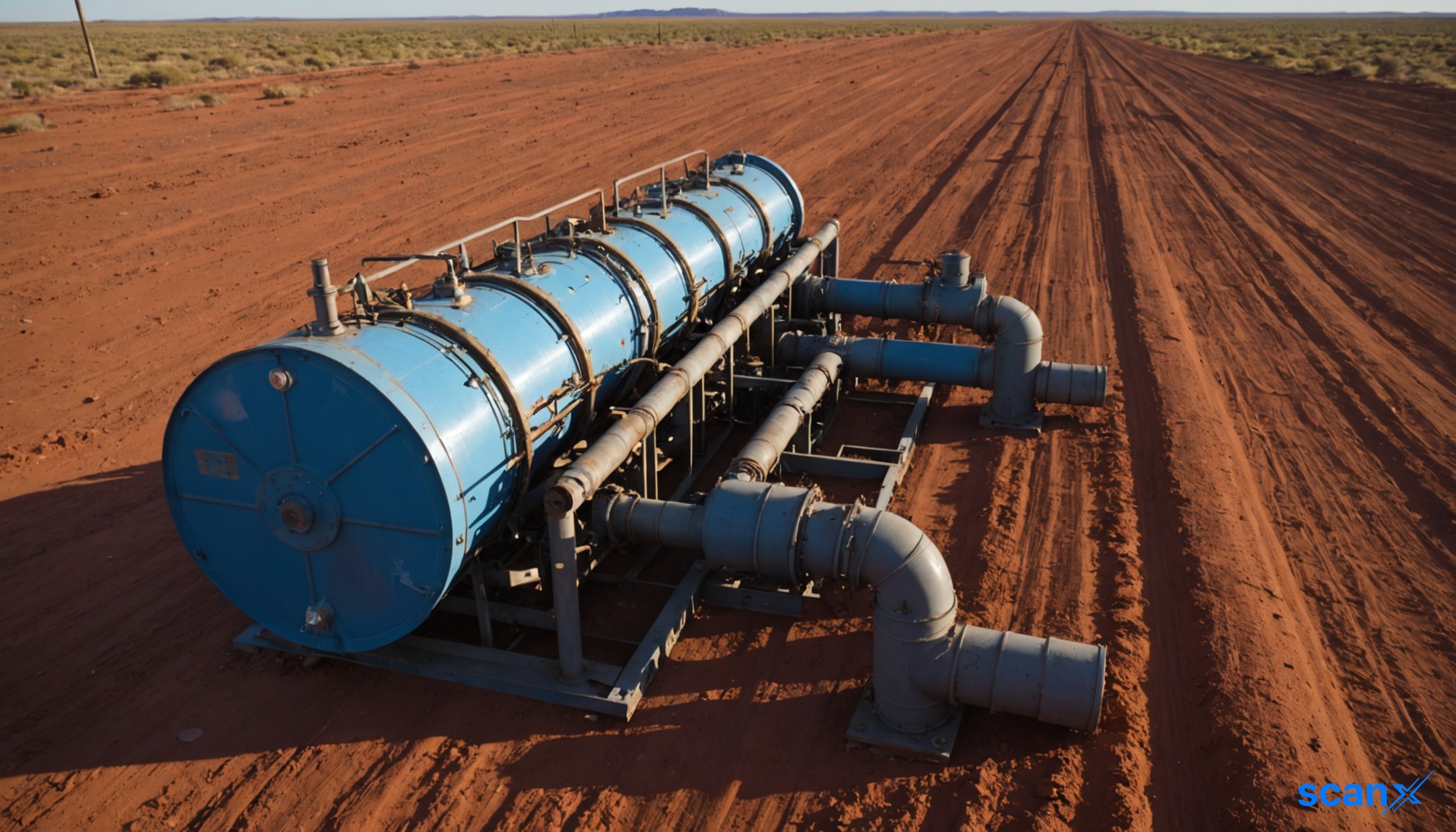

*this image is generated using AI for illustrative purposes only.
Tamboran Resources (NYSE: TBN) delivered first gas sales from the Beetaloo Basin to the Northern Territory market during the fourth quarter of fiscal year 2026. The milestone marks a critical transition from exploration to commercial production for the company.
The company strengthened its financial position by raising $186 million net of fees through a public offer, resulting in a cash position of $225 million at quarter-end. Management outlined plans to drill at least six additional wells over the next 18 months to further delineate resources and de-risk the asset base.
Operational Milestones and Infrastructure
Gas has been flowing into the market for 20 days, with current volumes limited by market demand nominations of 25 terajoules per day. The company is currently in the commissioning period of its gas sales agreement. Once the agreement moves into the supply period, take-or-pay provisions will apply to the contracted quantity of 40 terajoules per day.
Construction of the Sturt Plateau compression facility was completed on time and approximately $9 million under budget. Commissioning activities are ongoing, with the facility currently receiving 75% of the gas price due to the interruptible nature of the supply during this phase.
Cost Efficiency and Drilling Performance
Tamboran completed a major stimulation campaign on the SS2 pad using locally sourced Beetaloo red sand. This initiative is expected to reduce well completion costs by approximately $4 million per well compared to imported sand. The campaign utilized the Liberty Energy stimulation fleet, achieving a basin record of 12 stages completed in a single day.
Drilling efficiency also improved, with record speeds through the Merope formation attributed to improved drill bit designs and anti-vibration tools. The company is targeting cycle times of less than 25 days per well, having already achieved a 24-day well in recent operations.
Balance Sheet and Funding Position
The equity raise provides significant financial flexibility for the next phase of development. Tamboran holds $31 million in undrawn debt for funding the Sturt Plateau compression facility. A pro forma cash position of $240 million includes an expected receipt of $15 million from Daly Waters Energy, subject to conditions precedent.
| Financial Metric | Amount | Notes |
|---|---|---|
| Cash Position | $225 million | End of Q4FY26 |
| Equity Raise | $186 million | Net of fees |
| Undrawn Debt | $31 million | For SPCF funding |
| Pro Forma Cash | $240 million | Includes expected receipts |
Strategic Outlook
Management is progressing discussions with multiple parties to secure a strategic partner for large-scale development and pipeline infrastructure. The upcoming capital program will focus on de-risking both depocenters in the Beetaloo Basin, including step-out wells in joint ventures with Santos, INPEX, and Daly Waters Energy.
What the Numbers Show
The completion of the Sturt Plateau compression facility $9 million under budget, combined with the potential $4 million per well savings from local sand usage, highlights a dual approach to cost containment: capital expenditure efficiency and operational expenditure reduction. While revenue recognition is deferred due to US GAAP capitalization rules during commissioning, the balance sheet strengthening via the $186 million raise directly supports the capital-intensive drilling phase planned for the next 18 months.

How will the transition from interruptible to take-or-pay supply terms impact Tamboran's revenue recognition and cash flow stability once the commissioning period ends?
What specific criteria or valuation multiples is management targeting for the potential strategic partner in the Beetaloo Basin pipeline infrastructure?
Can Tamboran sustain sub-25-day cycle times across all six planned wells, and how might geological variances in the new depocenters affect this efficiency?
 18
18





 Access 50+ Readymade Screeners
  Use 200+ Custom Filters
  Get Full Market Insights





