Supreme Court to hear Apple appeal in Epic Games app store fee battle

scanx
Reviewed by
Naman SScanX News Team
Key Highlights

The U.S. Supreme Court agreed to hear Apple's appeal of a contempt ruling in its antitrust dispute with Epic Games. The core issue is Apple's 27% fee on external payment links, which Epic argues violates a 2021 injunction. Apple claims it complied and that the order should not apply beyond Epic. Oral arguments are set for October.


powered bylight_fuzz_icon
44397130

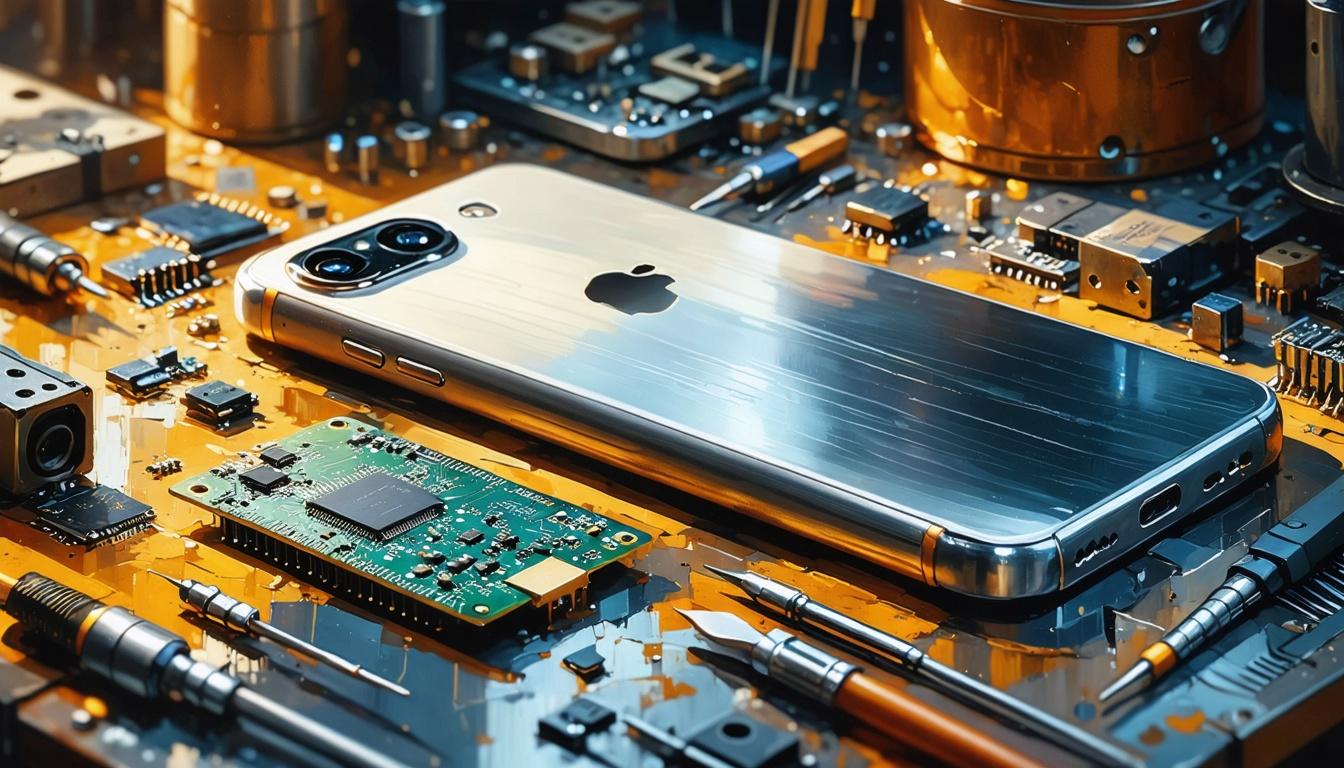
*this image is generated using AI for illustrative purposes only.

The U.S. Supreme Court has agreed to hear Apple's appeal of a contempt ruling tied to its long-running antitrust battle with Epic Games. The dispute centers on Apple's compliance with a 2021 injunction requiring the company to allow developers to link to alternative payment systems. At issue is Apple's policy of imposing a 27% fee on purchases made through those external links, compared to its standard 30% App Store commission.

The case stems from Epic Games' 2020 lawsuit challenging Apple's control over iOS in-app payments. While Apple largely won the underlying case, U.S. District Judge Yvonne Gonzalez Rogers found the company in civil contempt for failing to fully comply with the order to allow external payment options. An appeals court upheld the contempt ruling, leading to the current Supreme Court review.

Apple denies violating the injunction and argues the order should not extend beyond Epic Games. The company has asked the court to pause enforcement of the contempt label, calling it "erroneous and prejudicial" while the appeal is considered. Apple stated in court filings that global regulators are closely watching the case as they weigh app store commission structures in other major markets.

Epic Games contends that the 27% fee structure on external links still violates the injunction. A spokesperson for Epic Games stated that lower courts have rightly found Apple's fees to be illegal and anticompetitive. Epic CEO Tim Sweeney has urged regulators in the EU, U.K., and other jurisdictions to take stronger action, arguing the case could redefine digital marketplace fees beyond the U.S.

Oral arguments are expected in the Supreme Court's next term starting in October. The outcome of the case could have significant implications for how digital marketplaces handle payment processing and commission structures globally.

Key Figure Detail
External Link Fee 27%
Standard Commission 30%
Contempt Judge Yvonne Gonzalez Rogers
Next Term Start October

How might a Supreme Court ruling influence ongoing regulatory investigations into app store fees in the EU and UK?

If the court rules in Apple's favor, what alternative compliance strategies could developers pursue to lower payment processing costs?

Could a decision against Apple compel other digital marketplace operators to revise their own commission structures?

like17
dislike

Apple raises MacBook prices as global shipments forecast to fall 13.6%

scanx
Reviewed by
Ashish TScanX News Team
Key Highlights

Apple has implemented price increases across its entire MacBook lineup, a strategy that TrendForce links to a forecasted 13.6% decline in global notebook shipments for 2026. While Apple is expected to ship 23.1 million units, supported by the MacBook Neo launch and Apple Silicon adoption, rising component costs and consumer resistance to higher prices are projected to dampen second-half market momentum.

powered bylight_fuzz_icon
43939933

*this image is generated using AI for illustrative purposes only.

Apple has raised prices across the entire MacBook lineup, a move that market research firm TrendForce states is reshaping expectations for the notebook industry in 2026. This price adjustment comes as premium brands pass rising costs to consumers, reinforcing expectations of higher notebook prices and making consumers more cautious about upgrading their devices. The shift in pricing strategy adds uncertainty to consumer demand, which is already showing signs of weakening globally.

TrendForce forecasts that global notebook shipments will decline by 13.6% in 2026. This projection accounts for stronger-than-expected first-half shipments driven by improved component supply, contrasted with weaker second-half demand and rising end-market prices. Specifically, Apple is projected to ship approximately 23.1 million notebooks in 2026. While first-half shipments exceeded expectations due to stable pricing and the strong launch of the MacBook Neo, momentum is expected to moderate in the second half as price increases reach end markets.

Market Drivers and Constraints

The industry faces two primary challenges that are influencing these trends. First, sustained demand for AI servers is diverting semiconductor supply chain resources away from consumer electronics. Prices for memory, power management ICs, and key raw materials such as gold and copper remain elevated, maintaining pressure on notebook manufacturing costs. Although CPU supply in mainstream price segments improved steadily during the second quarter, enabling brands to accelerate procurement, the broader supply constraints persist.

Second, consumers are becoming increasingly resistant to higher notebook prices. TrendForce notes that higher MacBook prices may narrow the price overlap between MacBooks and certain premium Windows notebooks, potentially encouraging some price-sensitive consumers to switch. However, this spillover effect is expected to be limited and unlikely to become a meaningful driver of broader market recovery given the overall rise in prices and weakening demand.

Apple’s Position and Outlook

Despite the broader market decline, Apple’s performance is projected to stay relatively stable throughout the year. The ongoing adoption of Apple Silicon is encouraging existing users to upgrade, and the robust macOS ecosystem—along with Apple’s seamless cross-device integration—helps maintain underlying demand. However, TrendForce warns that if retail prices increase more than anticipated and significantly reduce consumer demand, Apple’s shipment forecast might need further downward adjustment.

Consumers are also beginning to extend their notebook replacement cycles. While demand from commercial PC upgrades and education-sector procurement projects remains relatively stable, it is insufficient to fully offset the slowdown in the consumer market. Notebook brands will face their greatest challenge in balancing cost pass-through with maintaining end-market demand against this backdrop of constrained supply and slowing demand.

How will Windows OEMs adjust their pricing strategies to capitalize on potential MacBook switchers?

Will the diversion of semiconductor resources to AI servers persist beyond 2026, creating long-term cost pressures for consumer electronics?

What specific price threshold is likely to trigger a significant downward revision in Apple's shipment forecast?

like18
dislike

More News on Apple