

Apple’s Touch MacBook to use M5 Pro and Max chips


Apple is set to release a touchscreen MacBook equipped with M5 Pro and M5 Max chips, according to a Bloomberg News report. Following this, the company plans to introduce M7 Pro, M7 Max, and M7 Ultra models in 2027, focusing on artificial intelligence capabilities. This move highlights Apple's commitment to AI-driven hardware innovation, skipping a high-end M6 release to accelerate the development of the M7 lineup.


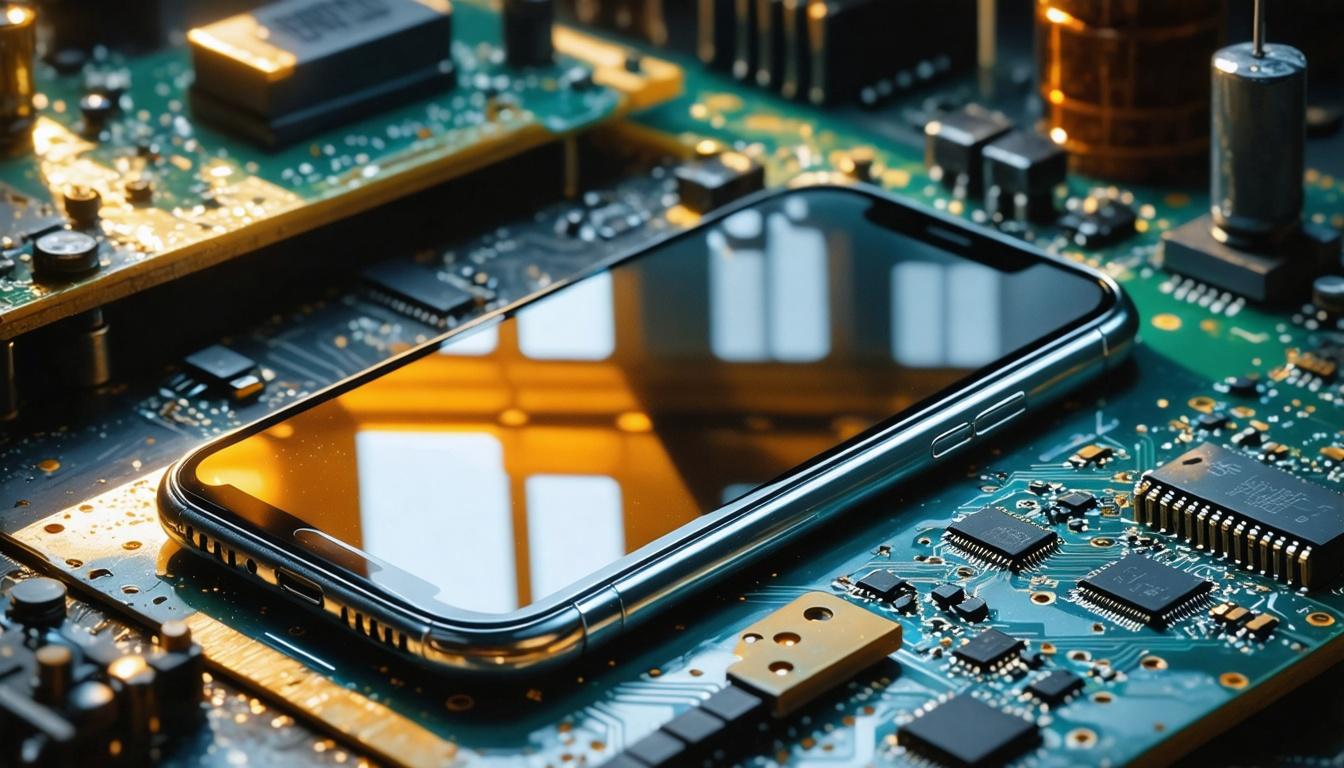
*this image is generated using AI for illustrative purposes only.
Apple plans to introduce a touchscreen MacBook powered by M5 Pro and M5 Max chips, as reported by Bloomberg News. This device will precede the company's release of M7 Pro, M7 Max, and M7 Ultra models, which are anticipated to arrive in 2027. The strategy indicates a continued focus on integrating artificial intelligence capabilities into its hardware lineup, specifically for high-performance computing tasks.
The decision to deploy M5 chips in the Touch MacBook aligns with Apple's broader push into AI-driven features. By prioritizing the M7 line for subsequent releases, the company aims to deliver enhanced processing power tailored for machine learning and other AI-intensive workloads. The M7 Pro, M7 Max, and M7 Ultra chips are expected to offer significant improvements over their predecessors, setting new benchmarks for performance in the Mac ecosystem.
Bloomberg News highlights that this strategic pivot reflects Apple's response to growing demand for AI-capable devices. The M7 lineup is designed to cater to professionals and power users requiring advanced computational resources. While the Touch MacBook will utilize the M5 series, the M7 variants are poised to play a pivotal role in Apple's future product roadmap, emphasizing dedicated neural engines and other optimizations for AI tasks.
Apple's focus on AI comes amid increasing competition in the semiconductor space, with rivals also integrating specialized AI accelerators into their chips. The approach differentiates Apple's Mac offerings in a crowded market by concentrating resources on AI hardware innovation. The report suggests that skipping a high-end M6 release allows the company to accelerate the development of the M7 architecture.
The following table outlines the expected chip lineup:
| Chip Model | Device Category | Expected Focus |
|---|---|---|
| M5 Pro | Touch MacBook | AI-driven features |
| M5 Max | Touch MacBook | High-performance tasks |
| M7 Pro | Future Macs | Advanced AI workloads |
| M7 Max | Future Macs | Machine learning |
| M7 Ultra | Future Macs | Professional computing |
By concentrating on the M7 line, Apple aims to maintain its leadership in performance and efficiency. The transition from M5 to M7 chips underscores the company's commitment to advancing AI performance across its hardware portfolio.

How will competitors respond to Apple skipping the M6 generation for high-end Macs?
What specific AI-driven features will the touchscreen MacBook introduce to differentiate it from previous models?
Will the introduction of a touchscreen MacBook signal a broader shift in Apple's design philosophy for its hardware lineup?
 16
16








 Create Custom Screeners
  Access 200+ Pre-built Filters
  Use 50+ Readymade Screener





