

Spyre Therapeutics RA data misses internal bar; shares fall 12%


- Spyre Therapeutics reported Phase 2 RA data for SPY072 showing statistical significance but missing internal monotherapy thresholds
- Shares fell 12.33% to $94.12 following the disclosure that efficacy did not meet the bar for prioritization
- Low dose showed significant benefit on primary endpoint DAS28-CRP vs placebo at Week 12
- High dose showed nominal significance on secondary ACR20 endpoint; low dose on exploratory ACR50
- Company maintains focus on combination therapies and other autoimmune indications

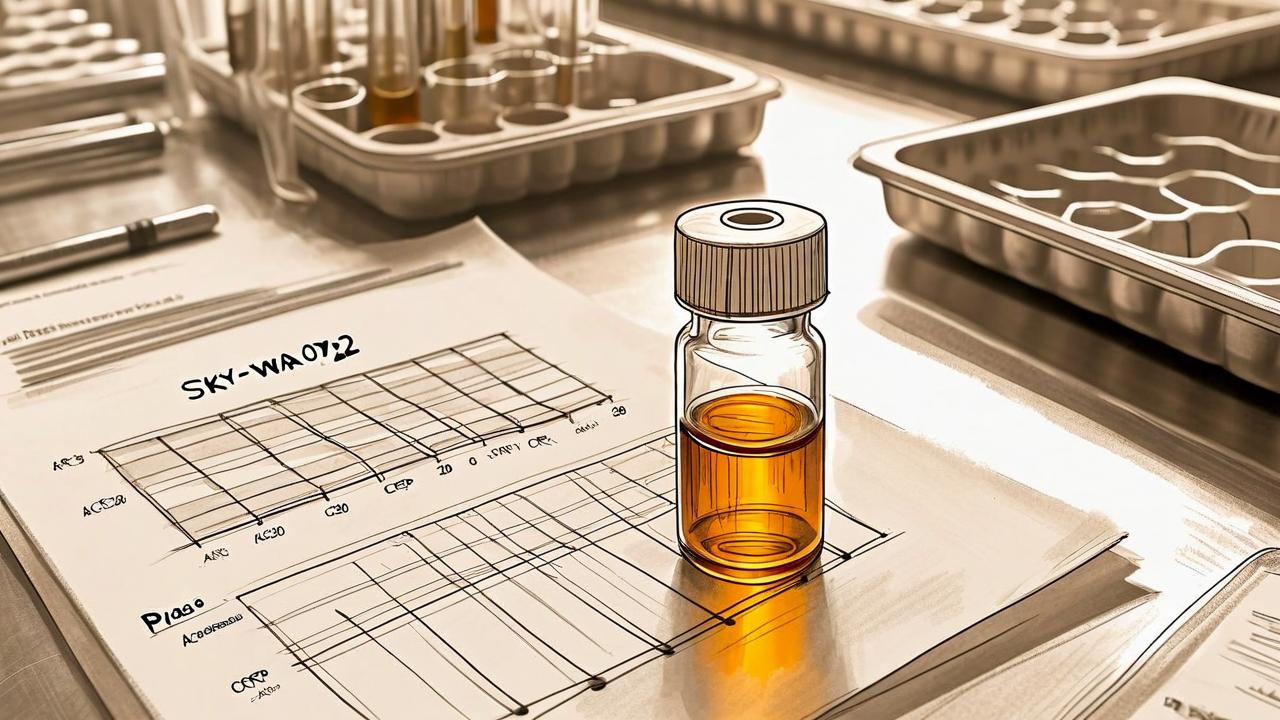

*this image is generated using AI for illustrative purposes only.
Spyre Therapeutics Inc (NASDAQ: SYRE) reported Phase 2 SKYWAY rheumatoid arthritis sub-study results for SPY072. The drug achieved statistical significance on select endpoints but missed the company's internal threshold to prioritize it as a monotherapy in RA. Shares fell 12.33% to $94.12.
The SKYWAY-RA sub-study is a randomised, placebo-controlled trial evaluating two doses of SPY072 in patients with moderate to severely active RA who had an inadequate response to conventional or advanced therapies. The primary endpoint was the change from baseline to Week 12 in Disease Activity Score in 28 joints, C-reactive protein (DAS28-CRP). The secondary endpoint was the proportion of patients achieving an ACR20 response at Week 12.
SKYWAY-RA efficacy results at Week 12
SPY072 Low Dose demonstrated a statistically significant benefit compared to placebo on the primary endpoint (change from baseline in DAS28-CRP) at Week 12. Nominally significant improvements versus placebo were observed on the secondary endpoint (ACR20) with High Dose and on the exploratory endpoint (ACR50) with Low Dose. Results were generally comparable between advanced-therapy-naive and advanced-therapy-experienced sub-groups. Both doses achieved target drug concentrations and provided complete and durable suppression of free TL1A through Week 12, indicating complete target engagement.
| Endpoint (W12) | SPY072 High Dose (N=48) | SPY072 Low Dose (N=48) | Placebo (N=47) |
|---|---|---|---|
| ΔDAS28-CRP | -1.5 | -1.9* | -1.3 |
| ACR20 | 63%** | 58% | 43% |
| ACR50 | 31% | 38%** | 19% |
| ACR70 | 13% | 4% | 2% |
*p<0.05 for SPY072 versus placebo; **nominal p<0.05 for SPY072 versus placebo
Safety profile
SPY072 was well tolerated with a safety profile consistent with the TL1A class. Rates of adverse events were comparable between active (27%) and placebo (36%) arms and were generally mild or moderate. One serious treatment-emergent adverse event (TEAE) occurred on each arm, with none deemed drug-related. One death occurred in a participant receiving placebo. The most common TEAEs were infections and infestations, occurring in 14% of SPY072-treated participants and 15% of placebo-treated participants.
Management commentary
Cameron Turtle, DPhil, Chief Executive Officer at Spyre, stated that while the results do not lead the company to prioritise SPY072 as a monotherapy in RA, the favorable safety profile of TL1A inhibition alongside demonstrated efficacy across inflammatory bowel disease, hidradenitis suppurativa (HS), and RA provides increased conviction that Spyre's long-acting TL1A antibodies have potential in a range of autoimmune diseases and as combination components. Turtle also noted the initiation of the SKYLIGHT trial of SPY072 in combination with IL-17A/F in HS as the company's fourth investigational combination of validated mechanisms in autoimmune indications.
Pipeline readouts and next steps
Spyre outlined several expected topline readouts over the next 12-18 months across its immunology and inflammation pipeline.
| Trial | Indication | Asset(s) | Expected timing |
|---|---|---|---|
| SKYLINE Part A | Ulcerative Colitis | SPY003 | Sept 2026 |
| SKYWAY | PsA, axSpA | SPY072 | 4Q 2026 |
| SKYLINE Part B | Ulcerative Colitis | SPY001, SPY002, SPY003, SPY120, SPY130, SPY230 | 2027 |
| SKYLIGHT | HS | SPY072 + IL-17A/F | Late 2027 or early 2028 |
Spyre's pipeline includes investigational extended half-life antibodies targeting α4β7, TL1A, IL-23, and IL-17A/F, as well as rational combination programs across autoimmune indications with high unmet need.

How might the decision to pivot SPY072 away from RA monotherapy impact Spyre's valuation and investor confidence in its TL1A platform?
What specific efficacy thresholds or clinical endpoints must the upcoming SKYLIGHT combination trial in hidradenitis suppurativa meet to validate the strategy of pairing TL1A inhibition with IL-17A/F blockade?
Given the mixed results in RA, how likely is it that regulatory bodies will accept data from other indications, such as psoriatic arthritis or ulcerative colitis, to support broader approval of TL1A-targeting therapies?
 19
19










 Access Market Heat-map & Insights
  Create, Save & Share your Screener
  Use 200+ Screening Filters





