SKF India accepts Mukund Vasudevan resignation as managing director

scanx
Reviewed by
Anirudha BScanX News Team
Key Highlights
  • Mukund Vasudevan resigns as Managing Director effective August 31, 2026
  • Departure is due to a change in his role within the SKF Group
  • Disclosure made under Regulation 30 of SEBI LODR 2015
  • No other material reasons cited for the resignation
powered bylight_fuzz_icon
49791081

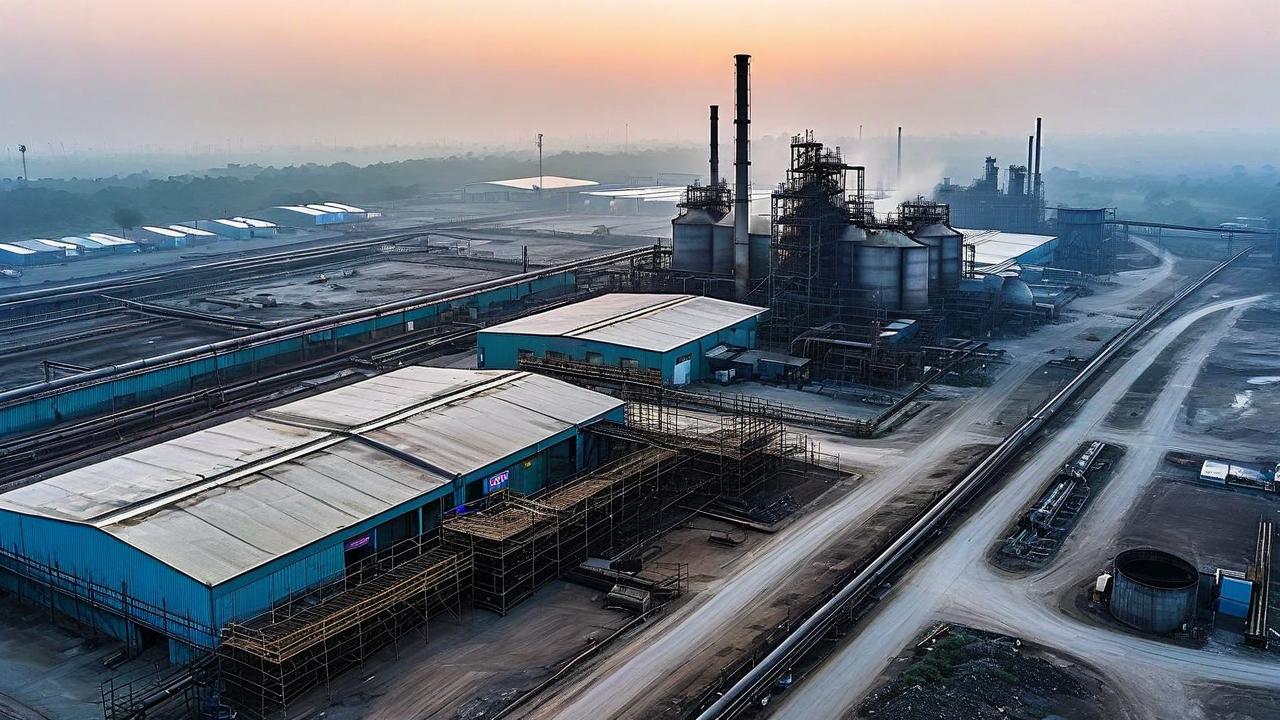
*this image is generated using AI for illustrative purposes only.

SKF India (Industrial) Limited has accepted the resignation of Mukund Vasudevan from the office of Managing Director. The resignation takes effect from the closure of business hours on August 31, 2026.

The departure follows a change in Mr. Vasudevan’s role within the broader SKF Group. The company made the disclosure under Regulation 30 of the SEBI (Listing Obligations and Disclosure Requirements) Regulations, 2015.

Key Details

  • Resigning Executive: Mukund Vasudevan (DIN: 05146681)
  • Position: Managing Director
  • Effective Date: Closure of business hours on August 31, 2026
  • Reason: Change in role within the SKF Group

Mr. Vasudevan submitted his resignation letter on August 4, 2026. He confirmed that there were no other material reasons for his resignation aside from the internal role shift. He thanked the Board Members for their support during his tenure.

The company’s Company Secretary and Compliance Officer, Poorva Bang, signed the intimation dated September 1, 2026. The Board has requested that all necessary formalities be completed to formalize the discontinuance with the Registrar of Companies and other regulatory authorities.

Historical Stock Returns for SKF India Industrial

1 Day5 Days1 Month6 Months1 Year5 Years
+1.33%+10.00%+10.33%+17.97%0.0%0.0%

Who has been appointed as the interim or permanent successor to Mukund Vasudevan as Managing Director of SKF India?

How will Mr. Vasudevan's new role within the broader SKF Group influence the strategic alignment and operational autonomy of SKF India?

Are there any anticipated changes to SKF India's current business strategy or capital allocation plans following this leadership transition?

SKF India Industrial Q1 net profit falls 14% as costs outpace revenue growth

scanx
Reviewed by
Shriram SScanX News Team
Key Highlights

SKF India (Industrial) Ltd reported a 13.8% YoY decline in Q1 net profit to ₹619.2 million, despite an 18.3% rise in revenue to ₹9,707.7 million, as expenses surged 21.7%. The margin pressure was attributed to a ₹150 million IT demerger cost and ₹147 million forex loss. The firm announced a ₹20/share interim dividend and plans to invest ₹900-950 crore in a new Pune plant by 2028.

powered bylight_fuzz_icon
48054972

*this image is generated using AI for illustrative purposes only.

SKF India (Industrial) Limited reported a 13.8% year-on-year decline in net profit to ₹619.2 million for the first quarter ended June 30, 2026, driven by rising operational costs that outpaced top-line growth. While revenue from operations surged 18.3% to ₹9,707.7 million, margin compression resulted in a lower bottom line compared to the previous year’s period. The Board of Directors declared an interim dividend of ₹20 per equity share, signaling confidence in cash flows despite the profit dip.

The Board meeting held on August 11, 2026, approved the unaudited financial results reviewed by Statutory Auditors Deloitte Haskins & Sells LLP, which issued an unmodified opinion. In a significant leadership transition, Mukund Vasudevan resigned as Managing Director effective August 31, 2026, due to a role change within the SKF Group. He will be appointed as a Non-Executive, Non-Independent Director starting September 1, 2026. Sujeeth Pai was elevated from Whole-Time Director to Managing Director for a five-year term, subject to shareholder approval under Regulation 17(1C) of the SEBI LODR.

Financial Performance Highlights

Revenue from operations grew robustly to ₹9,707.7 million in Q1FY27, up from ₹8,206.3 million in the same quarter last year. This represents a sequential growth of 2.6% from ₹9,457.2 million in Q4FY26. However, total expenses increased by 21.7% to ₹8,934.0 million, primarily due to higher purchases of stock-in-trade and other expenses. Profit before tax stood at ₹869.2 million, down from ₹970.9 million in Q1FY26 and slightly lower than ₹899.7 million in Q4FY26.

Particulars Q1FY27 (₹ Million) Q1FY26 (₹ Million) Change (%)
Revenue from Operations 9,707.7 8,206.3 +18.3%
Total Expenses 8,934.0 7,338.8 +21.7%
Profit Before Tax 869.2 970.9 -10.5%
Net Profit After Tax 619.2 718.7 -13.8%
Earnings Per Share (Basic) ₹12.5 ₹14.5 -13.8%

The company’s total income rose to ₹9,803.2 million, aided by other income of ₹95.5 million. However, the increase in finance costs to ₹5.6 million from ₹1.1 million and depreciation expense to ₹102.8 million from ₹70.4 million contributed to the pressure on margins. Income tax expense was recorded at ₹250.0 million.

Strategic Growth Drivers and Market Context

Management highlighted strong top-line growth across the Wind, General Machinery, and Agriculture sectors. The company has operationalized a new Tapered Roller Bearing (TRB) manufacturing line, adding capacity of 3 million units annually to support future growth and reduce exposure to imports. Innovation initiatives include railway wheel-set bearing solutions extending maintenance intervals by up to 20%, bearings with operating capability up to 250°C for the food segment, and energy-efficient hybrid bearings for next-generation electric drives.

Macroeconomic indicators remain robust, with India’s GDP growth at 7.0% in Q1FY27. Industrial Production (IIP) growth rebounded to 5.7%, signaling improved manufacturing momentum. The wind energy sector continues to expand, with India’s wind capacity reaching 57 GW, a 10% year-on-year increase. SKF India secured key contracts, including a ₹140 crore deal with a global gearbox OEM in the wind sector and a ₹35 crore contract with a leading tractor OEM in agriculture.

Customer and Segment Mix

The company’s customer mix shifted slightly, with OEM customers accounting for 54% of revenue in Q1FY27, up from 52% in Q4FY26. Distribution channels contributed 34%, while exports and SKF India (Auto) made up 12%. Segment-wise, General Machinery (GM) remained the largest contributor at 26%, followed by Rail (20%), Wind (16%), Agriculture & Electrical (15%), Heavy Industries (12%), and Metals (11%).

What the Numbers Show

The divergence between revenue growth (+18.3%) and expense inflation (+21.7%) highlights a margin squeeze in the current quarter. Specifically, purchases of stock-in-trade jumped 40.4% to ₹6,271.4 million, significantly outpacing revenue growth. This suggests either aggressive inventory buildup or higher input costs. Additionally, while profit before tax declined modestly by 10.5%, net profit fell more sharply by 13.8%, indicating that tax efficiency did not fully offset the operational margin decline. The declaration of a substantial interim dividend of ₹20 per share (₹989 million total outflow) demonstrates strong liquidity, even as operating profitability faced headwinds.

Operating cash flow stood at ₹547 million in Q1FY27, resulting in a cash conversion ratio of 63%. Net working capital increased marginally to ₹6,275 million, representing 17.5% of revenue, down from 18.1% in the previous quarter. Management noted that the 9% PBT margin was maintained despite headwinds from currency fluctuations and demerger-related expenses. The company is positioned for sustainable growth through an INR 800-950 crore investment plan focused on manufacturing expansion and future-ready capabilities through 2030.

Historical Stock Returns for SKF India Industrial

1 Day5 Days1 Month6 Months1 Year5 Years
+1.33%+10.00%+10.33%+17.97%0.0%0.0%

How will the elevation of Sujeeth Pai to Managing Director influence the execution of the company's INR 800-950 crore investment plan through 2030?

Can the new Tapered Roller Bearing manufacturing line effectively reduce import dependence and improve gross margins in the upcoming quarters?

Will the aggressive 40.4% increase in stock-in-trade purchases normalize, or does it signal sustained high input costs for the remainder of FY27?

More News on SKF India Industrial

1 Year Returns:0.00%