

Shree Digvijay Cement profit falls 50% as margins compress in Q1FY26


Shree Digvijay Cement reported a 50% YoY drop in Q1FY26 net profit to ₹6.83 crore despite 72% revenue growth, driven by Hi-Bond volume expansion but offset by rising input costs and lower EBITDA per ton.

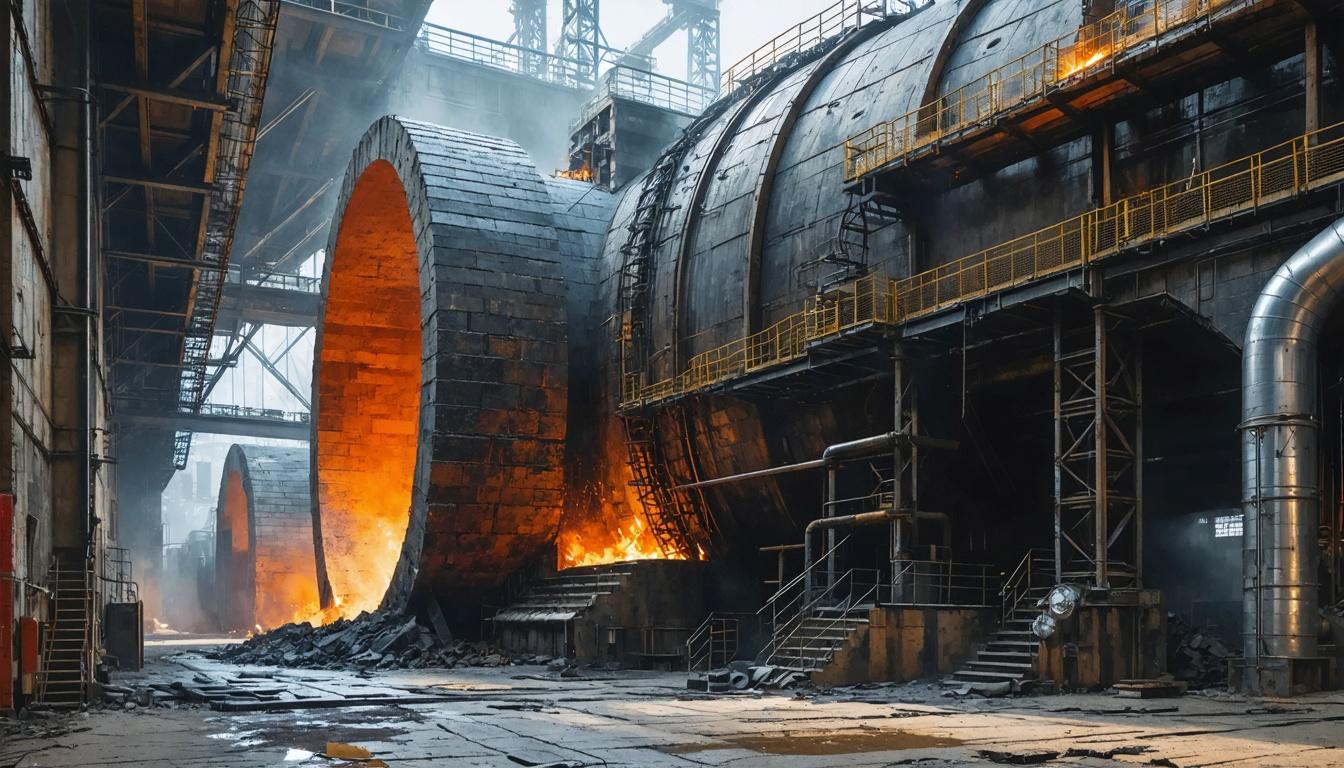

*this image is generated using AI for illustrative purposes only.
Shree Digvijay Cement Company reported a 50% year-on-year decline in standalone net profit for the quarter ended June 30, 2026, dropping to ₹6.83 crore from ₹13.79 crore in Q1FY25. The profit contraction occurred despite a 72% surge in revenue from operations to ₹33,727 lakh, highlighting significant margin compression caused by rising input and logistics costs amid global geopolitical uncertainties. While sales volume nearly doubled, EBITDA per ton fell sharply to ₹500 from ₹701, indicating that cost inflation outpaced pricing power.
The Board of Directors approved the unaudited financial results at its meeting held on July 24, 2026, pursuant to Regulation 33 of the SEBI (Listing Obligations & Disclosure Requirements) Regulations, 2015. The results were reviewed by the Audit Committee and subjected to limited review by M/s. BSR and Co., the statutory auditors of the company. Amit Arora, CEO & Managing Director, stated that management remains confident in the company's long-term growth potential, supported by strong operational capabilities and disciplined capital allocation.
Operational Performance
Sales volume for Shree Digvijay Cement Company Limited rose sharply to 6.06 lakh tons in Q1FY26, compared to 3.59 lakh tons in the same period last year. This volume growth was primarily driven by cement sold under the Brand Usage, Supply and Distributorship Agreement with Hi-Bond Cement (India) Private Limited. The company sold 249,343 metric tons manufactured at the Hi-Bond plant during the quarter, a substantial increase from 29,928 metric tons in the preceding quarter ended March 2026.
| Particulars | Q1FY26 | Q1FY25 | Change |
|---|---|---|---|
| Sales Volume (lacs tons) | 6.06 | 3.59 | +68.8% |
| Revenue from Operations (₹ lacs) | 33,727 | 19,595 | +71.9% |
| EBITDA (₹ lacs) | 3,028 | 2,519 | +20.2% |
| EBITDA per Ton (₹) | 500 | 701 | -28.7% |
| Net Profit (₹ lacs) | 683 | 1,379 | -50.5% |
Financial Metrics
Revenue from operations stood at ₹33,727 lakh, up from ₹19,595 lakh in Q1FY25. EBITDA grew moderately by 20.2% to ₹3,028 lakh, but EBITDA per ton declined significantly to ₹500 from ₹701. Profit before tax fell to ₹915 lakh from ₹1,852 lakh, while total tax expenses decreased to ₹232.66 lakh from ₹473.11 lakh.
Sub-contracting costs for purchased cement emerged as a major expense driver, rising to ₹12,091.51 lakh from nil in Q1FY25, reflecting the increased reliance on third-party manufacturing under the Hi-Bond agreement. Finance costs also increased substantially to ₹1,162.97 lakh from ₹57.95 lakh in the prior year period.
What the Numbers Show
The divergence between volume growth and profitability underscores the impact of external cost pressures. While the company successfully expanded its market presence through the Hi-Bond partnership, driving sales volume up nearly 69%, the inability to pass on all cost increases resulted in a 28.7% drop in EBITDA per ton. This suggests that operational leverage has been offset by higher variable costs, particularly in sub-contracting and finance charges, which together accounted for a significant portion of the expense base.
Consolidated segment-wise data reveals that the cement business generated segment revenue of ₹33,726.73 lakh with a segment result of ₹2,078.15 lakh. Total comprehensive income for the consolidated group was ₹660.51 lakh, compared to ₹1,319.21 lakh in Q1FY25. Paid-up equity share capital increased slightly to ₹14,791.50 lakh following the allotment of 45,000 equity shares under the Employees Stock Options Scheme - 2019.
Historical Stock Returns for Shree Digvijay Cement Company
| 1 Day | 5 Days | 1 Month | 6 Months | 1 Year | 5 Years |
|---|---|---|---|---|---|
| +0.45% | -6.01% | -13.66% | -9.74% | -30.14% | -20.86% |

How sustainable is the Hi-Bond partnership model given the significant margin compression from sub-contracting costs, and will Shree Digvijay seek to renegotiate terms or reduce reliance on third-party manufacturing?
What specific pricing strategies or cost-control measures does management plan to implement in Q2FY26 to reverse the 28.7% decline in EBITDA per ton?
With finance costs surging to ₹1,162.97 lakh, what is the company's strategy for debt restructuring or capital optimization to mitigate the impact of rising interest expenses on net profitability?
 17
17






 Create Custom Screeners
  Access 200+ Pre-built Filters
  Use 50+ Readymade Screener





