

RoboStrategy CEO: Humanoid robots could match humans in five years


- RoboStrategy CEO Andrew Kang predicts humanoid robots will rival humans in physical tasks within five years
- Advances in hardware, manufacturing, and AI foundation models are driving this acceleration
- The shift impacts labor-shortage sectors like manufacturing, logistics, and healthcare
- Suppliers of motors, batteries, sensors, and AI systems stand to benefit alongside robot builders

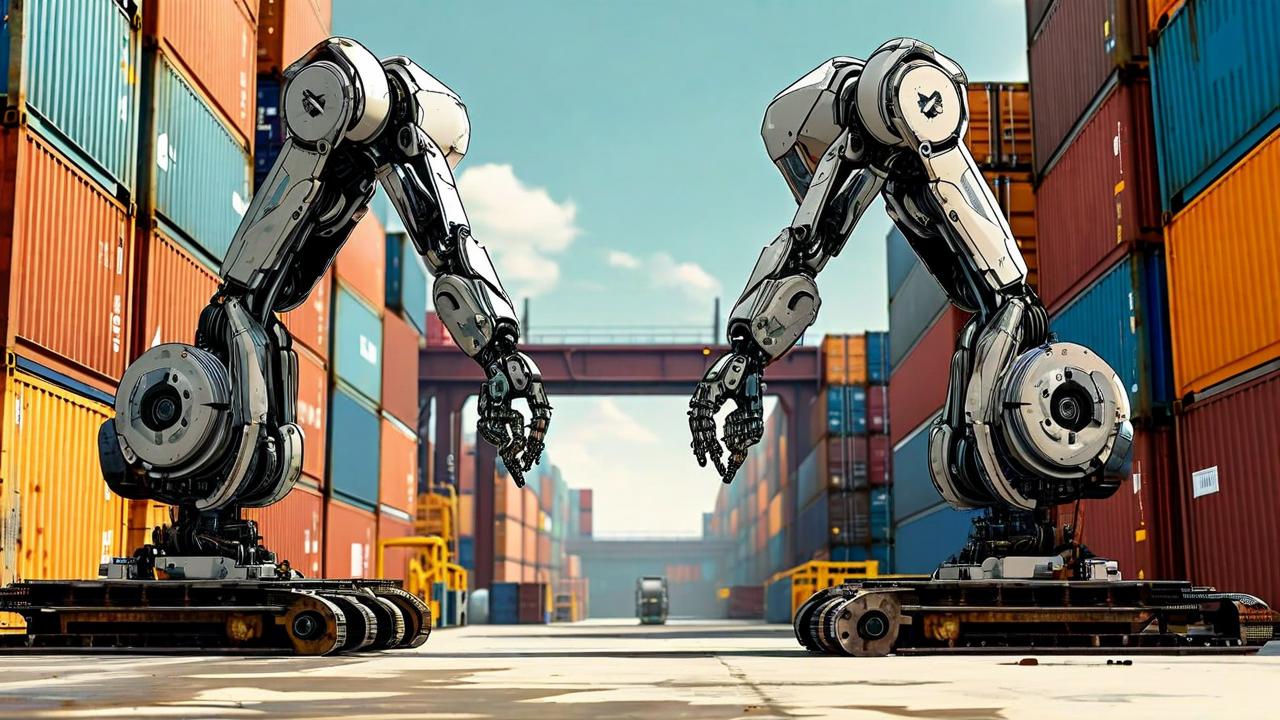

*this image is generated using AI for illustrative purposes only.
RoboStrategy, Inc. (NASDAQ: BOT) CEO Andrew Kang stated that humanoid robots could rival humans in physical tasks within five years. He said the timeline for useful deployment is shorter than many investors expect.
Accelerated Robotics Timeline
Kang told Benzinga in an exclusive email interview that the biggest surprise over the next five years will not be incremental improvements but how quickly humanoid robots can match human capability. He noted that society does not need to wait another 50 years for robots to be genuinely useful in everyday life.
He expects that in five years, robots will be as capable, if not more capable, than humans at most physical work. Kang attributed this acceleration to advances in robot hardware, manufacturing, and AI foundation models.
Industry Implications
If accurate, this prediction would shift the focus from whether humanoid robots can perform useful work to how quickly they can be deployed at scale. This development would impact industries facing persistent labor shortages, including manufacturing, logistics, warehousing, and healthcare.
The outlook strengthens the investment case for companies building humanoid robots, such as Tesla, Inc. (NASDAQ: TSLA), Boston Dynamics, Figure AI, and Unitree Robotics. It also benefits suppliers developing motors, batteries, sensors, and AI systems for these machines.
What the Numbers Show
The source provides a qualitative forecast rather than quantitative financial data. The core observation is the divergence between investor expectations of a long-term rollout and management's view of a five-year horizon for functional parity with humans in physical tasks.

How might the accelerated deployment of humanoid robots impact labor market dynamics and wage structures in sectors like manufacturing and logistics over the next five years?
What specific regulatory or safety frameworks need to be established to facilitate the rapid integration of humanoid robots into healthcare and public-facing environments?
Which supply chain bottlenecks, such as rare earth minerals for motors or advanced battery production, could hinder the mass scaling of humanoid robots despite AI advancements?
 17
17










 Create Custom Screeners
  Access 200+ Pre-built Filters
  Use 50+ Readymade Screener





