

Precision Drilling Q2 Results: Revenue rises 11%, net loss widens


Precision Drilling posted an 11% revenue rise to $453 million in Q2 2026, buoyed by strong Canadian drilling activity and improved U.S. rig utilization. However, a net loss of $1 million replaced prior-year earnings of $16 million, driven by an $11 million increase in depreciation expense. Adjusted EBITDA fell 10% to $97 million due to higher U.S. reactivation costs and lower international margins. Strong operating cash flow of $146 million enabled $50 million in debt reduction and $12 million in share repurchases.


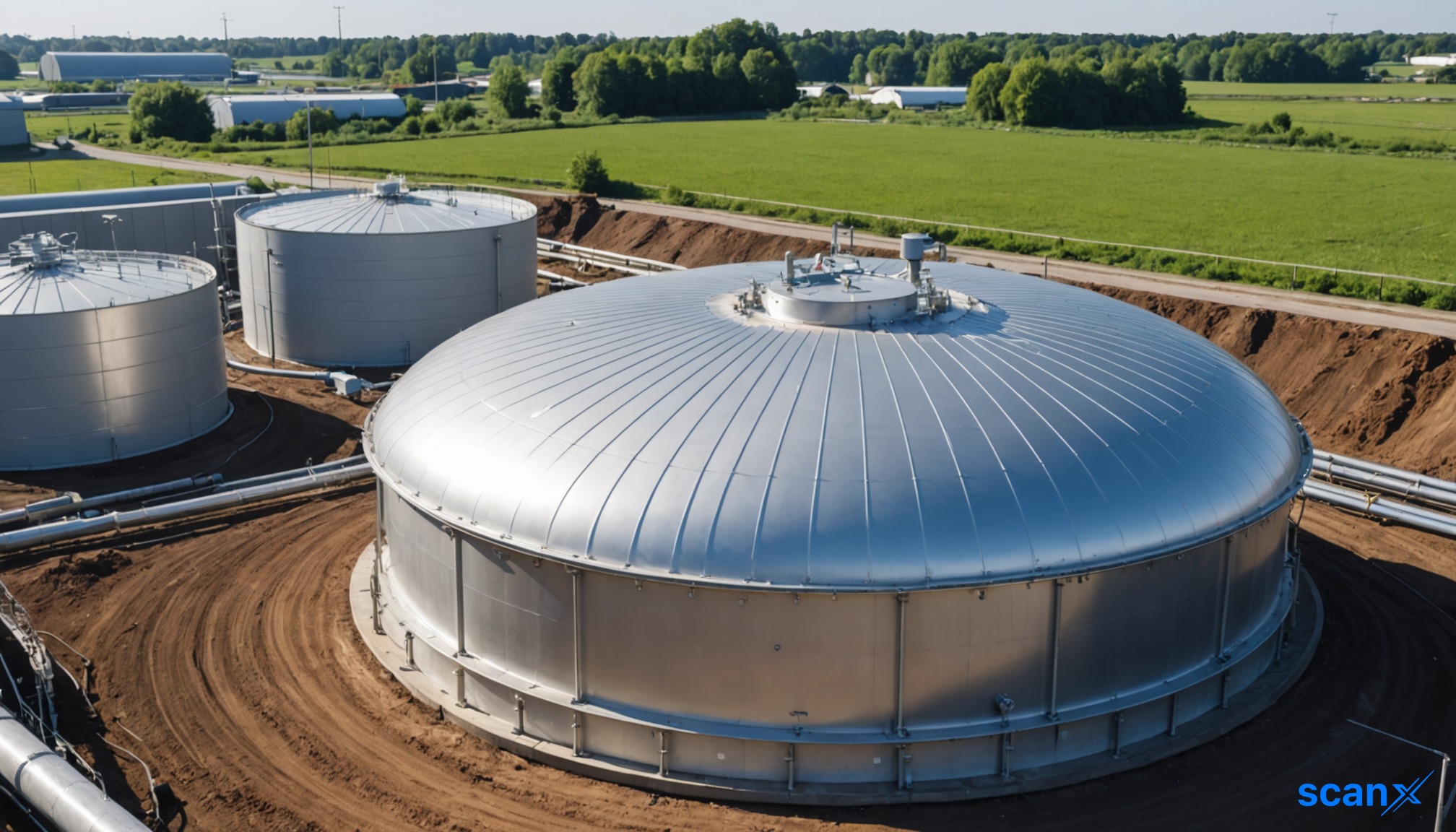
*this image is generated using AI for illustrative purposes only.
Precision Drilling Corporation reported an 11% year-over-year revenue increase to $453 million for the second quarter of 2026, driven by robust heavy oil drilling and well service activity in Canada and improving rig utilization in the U.S. Despite the top-line growth, the company recorded a net loss attributable to shareholders of $1 million, a reversal from net earnings of $16 million in the second quarter of 2025. The shift to a loss was primarily caused by an $11 million increase in depreciation expense resulting from previously communicated changes in useful life estimates for drill pipe assets. This divergence between operating cash flow generation and reported profitability highlights the impact of non-cash accounting adjustments on the bottom line.
Operational execution remained strong across key regions. In Canada, Precision averaged 61 active rigs, a 22% increase from 50 active rigs in the prior year, outpacing the 16% growth in overall Canadian industry activity. Canadian revenue per utilization day decreased to $35,448 from $37,725, largely due to lower upfront capital payments and a higher mix of Super Single rigs. In the U.S., the company averaged 35 active rigs versus 33 in 2025, outperforming a 3% decline in U.S. industry activity. U.S. revenue per utilization day rose to US$32,802 from US$31,113, supported by higher day rates on new contracts and increased technology revenue. Internationally, seven active rigs operated during the quarter, with a change in rig mix lowering revenue per utilization day to US$50,524 from US$53,129.
Adjusted EBITDA, a key performance metric defined as earnings before income taxes, finance charges, foreign exchange, gains on asset disposals, and depreciation and amortization, declined 10% to $97 million from $108 million in the second quarter of 2025. The decrease was attributed to higher U.S. rig reactivation costs, which averaged US$2,387 per utilization day as seven rigs were reactivated, compared to US$648 per day when four rigs were reactivated in 2025. Additionally, lower international margins related to geopolitical tensions and a change in rig mix impacted results. The quarter also included $3 million in one-time restructuring charges and a $2 million share-based compensation recovery, whereas share-based compensation was a $4 million expense in the prior year.
Cash flow generation remained robust, providing the company with significant financial flexibility. Cash provided by operations totaled $146 million during the quarter, allowing Precision Drilling to reduce debt by $50 million and repurchase $12 million of common shares. Year-to-date, the company has invested $141 million in capital expenditures, maintaining its full-year guidance of $265 million. As of June 30, 2026, long-term debt stood at $626 million, down from $679 million at the end of 2025, while total long-term financial liabilities decreased to $693 million from $747 million. Working capital remained positive at $147 million.
What the Numbers Show
The financial results reveal a distinct split between operational momentum and accounting-driven profitability. While revenue grew 11% and cash from operations remained strong at $146 million, the reported net loss of $1 million underscores the weight of depreciation charges. The $11 million increase in depreciation expense, stemming from revised useful life estimates for drill pipe, was the primary driver of the earnings decline. Furthermore, the 10% drop in Adjusted EBITDA despite rising revenue indicates margin compression, particularly in the U.S. where reactivation costs weighed heavily on performance. Investors should note that the company’s core cash-generating ability remains intact, even as near-term reported earnings face headwinds from both operational reactivation costs and non-cash accounting adjustments.
| Metric | Q2 2026 | Q2 2025 | % Change |
|---|---|---|---|
| Revenue | $453 million | $407 million | 11% |
| Adjusted EBITDA | $97 million | $108 million | (10%) |
| Net Loss Attributable to Shareholders | $(1) million | $16 million | (107%) |
| Cash Provided by Operations | $146 million | $147 million | (1%) |
| Capital Expenditures | $76 million | $53 million | 43% |
| Active Rigs (Canada) | 61 | 50 | 22% |
| Active Rigs (U.S.) | 35 | 33 | 6% |
Looking ahead, management expects North American drilling and completion activity to improve modestly through the remainder of 2026, assuming constructive commodity prices. In Canada, demand for Super Series rigs remains robust, with expectations for near-full utilization through the fall drilling season. In the U.S., active rig counts are expected to remain in the low 40s, with fourth-quarter margins anticipated to approach US$10,000 per utilization day as reactivation costs subside. Internationally, the company secured an additional five-year drilling rig contract in Kuwait, which is expected to increase the international active rig count to eight by mid-2027 following planned recertifications and upgrades.

How might the revised useful life estimates for drill pipe assets impact Precision Drilling's depreciation schedule and reported earnings in subsequent quarters?
Given the surge in U.S. rig reactivation costs, what specific operational efficiencies or contract structures could help sustain the projected US$10,000 per utilization day margin by Q4 2026?
Will the robust cash flow generation continue to support aggressive debt reduction and share buybacks, or will capital expenditure needs for international upgrades prioritize balance sheet preservation?
 16
16






 Access 50+ Readymade Screeners
  Use 200+ Custom Filters
  Get Full Market Insights





