

Orient Cement Q4FY26 Earnings Call Transcript: Ambuja Posts Record Volumes, Eyes Cost Cuts


Orient Cement filed its Q4 FY'26 earnings call transcript under Regulation 30 on May 10, 2026. The joint call covering Ambuja Cements, ACC, and Orient Cement highlighted record FY'26 consolidated volumes of 73.7 million tonnes (up 16% YoY), normalized EBITDA of ₹6,539 crores (up 31%), and PAT of ₹2,647 crores (up 17%). Management guided for ~80 million tonnes in FY'27, a cost reduction of ~₹250/tonne from the Q4 peak of ₹4,500/tonne, and capex of ₹6,000–₹6,500 crores, while acknowledging delays in acquired asset turnarounds at Sanghi and Penna.


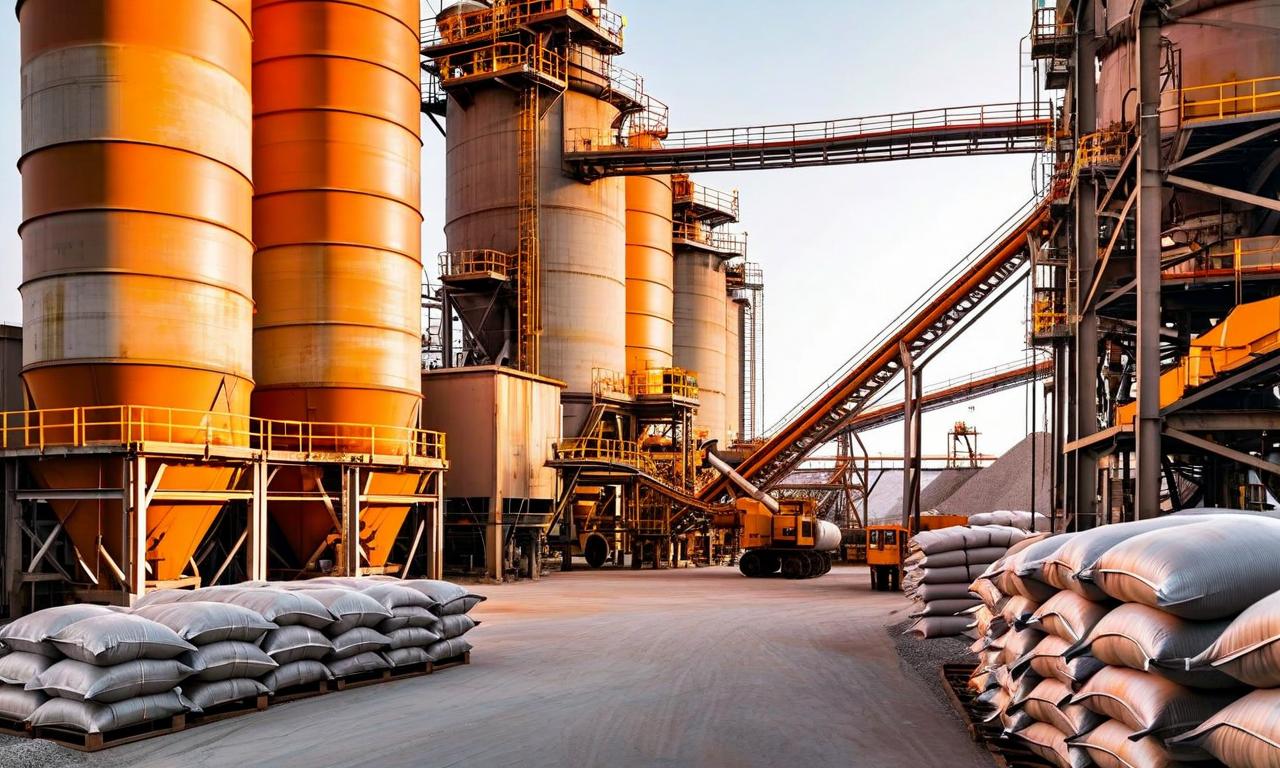
*this image is generated using AI for illustrative purposes only.
Orient Cement Limited filed the transcript of its Q4 FY'26 earnings conference call under Regulation 30 of SEBI (Listing Obligations and Disclosure Requirements) Regulations 2015, with the document uploaded on the company's official website at www.orientcement.com . The filing, dated May 10, 2026, was addressed to both BSE Limited and the National Stock Exchange of India Limited, and was executed by Pranjali Dubey, Company Secretary and Compliance Officer. The call, held on May 04, 2026, covered the audited financial results for the quarter and financial year ended March 31, 2026, and was hosted by JM Financial Institutional Securities Limited. The earnings call was a joint session covering Ambuja Cements, ACC Ltd, and Orient Cement, with Orient Cement currently under process of amalgamation with Ambuja Cements as part of the One Cement platform initiative.
Ambuja Consolidated: Record Annual Performance
Vinod Bahety, Chief Executive Officer of Ambuja Cements, opened the call by highlighting FY'26 as a year of resilience for the Indian cement sector, marked by industry consolidation, GST 2.0 reforms, adverse weather conditions, global geopolitical factors, and state elections. Against this backdrop, Ambuja delivered its highest-ever annual sales volume. Key consolidated financial highlights for FY'26 are presented below:
| Metric: | FY'26 Performance |
|---|---|
| Annual Sales Volume | 73.7 million tonnes (up 16% YoY) |
| Normalized EBITDA | ₹6,539 crores (up 31% YoY) |
| EBITDA per Metric Tonne | ₹887/tonne (up 12% YoY) |
| PAT | ₹2,647 crores (up 17% YoY) |
| Cement Capacity | 109 million tonnes |
| Trade Sales Share (Q4) | 74% |
| Premium Cement (Trade Sales) | 35% for FY'26; 36% for Q4 |
| Green Power Share (Q4) | 32% (vs. 26% previously) |
| Branding & Advertisement Cost | ~₹70/tonne (full year FY'26) |
| Full Year RMX EBITDA | ~₹300 crores |
| Capex (FY'26) | ~₹7,500 crores |
The company added 10.7 million tonnes of new grinding capacity during the year at locations including Marwar, Farakka, Sankrail, Sindri, and Krishnapatnam, along with additional clinker capacity of 7 million tonnes at Jodhpur and Bhatapara. The company remains debt-free with the highest credit rating. Trade sales volume grew 10% for the year, while premium cement accounted for 35% of trade sales, reflecting sustained progress on premiumization.
Cost Structure and Q4 Pressures
The Q4 FY'26 quarter saw cost pressures emerge from multiple fronts. Management acknowledged that the full-year cost of ₹4,400 per tonne was approximately 10% higher than the company's own target, with the March quarter cost settling at ₹4,500 per tonne. Key cost drivers and the Q4 cost breakdown are outlined below:
| Cost Factor: | Details |
|---|---|
| Q4 FY'26 Average Cost | ₹4,500/tonne |
| Normalized March Month Cost | ₹4,100/tonne (excl. escalations) |
| Full Year FY'26 Average Cost | ₹4,400/tonne |
| Cost Escalation (Q4, West Asia) | ~₹250/tonne |
| Packing Cost Spike (March) | Abrupt increase due to West Asia conflict |
| Cement Price Change (April vs March) | ~₹10/bag increase |
| Q4 RMX EBITDA | ₹102 crores |
Management attributed the elevated costs to higher freight costs due to increased sale lead distances, additional goods tax in states like Himachal Pradesh, higher packing costs from the West Asia conflict, elevated fuel and heat consumption (particularly at acquired assets), higher branding and sales promotion costs linked to the trade sales push, and higher repairs and maintenance expenditure at Penna and Sanghi plants. Bahety noted that the acquired assets of Sanghi and Penna continued to operate below desired efficiency levels, with Sanghi at approximately 57% cement capacity utilization and Penna at approximately 46%.
Capacity Utilization and Integration Status
Management provided utilization targets for FY'27 across the portfolio, with Orient Cement noted as operating at full capacity. The amalgamation of Sanghi Industries and Penna Cement with Ambuja Cements has been completed, while ACC and Orient Cement amalgamations are under process.
| Asset: | Current Utilization | FY'27 Target |
|---|---|---|
| Orient Cement | Full capacity | Full capacity |
| Sanghi Industries | ~57% | 65%–70% |
| Penna Cement | ~46% | 55%–60% |
| Ambuja & ACC (existing) | — | 75%–80% |
| Ambuja Consol (overall) | — | ~70%–75% |
Karan Adani, Director – Ambuja Cements, acknowledged that the company's capex execution had not met its own standards, citing incorrect contractor selection, delayed team formation post-acquisition, and projects initiated without complete engineering. He confirmed that the company would complete all ongoing projects before commencing new ones.
FY'27 Outlook: Cost Reduction and Capacity Plans
Management outlined a focused roadmap for FY'27, centered on cost reduction, operational stabilization, and disciplined capital allocation. Key forward-looking operational parameters are as follows:
| Parameter: | FY'27 Guidance |
|---|---|
| Consolidated Volume Target | |
| Industry Volume Growth Estimate | ~5%–5.5% |
| Target Capacity (end FY'27) | ~119 million tonnes |
| Cost Reduction Target (FY'27) | ~₹250/tonne reduction from ₹4,500 peak |
| Cost Reduction Target (FY'28) | Additional ~₹250/tonne |
| FY'27 Capex Estimate | ₹6,000–₹6,500 crores |
| Clinker Capacity (current) | 69 million tonnes |
| Clinker Addition (Maratha) | 4 million tonnes |
| New Clinker Projects | Mundra (2 MT), Assam (2 MT) |
| Project IRR Target | 18% |
Bahety indicated that Q1 FY'27 costs are expected to remain flattish at approximately ₹4,500 per tonne, with reductions accelerating through subsequent quarters to achieve the full-year average reduction of ₹250 per tonne. Karan Adani confirmed that the INR250 per tonne reduction over each of the next two years is the minimum commitment, and that the earlier long-term cost target of ₹3,650 per tonne has not been abandoned — only the timeline has been extended. The company's capacity expansion timeline for the 155 million tonne target has been revised to approximately FY'30, from earlier projections.
Filing and Compliance Details
The regulatory submission details for the transcript filing are as follows:
| Particular: | Details |
|---|---|
| Submission Date | May 10, 2026 |
| Regulation | Regulation 30, SEBI (LODR) Regulations 2015 |
| Period Covered | Quarter and financial year ended March 31, 2026 |
| Call Date | May 04, 2026 |
| Compliance Officer | Pranjali Dubey, Company Secretary |
| Website | www.orientcement.com |
| Registered Office | Adani Corporate House, Shantigram, S.G. Highway, Khodiyar, Ahmedabad – 382421, Gujarat |
The transcript filing follows the earlier submission of the investor presentation titled 'Operational & Financial Highlights' and the audio recording of the analysts/investors call, both filed on May 04, 2026. Together, these disclosures form part of Orient Cement's ongoing compliance with regulatory disclosure requirements, ensuring timely dissemination of material information to investors and market participants.
Historical Stock Returns for Orient Cement
| 1 Day | 5 Days | 1 Month | 6 Months | 1 Year | 5 Years |
|---|---|---|---|---|---|
| +0.10% | +3.01% | -5.48% | -20.68% | -46.57% | 0.0% |

How will the completion of Orient Cement's amalgamation with Ambuja Cements impact minority shareholders' valuation and the combined entity's market positioning against UltraTech Cement?
Given that Sanghi and Penna plants are operating significantly below target utilization, what operational or market risks could prevent Ambuja from achieving its FY'27 efficiency targets for these acquired assets?
With Ambuja targeting ~80 million tonnes in FY'27 against an industry growth estimate of only 5–5.5%, what pricing pressure risks could emerge if demand fails to absorb the sector's expanding capacity?
 18
18







 Create Custom Screeners
  Access 200+ Pre-built Filters
  Use 50+ Readymade Screener





