

NRB Bearings PAT surges 77% to ₹146 crore in FY26


NRB Bearings Ltd posted a 77% increase in consolidated PAT to ₹146 crore for FY26, with revenue rising 11% to ₹1,335 crore. The company’s ROE improved to 15% and ROCE to 20%, reflecting strong operational leverage and strategic diversification into aerospace and advanced automotive components.

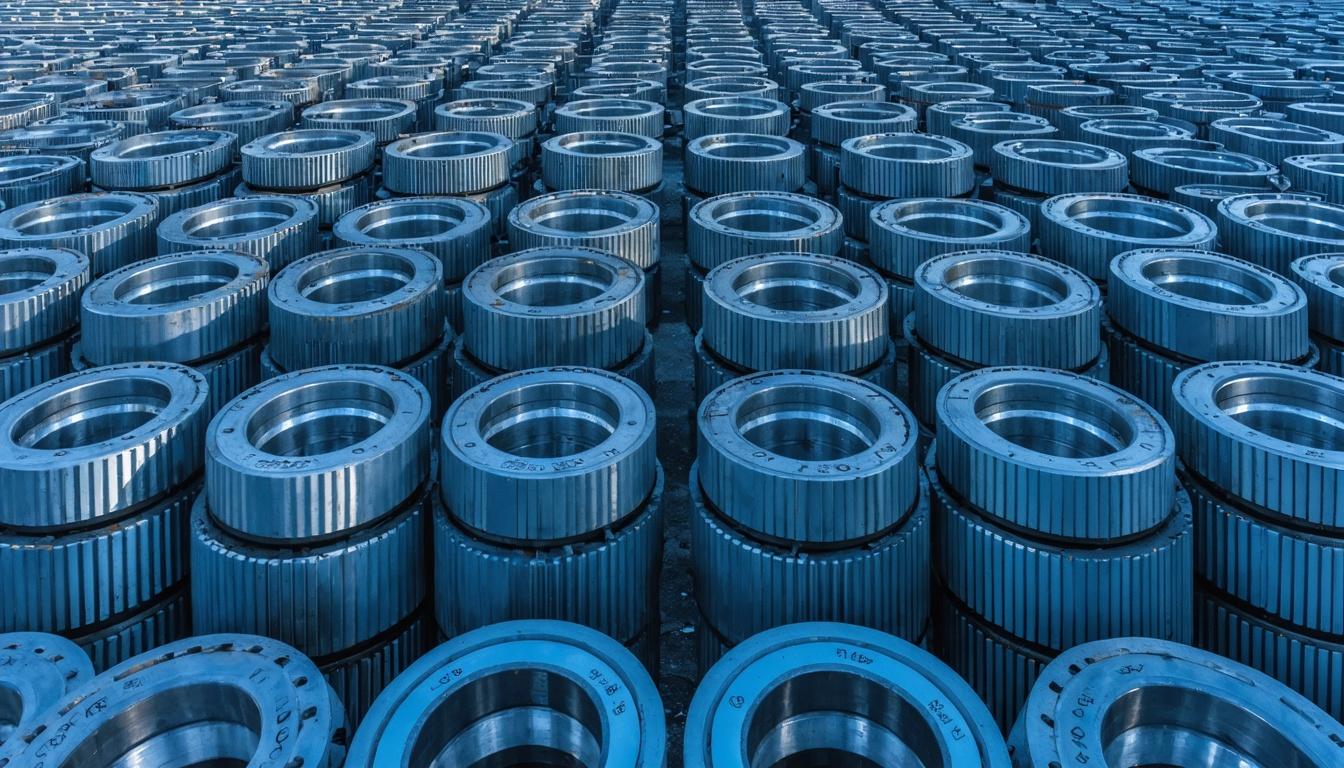

*this image is generated using AI for illustrative purposes only.
NRB Bearings delivered a robust financial performance for FY26, with consolidated Profit After Tax (PAT) surging 77% to ₹146 crore. Revenue from operations grew by 11% to ₹1,335 crore, supported by a 19% rise in EBITDA to ₹267 crore. The results were presented at the 61st Annual General Meeting held on July 29, 2026, where the company also submitted revised speeches by Chairman Tashwinder Singh and Vice Chairman & Managing Director Harshbeena Zaveri. This strong bottom-line growth signals enhanced capital efficiency and successful execution of its strategic pivot toward high-margin sectors.
The company’s return on equity (ROE) improved by 6 percentage points to 15%, while return on capital employed (ROCE) rose by 7 percentage points to 20%. Return on invested capital (ROIC) also increased by 6%, reflecting improved efficiency in deploying capital. On a standalone basis, profit after tax more than doubled compared to the previous year. Management attributed this performance to disciplined execution, structural margin improvements, and prudent cost management amidst a resilient domestic demand environment.
Financial Highlights
| Metric | FY26 Value | YoY Change |
|---|---|---|
| Revenue from Operations | ₹1,335 crore | +11% |
| EBITDA | ₹267 crore | +19% |
| Profit After Tax | ₹146 crore | +77% |
| Return on Equity (ROE) | 15% | +6% |
| Return on Capital Employed (ROCE) | 20% | +7% |
Strategic Diversification
NRB Bearings is expanding its addressable market across six key vectors: aerospace, automotive adjacencies, electrification beyond passenger EVs, mobility beyond vehicles, industrial heavy construction equipment, and mission-critical friction solutions. In aerospace, the company acquired a pre-certified platform to bypass multi-year OEM certification lead times, enabling immediate market entry. In automotive, it is moving beyond legacy products into higher-value components such as tapered and ball bearing wheel hubs and spherical roller bearings.
The firm is also targeting high-frequency drives, commercial EV fleets, robotics, and automated guided vehicles (AGVs). Chairman Tashwinder Singh highlighted that India’s position as a preferred manufacturing destination, supported by initiatives like the Production Linked Incentive (PLI) Scheme, provides significant long-term opportunities. The company leverages proprietary computational analysis software and advanced manufacturing processes to deliver breakthrough friction solutions.
What the Numbers Show
The divergence between revenue growth (11%) and PAT growth (77%) highlights significant operating leverage achieved in FY26. This expansion in bottom-line profitability, coupled with rising ROE and ROCE, suggests that the company’s structural actions to improve margins are yielding tangible results. The strategic shift toward high-margin niches in aerospace and industrial sectors appears to be enhancing overall return profiles without diluting financial discipline. With 34% of employees below the age of 33, the company emphasizes agility and digitization as key competitive advantages against larger, slower-moving legacy competitors.
Historical Stock Returns for NRB Bearings
| 1 Day | 5 Days | 1 Month | 6 Months | 1 Year | 5 Years |
|---|---|---|---|---|---|
| +2.89% | -3.25% | +7.22% | +107.64% | +88.70% | +264.68% |

How will the pre-certified aerospace platform impact NRB Bearings' revenue contribution and margin profile in the next 12-18 months?
What specific risks does the company face in transitioning from legacy automotive products to high-value components like tapered wheel hubs amidst global supply chain volatility?
To what extent will India's PLI Scheme directly influence NRB Bearings' capital expenditure plans and market share in the domestic manufacturing sector?
 17
17




 Access Market Heat-map & Insights
  Create, Save & Share your Screener
  Use 200+ Screening Filters





